Melanoma danger peaks in middle age not old age
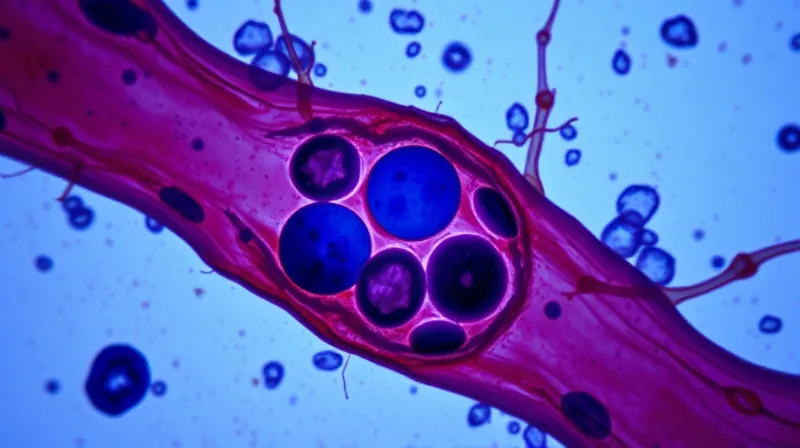
The mouse is twelve months old. In human years, that is roughly forty-five. It has spent its life in a clean cage at Fox Chase Cancer Center in Philadelphia. It has eaten the same food. It has breathed the same filtered air. It has never been sick. Now, under the microscope, something is changing. The melanoma cells injected weeks ago are not staying put. They are moving. They are slipping into blood vessels. They are heading for the lungs and the liver. The mouse is not old. It is not young. It is in the middle. And that is precisely when the danger is greatest.
For decades, cancer research told a simple story. Age makes cancer worse. The older you get, the more your body breaks down. The immune system weakens. Tumors grow unchecked. This idea seemed so obvious that scientists rarely questioned it. Most experiments used young mice. They assumed old mice would only show more of the same. They were wrong.
The new work from Mitchell Fane and his team at Fox Chase Cancer Center, published in a peer-reviewed journal, shows a different pattern. It is not a straight line. It is a curve. Cancer spread is low in youth. It peaks in middle age. It drops again in extreme old age. The immune system does not simply decline. It changes. It shifts. And in the middle of life, it gives ground.
The Shape of the Curve
Think of a mountain. You start at the base. The climb is gentle. Then the slope steepens. You reach the summit. Then the path goes down again. That is the shape of melanoma danger across a lifetime. The young are protected. The very old are protected. The middle-aged are exposed.
In young mice, equivalent to humans in their twenties, melanoma tumors stayed small. They did not spread. The immune system kept them in check. In middle-aged mice, equivalent to humans in their forties and fifties, the tumors grew. They spread to the lungs. They spread to the liver. In very old mice, equivalent to humans in their eighties and nineties, the pattern reversed. The tumors shrank again. The spread stopped.
This is not what anyone expected. The standard view of aging is a one-way street. Everything gets worse. Bones weaken. Skin wrinkles. Memory fades. Cancer should follow the same path. It does not. Something else is happening.
The Guardians of the Gap
The key is a type of immune cell called the gamma delta T cell. Most immune cells patrol the body looking for threats. Gamma delta T cells are different. They are stationed at the borders. They live in the skin. They live in the lining of the gut. They are the first line of defense. They do not wait for instructions. They act.
In young mice, gamma delta T cells are abundant. They patrol the skin. They kill any melanoma cell that tries to escape. In very old mice, these cells are also abundant. Something about extreme age brings them back. In middle-aged mice, they are scarce. The guardians are gone. The cancer moves.
The researchers quantified gamma delta T cell levels and found a direct correlation: higher counts corresponded to reduced melanoma spread, while lower counts were associated with increased metastasis. The pattern was clear. The immune system does not simply wear out. It changes its composition. And in middle age, the composition is wrong.
The Cancer Strikes Back
Melanoma is not passive. It does not wait to be killed. It fights back. The researchers found that middle-aged melanoma cells release molecules that suppress gamma delta T cells. They exhaust them. They make them tired. They make them ineffective.
Think of a guard dog. In youth, the dog is alert. It barks at any intruder. In middle age, the intruder throws poisoned meat over the fence. The dog eats it. It becomes drowsy. It stops barking. In extreme old age, the fence itself changes. The intruder cannot get in. The dog wakes up again.
The cancer uses the body’s own aging process against it. It exploits the dip in immune protection. It waits until the guardians are weak. Then it moves. This is not random. It is calculated. The cancer has evolved to sense the state of the immune system. It strikes when the odds are best.
A Mirror in Human Data
The mouse study provides compelling evidence, and epidemiological data supports its relevance to humans. Cancer rates in humans rise steadily from youth to middle age. They peak around age sixty to seventy. Then they plateau. Then they decline. People over eighty-five have lower cancer rates than people in their seventies.
This has been known for years. But it was dismissed as a statistical artifact. Perhaps older people were not diagnosed as often. Perhaps they died of other causes first. The new study offers a biological explanation. The immune system changes. The gamma delta T cells return. The cancer is held in check again.
While the pattern varies across cancer types, for melanoma the correlation between mouse and human data is striking. The mouse data mirrors the human data. The curve is the same. The peak is the same. The decline is the same.
The Problem with Young Mice
Most cancer research uses young mice. They are cheap. They are easy to handle. They have strong immune systems. They respond well to treatments. This creates a problem. Treatments that work in young mice often fail in humans. The human population is not young. It is middle-aged and old.
Fewer than ten percent of mouse studies use aged animals. This is a massive blind spot. Researchers are testing treatments on a model that does not match the real patient population. They are optimizing for youth. They are ignoring middle age and old age.
The Fox Chase team is trying to change this. They built a facility for aged mice. They breed them. They wait eighteen to twenty-four months for them to reach old age. This is expensive. This is time-consuming. But it is necessary. Without aged mice, the picture is incomplete.
The Cost of Ignoring Age
Dave Runkel, a patient advocate, was thirty-six years old when he experienced symptoms including blood in his stool, abdominal pain, and loose stools. He consulted his doctor, who hesitated due to the rarity of colorectal cancer at that age and the standard screening age of forty-five. A colonoscopy was not initially ordered.
Runkel had to lie. He told the doctor he had a family history of cancer. Only then did the test get ordered. The cancer was found. It had been growing for years. The treatment was brutal. Chemotherapy. Radiation. Surgery. An ileostomy bag. A reversal surgery. Memory loss. Fatigue. Anger.
Runkel wonders what would have happened if the cancer had been found earlier. He tries not to think about it. He says dwelling on it only makes him angry. But the question remains. How many other patients are being missed? How many are being told they are too young for cancer?
Early-onset colorectal cancer has nearly doubled since 1995. The reasons are not fully understood. Diet. Microbiome. Environmental factors. But one thing is clear. The assumption that cancer is a disease of old age is wrong. It is a disease of middle age too. And the immune system is changing in ways we are only beginning to understand.
The Bridge Between Mouse and Human
Mitchell Fane is a cancer biologist. He specializes in aging. He knows that mice are not humans. But they are the best tool we have. They age faster. They develop cancer faster. They allow experiments that would be impossible in people.
The next step is to confirm the findings in human tissue. The researchers will look at gamma delta T cell levels in human skin. They will compare young, middle-aged, and old donors. They expect to see the same pattern. High levels in youth. Low levels in middle age. High levels in old age.
If confirmed, this could change how we screen for melanoma. It could change how we treat it. Middle-aged patients might need different therapies. They might need immune support. They might need gamma delta T cell boosters. The treatment could be tailored to the age of the immune system, not the age of the patient.
The Parallel Search
Other researchers are finding similar patterns. The immune system does not age uniformly. It changes in waves. Some cells decline. Some cells increase. Some cells change their function. The timing is different for different people. But the overall shape is consistent.
A team at the University of California is studying the same gamma delta T cells in lung cancer. They are finding a similar pattern. The cells are protective in youth. They decline in middle age. They return in old age. The mechanism may be universal across many cancer types.
Another group at the National Institutes of Health is looking at the microbiome. [3] They are finding that gut bacteria change with age. Some bacteria protect against cancer. Some promote it. The balance shifts in middle age. It shifts again in old age. The immune system is not alone. It is part of a larger system. And that system is dynamic.
The Practical Challenge
Building an aged mouse facility is not glamorous. It is not high-tech. It is simply waiting. You order young mice. You feed them. You clean their cages. You wait eighteen months. You wait two years. You hope they do not die of old age before the experiment starts.
Most researchers do not have this patience. Most funding agencies do not have this patience. They want results quickly. They want publications quickly. Aged mouse studies take too long. They cost too much. They are a hard sell.
Fane and his colleague Yash Chabra are trying to change the culture. They are offering their facility to other researchers. They are saying, bring us your young mouse data. Let us test it in old mice. Let us see if it holds. The response has been positive. More researchers are interested. More are willing to wait.
The View from the Other Side
Imagine the cancer itself. It does not know it is a cancer. It is just a cell. It divides. It mutates. It tries to survive. It senses the environment. It feels the immune system pressing in. It waits. It adapts. It strikes when the pressure is lowest.
In youth, the pressure is high. The immune system is strong. The cancer stays dormant. In middle age, the pressure drops. The guardians are gone. The cancer moves. It spreads. It colonizes new organs. It thrives.
In extreme old age, the pressure returns. The guardians come back. The cancer is contained again. It does not know why. It does not understand aging. It only knows that the environment has changed. It retreats. It waits. It hopes for another opening.
The cancer is not evil. It is not malicious. It is just a cell following its programming. The problem is that its programming intersects with our aging in a dangerous way. The middle of life is the window of vulnerability. The cancer knows this. Now we know it too.
The Deeper Question
Why does the immune system change this way? Why do gamma delta T cells decline in middle age and return in old age? The answer may lie in evolution. The immune system is shaped by reproduction. In youth, the priority is survival to reproductive age. The immune system is strong. In middle age, reproduction is done. The priority shifts to energy conservation. The immune system is dialed back. In extreme old age, the priority shifts again. The immune system may be reactivated to prevent cancer from killing the host before natural death.
This is speculation. But it fits the data. The immune system is not a simple machine. It is a dynamic system. It adjusts to the life stage. It conserves resources. It prioritizes. And in middle age, cancer is the price we pay for that prioritization.
The implications are profound. If we understand the timing, we can intervene. We can boost gamma delta T cells in middle age. We can screen more aggressively. We can catch cancer before it spreads. We can change the curve.
The Human Cost
Dave Runkel survived. He is alive. He is raising his kids. He is working. But he carries the scars. The chemo fog. The memory gaps. The anger. The what-ifs.
He is not alone. Thousands of patients are diagnosed with early-onset cancer every year. They are told they are too young. They are told it is probably nothing. They are sent home. They come back later with stage four disease.
The mouse study is not just about melanoma. It is about a pattern. It is about a blind spot in research. It is about the assumption that age is a straight line. It is not. It is a curve. And the middle of the curve is the most dangerous place to be.
The Call for Change
Fane emphasizes that the vast majority of studies rely on young mice, which is a significant problem. He advocates for personalized care for older patients, a deeper understanding of therapy effects across ages, and the development of better treatment options.
The core message is clear: to understand cancer in humans, researchers must study aged animals; to treat cancer in middle-aged people, therapies must be tested in middle-aged mice; and to save lives, the assumption that young and old are biologically equivalent must be abandoned.
The Fox Chase facility represents an initial step in the right direction, but more facilities, funding, and patience are required. The potential payoff includes better treatments, improved screening, and enhanced outcomes for patients.
The Final Image
Picture the very old mouse. It is twenty-four months old. In human years, it is eighty. It has lived its life. Its fur is gray. Its movements are slow. But its immune system is active. The gamma delta T cells are back. They are patrolling the skin. They are killing cancer cells. The tumor is dormant. The mouse will die of old age, not cancer.
Picture the middle-aged mouse. It is twelve months old. It is in its prime. It is active. It is eating. It is breeding. But its immune system is compromised. The gamma delta T cells are gone. The cancer is spreading. The mouse will die of melanoma, not old age.
Picture the young mouse. It is three months old. It is healthy. It is strong. The gamma delta T cells are abundant. The cancer is contained. The mouse will live to middle age. Then the danger will begin.
The cycle repeats. The curve stays the same. The middle is the danger zone. The immune system is the key. The gamma delta T cells are the guardians. And we are only beginning to understand how to help them.