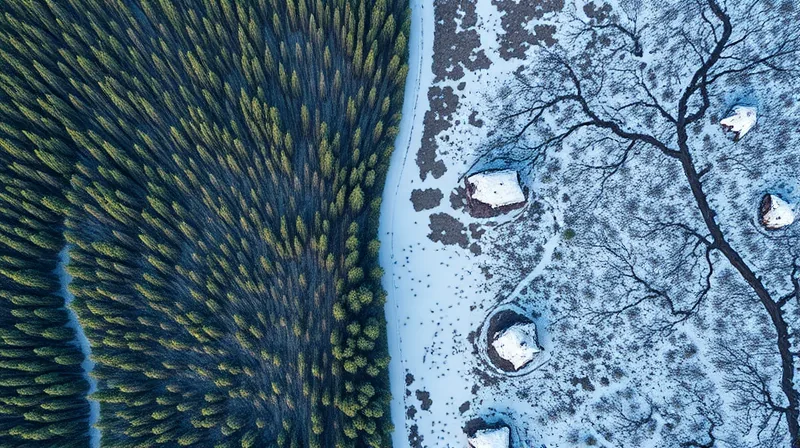
Boreal Forest Clearcut Limit Found
The first time researchers tried to measure how much forest could be cut without destroying bird life, they expected a simple answer. They wanted a single number, a percentage that managers could apply across the entire boreal forest zone. What they found instead was that the question itself had two equally valid answers, and choosing between them would shape the future of millions of hectares.
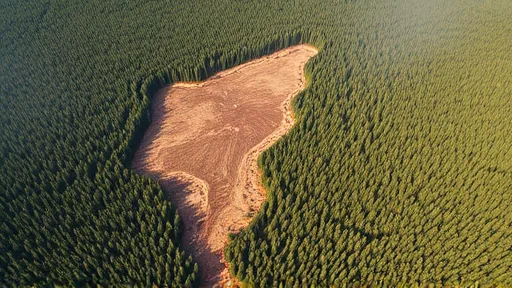
Researchers at the University of Jyväskylä in Finland modeled bird populations under different logging intensities. They expected old-growth specialists to decline gradually as clearcutting increased. Instead, the data revealed a sharp threshold — a point where populations did not just shrink but collapsed. This break in the pattern became the study’s central finding: the first quantified limit for clearcutting in boreal forests.
One Fifth, or Ninety Years
The threshold manifests in two distinct ways, each offering a practical route for forest managers. The first option requires that approximately one-fifth of the forest area be permanently excluded from clearcut management — land where trees grow old and die naturally.
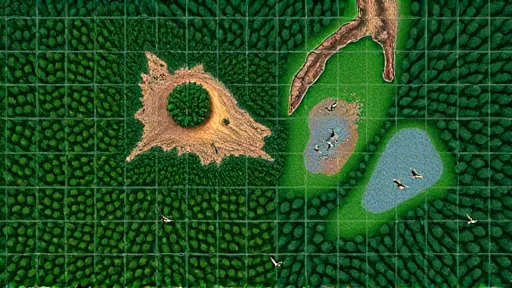
The second option focuses on time rather than space. If clearcutting continues across the landscape, the rotation period — the time between one harvest and the next on the same ground — must average at least ninety years. This longer cycle allows young forests to mature into the complex structures that specialized bird species require for nesting and feeding.
Many boreal forests in Finland and neighboring countries operate on rotation periods of sixty to eighty years, significantly shorter than the ninety-year minimum the study identifies. The gap between current management and ecological sustainability is not marginal — it represents a fundamental mismatch between economic timelines and biological ones.
The threshold applies specifically to bird species that depend on old-growth characteristics: large trees, standing deadwood, and multi-layered canopies. These species cannot adapt to younger forests, no matter how well-managed those forests might be. Their presence or absence serves as a biological indicator of forest health.
The Measure That Changes Everything
The significance of this study lies in its concrete, testable targets. Before this research, discussions about sustainable forestry relied on vague principles — ‘maintain biodiversity’ or ‘balance conservation with production’ — without numerical benchmarks. Now there is a specific ecological limit grounded in empirical data.
Old-growth forest birds function as umbrella species, meaning their habitat requirements encompass the needs of many other organisms. When the threshold for these birds is met, the entire ecosystem — from lichens on ancient bark to insects in decaying wood — likely benefits. When the threshold is missed, the loss extends far beyond the bird species themselves.
For Finland, where boreal forests cover more than seventy percent of the land area, the finding carries immediate national relevance. The research provides Finnish policymakers with a defensible, science-based target for what ‘ecologically sustainable use of forests’ means in measurable terms
The study does not prescribe which of the two pathways — the twenty percent set-aside or the ninety-year rotation — should be adopted. That decision involves economic trade-offs, regional planning, and social priorities that extend beyond ecological science. What the research establishes is the boundary itself, the line that must not be crossed if old-growth bird populations are to persist.