Attribution Science Now Proves Extreme Weather Links in Days
The simplest explanation for a devastating flood or a record-breaking heatwave is often the wrong one. For years, the public heard that weather is chaotic, that single events cannot be pinned on a warming planet, and that only long-term trends carry scientific weight. That cautious stance was technically correct, yet it left a gap. Communities struck by disaster received no clear answer about what caused their suffering, and the vacuum filled with doubt.
The counterargument that has not yet been refuted goes like this: climate models are imperfect, natural variability is immense, and any claim linking one storm to human emissions overreaches the evidence. This position held scientific ground for decades. Researchers could describe global warming with confidence, but when asked whether a specific hurricane or drought was caused by it, they hesitated. The hesitation was honest, but it created a frustrating reality where the most urgent questions went unanswered.
That old framework is now crumbling. A fundamental shift has occurred in how scientists investigate extreme weather. Instead of waiting years for comprehensive studies, researchers can now deliver concrete, data-backed assessments within days or weeks of an event unfolding. This is not an incremental improvement in forecasting. It is a transformation in what science can say, and how quickly it can say it.
From General Trends to Specific Fingerprints
The old approach to climate science operated on broad correlations. Scientists knew greenhouse gas concentrations were rising due to human activity. They knew the planet was warming. They knew that warming would make certain extremes more frequent or intense. What they could not do was look at one flood and state with confidence that human influence made it worse.
The problem was disentangling natural weather chaos from the human-caused signal. Hurricanes have always formed. Heatwaves have always occurred. When a record-breaking event struck, researchers faced a difficult question: was this primarily natural variation, or did emissions tip the scales? Answering that required extensive analysis that often took months or years, far too slow for policy decisions or public understanding.
Attribution science emerged to close this gap. It is a specialized branch of climate research that combines advanced statistics, sophisticated modeling, and atmospheric physics. The core method involves comparing two simulated worlds. One represents the current climate, complete with all the greenhouse gases humanity has emitted. The other represents a hypothetical planet where industrial emissions never happened, where pre-industrial conditions prevail. Running thousands of simulations for both scenarios reveals how much more likely an event becomes due to human activity.
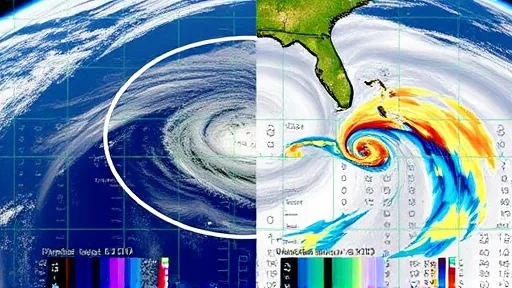
Think of it as a massive what-if experiment. If a heatwave appears significantly more often in the real-world simulation than in the no-human-influence scenario, scientists can quantify the increase. They can say this event was made twice as likely, or three times as intense, because of warming. This moves the science from saying smoking causes cancer generally to saying this specific patient’s illness was caused by their smoking habit.
The Rapid Response Team for Climate Extremes
In July 2023, a severe heatwave scorched Southern Europe, with temperatures exceeding 45°C in parts of Italy and Spain. The World Weather Attribution consortium analyzed the event and found that human-induced climate change made the heatwave up to 2.5°C hotter than it would have been in a world without emissions. This time, answers came within days, not years.
The World Weather Attribution consortium, known as WWA, coordinates climate scientists from institutions including Imperial College London, the Royal Netherlands Meteorological Institute, and Princeton University. For the 2023 Southern European heatwave, they ran thousands of climate model simulations comparing current conditions against a counterfactual world without human emissions. Their analysis concluded that the heatwave was made at least twice as likely and up to 2.5°C hotter due to human-driven climate change. That is not a vague statement. It is a quantified, data-backed assessment that tells the public exactly how much emissions amplified their suffering.
At the forefront of this work is Friederike Otto, a climatologist at Imperial College London’s Grantham Institute, who co-founded WWA in 2015. Otto has been instrumental in developing the rapid-attribution methodology, which pairs pre-computed climate model results with observational data to deliver assessments within days. She and her colleagues at WWA function as the rapid-response team for climate extremes, providing scientific answers when the world needs them most.
Otto emphasizes that rapid attribution provides concrete evidence that shapes public understanding. For too long, climate discussions were bogged down by a perceived lack of immediate proof for specific events. Attribution science cuts through that ambiguity. When researchers can confidently state that a particular flood was made one and a half times more likely, or a drought three times more intense, by human activities, the conversation changes. It moves from speculation to verifiable statements about what is happening and why.
What This Means for the People Affected
The ability to rapidly attribute extreme weather has profound implications for public perception. When a community is devastated by a flood, and scientists can almost immediately say this event was significantly worsened by human-caused warming, it hits differently than a general statement about global trends. The abstract becomes tangible. The distant problem becomes local.
This capability also transforms the political landscape. Policymakers no longer need to wait for exhaustive studies before acting. They receive timely, actionable insights about how emissions are directly influencing destructive phenomena. The information empowers informed decisions about infrastructure, emergency response, and long-term planning in the face of escalating extreme weather.
The shift also changes how the media covers disasters. Reporters covering a hurricane or drought can now include attribution results in their initial coverage, rather than months later as an afterthought. The public learns immediately whether climate change played a role, and how large that role was. This direct line of information cuts through the confusion and misinformation that often surrounds discussions of extreme weather.
Attribution science does not blame any single storm on any single emission source. It does something more powerful. It shows how the accumulated greenhouse gases in the atmosphere load the dice for extreme events. Every heatwave, flood, and drought now carries a measurable human fingerprint, and scientists can reveal that fingerprint while the event is still fresh in public memory.
The field continues to refine its methods. Researchers at WWA and other institutions are constantly improving their models and statistical techniques to deliver even faster and more precise assessments. The work requires meticulous data collection and rigorous analysis, often spanning multiple research institutions. It is incredibly complex, but the results offer unprecedented clarity on the relationship between extreme weather and climate change. Parallel efforts, such as the National Oceanic and Atmospheric Administration’s rapid attribution research and the European Centre for Medium-Range Weather Forecasts’ extreme-event analyses, are pursuing similar goals, signaling a broader scientific shift toward real-time climate accountability.
What was once a frustrating dance of uncertainty has become a direct conversation. Scientists no longer need to hedge when asked if climate change caused a specific disaster. They can provide evidence-based answers within days, showing exactly how much more likely or intense an event became because of human activity. This is the finding that closes the gap between global science and local experience, giving communities the knowledge they need to understand what is happening to their world. The next frontier is operationalizing these methods so that attribution results become a standard part of disaster response, as routine as weather forecasts.