Forecasts That Read Like Schedules
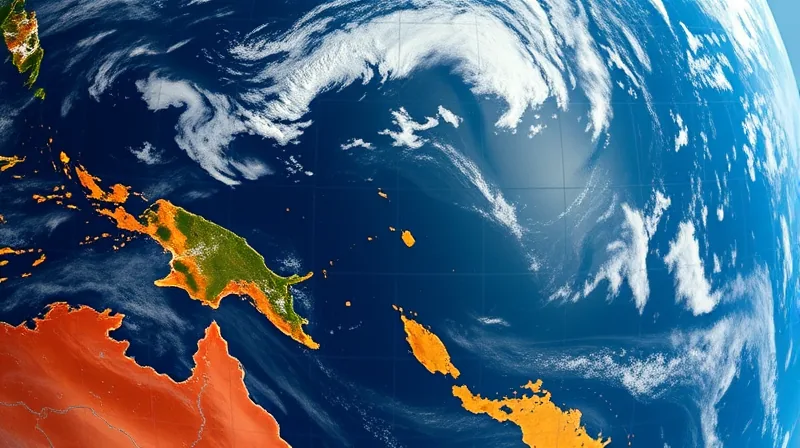
El Niño is not a surprise guest. It is a recurring pattern in Earth’s climate system, and its consequences follow scripts so reliable that scientists can name them years in advance. The weather extremes it triggers — floods on one side of the planet, droughts on the other, cyclones, wildfires — are not random. They are, in the words of researchers who study the cycle, highly predictable.
The evidence is stark. Strong El Niños in the past 70 years have been linked to drought in Indonesia. [1] That is not a correlation that leaves room for doubt; it is a track record. The drought and wildfires already worsening there are not a surprise. They are a forecast that came true.
This predictability extends worldwide. Over the next year, the same cycle will produce effects that scientists have already mapped — food shocks, water shortages, storm damage — across multiple continents. The question is not what will happen. The question is who will be ready.
Some governments have acted, treating the forecast as a call to prepare rather than a curiosity to observe. But many others have not. Some nations maintain large grain stores to buffer against food shocks. Others do not.
The most vulnerable countries — Ethiopia, Sudan and South Sudan — have plans to prevent widespread hunger and death. Those plans exist on paper. But the funding is far from sufficient: United Nations members have provided only one-third of the necessary funding. It is a resource gap.
The Infrastructure We Already Know Is Fragile
There is a deeper problem than emergency declarations and grain reserves. The everyday infrastructure that rich societies depend on is already failing under normal conditions. Sewers overflow. Power grids collapse. These are not systems strained by once-in-a-generation storms; they are systems that break during ordinary weather. Expecting them to withstand an extreme El Niño event or global warming is not optimism.
The logic is simple enough for a child to follow: if a bridge cracks under a light load, it will not hold under a heavy one. If a power grid fails on a mild day, it will not survive a heatwave or a flood. The infrastructure deficit is not a future problem. It is a present one, and El Niño will make it worse.
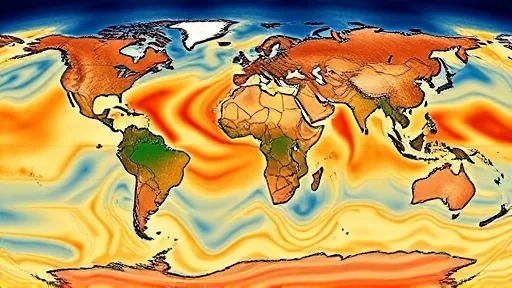
More speculative proposals exist. There are proposals to dull El Niño’s worst impacts through geoengineering — deliberate, large-scale interventions in the climate system. [1] These ideas remain proposals, not deployed tools. They are worth studying, but they are not a substitute for preparation. A parachute designed in a laboratory is not the same as one that has been packed and tested.
Removing the Compounding Threat
El Niño is a natural cycle within Earth’s climate system. It has occurred for millennia and will continue to occur. But its worst effects are not inevitable. They are a function of how much preparation precedes them and how much carbon humanity continues to emit.
Cutting carbon emissions to halt global warming would not eliminate El Niño. It would remove one extreme from the equation — one less extreme to worry about. The impact of ever-growing emissions is entirely predictable. The floods, the droughts, the cyclones, the wildfires — none of these will arrive as surprises. They will arrive as consequences.
No one can say we weren’t warned.
Sources
Mentioned organisations (context, not sources)
- California — Organisation (homepage)
- Peru — Organisation (homepage)
- China — Organisation (homepage)
- India — Organisation (homepage)
- European Union — Organisation (homepage)
- United States — Organisation (homepage)
- United Kingdom — Organisation (homepage)
- Australia — Organisation (homepage)
- Sudan — Organisation (homepage)
- South Sudan — Organisation (homepage)