
AI and De-Extinction: Rewriting Extinction With Code
How Language Models Learned to Read DNA
The path toward bringing back vanished species did not begin with a grand plan. It began with a tool built for something else entirely. Machine learning systems designed to parse human language and recognize patterns in vast datasets turned out to be unexpectedly good at reading genetic code. What started as an accident of computational capability became the foundation for a new field. Researchers noticed that the same algorithms powering search engines and language translation could model biological systems with startling accuracy. That realization changed what scientists believed was possible.
The tools that now analyze genetic data were not purpose-built for biology. They were adapted. The companies pushing hardest at the boundary between artificial intelligence and life sciences did not grow out of traditional conservation biology. They grew out of the technology sector. The skills that built enterprise software and conversational intelligence are now being redirected toward questions that once belonged only to science fiction.
Ben Lamm, co-founder and CEO of Colossal Biosciences, embodies this crossover. He spent more than two decades building companies at the intersection of AI and emerging technologies. His previous ventures included Hypergiant, Conversable, and Chaotic Moon — businesses later acquired by Trive Capital, LivePerson, and Accenture. [2] None of them had anything to do with extinct animals. Yet today he leads one of the most closely watched and most debated companies in science and technology. The transition from enterprise AI to synthetic biology is not as strange as it first appears. Both fields depend on processing enormous amounts of data, finding patterns, and making predictions. The difference is that one operates on software, and the other operates on living systems.
A Company Built on Computational Biology
Colossal
Biosciences is not waiting for academic consensus. The company is actively applying AI alongside synthetic biology to explore de-extinction as a conservation tool. This is not a theoretical exercise. It is a funded, operational mission. The company has reached a billion-dollar valuation on the premise that extinct species can be brought back through advances in computational biology and genetic engineering. Whether that premise holds is still being tested, but the capital committed to it is real.
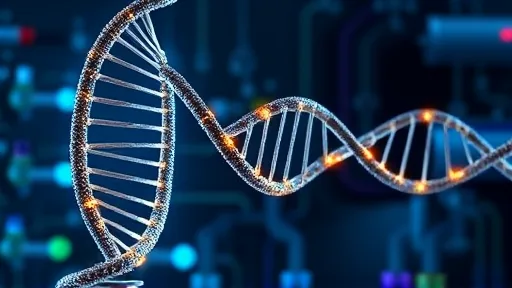
The technical approach relies on AI to analyze genetic data, model biological systems, and accelerate discovery. These are not separate tasks. They form a pipeline. First, the AI reads and interprets genetic information from both living and extinct species. Then it models how those systems interact. Finally, it suggests interventions that might produce a viable organism. Each step depends on the one before it. The speed of the entire process hinges on how well the AI can handle biological complexity, a domain far messier than any software system.
Lamm’s role places him at the center of conversations about biodiversity, climate resilience, and the responsibilities that come with engineering living systems. He is not a biologist by training. He is a builder of companies. That distinction shapes how Colossal approaches problems. The company operates more like a technology startup than a research laboratory. It moves fast, takes risks, and pursues goals that traditional institutions might consider impractical. This approach has made Colossal one of the most provocative actors in the field. It has also raised questions about whether the technology sector’s methods are appropriate for the natural world.
The debate extends beyond any single species. As AI becomes part of scientific discovery, conversations about technology increasingly reach into medicine, biology, conservation, and climate science. Those advances bring new possibilities and difficult questions about how and where these tools should be used. Colossal sits at the center of that debate not because it has all the answers, but because it is attempting something few organizations have tried. If a living system can be engineered, the question of whether it should be becomes unavoidable?
From One Genome to an Ecosystem
Bringing back one species is a scientific achievement. Bringing back an ecosystem is a different problem entirely. The gap between those two goals is where the scalability question lives. AI can model individual genomes. It can suggest genetic edits. It can predict how a single organism might develop. But an ecosystem is not a single organism. It is a web of relationships — between species, between organisms and their environment, between living things and the climate they inhabit. No AI currently models that level of complexity with the fidelity required for real-world intervention.
The conservation debate sharpens here. Some argue that engineering nature represents a breakthrough — a way to repair damage that has already been done. Others see it as a distraction from protecting the ecosystems that still exist. The resources, attention, and talent flowing into de-extinction could, in this view, be directed toward preventing the next extinction rather than reversing the last one. The question is not whether the technology works. The question is whether it can work at the scale required to matter — and whether that scale is even the right target.
The scalability question remains open. AI can analyze genetic data and model biological systems at unprecedented speed, and it can accelerate discovery in ways that were not possible a decade ago. But whether those capabilities can be extended from individual species to entire ecosystems, and whether that extension is desirable, is not a technical problem alone. It is a question about priorities, about risk, and about what kind of future is worth engineering. The tools exist. The intent is declared. The scale remains unproven.
Sources
2. Hypergiant
3. Conversable
5. LivePerson
6. Accenture
8. Moscone West