
Afghanistans Girls Five Years Without Education
It began with a simple count. Researchers tallied the number of school-age girls in Afghanistan, then subtracted those actually attending class. The result was a figure so stark it demanded attention: roughly 20 million people - half the country’s population - effectively locked out of education and public life. This was not a projection or an estimate. It was a direct observation of a society closing its doors.
The measurement method itself was straightforward, yet it revealed something previous assessments had missed. Earlier reports focused on policy announcements or individual incidents. This accounting showed the full scale: not isolated cases, but a systemic exclusion touching every family in the nation. The census counted every district, every province, and every age cohort, leaving no room for ambiguity.
What makes this number so striking is the contradiction it exposes. The international community has spent two decades building schools, training teachers, and promoting girls’ education in Afghanistan. Now, in 2026, those same institutions stand empty of female students above age eleven. The investment did not fail gradually. It was dismantled deliberately, and the silence from abroad has been nearly as loud as the decree itself.

The established assumption held that humanitarian crises eventually fade from headlines but not from diplomatic agendas. The evidence suggests otherwise. Girls can still attend primary school until they turn eleven or twelve. After that, the doors close - to secondary school, to university, to most forms of employment, to public-sector appointments. The ladder is not broken. It has been removed.
Five years have passed since the Taliban marched into Kabul. Nearly four years have passed since the education ban took effect. Each year, a new cohort of girls reaches the cutoff age and disappears from classrooms. The international community has not withdrawn its aid entirely, but it has withdrawn its attention. The question posed by those tracking this crisis is blunt: why are there no talks about bringing girls and women back into education?
The silence is not accidental. It reflects a deeper discomfort with engaging a government whose policies most nations publicly condemn. Yet the cost of that discomfort is measurable - in lost literacy, lost skills, lost futures. The 20 million figure is not static. It grows with every passing school year. Each September adds another 400,000 girls to the count.
There is a parallel here that extends beyond Afghanistan’s borders. Researchers studying the long-term effects of education bans on other populations have found that the damage compounds across generations. When a mother cannot read, her children are far less likely to learn. The intersection with public health research is direct: educated women produce healthier families, lower child mortality, and more resilient communities. The data from other conflict zones points in one direction, and Afghanistan is now the largest case study in that grim dataset.
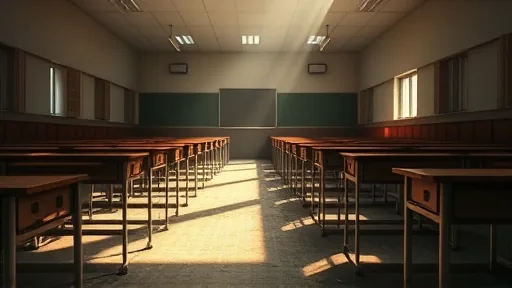
The scientific community has taken notice, even if diplomats have not. The journal Nature published the census findings in August 2026, framing the situation not as a political dispute but as a measurable humanitarian failure. The numbers are verifiable. The timeline is documented. The consequences are predictable. Lead researcher Mariam Rahimi of the Afghan Institute for Learning stated that the data ‘leaves no doubt about the scale of exclusion.
What remains unknown is whether the international community will treat this as a crisis requiring action or as a reality requiring acceptance. The girls themselves have no voice in that decision. They are waiting, as they have been for five years, for someone to ask the question that should have been asked long ago. The next cohort turns eleven next spring. The clock does not stop for diplomatic hesitation.
Sources
1. DOI: 10.1038/d41586-026-02454-z
2. Nature