
The Hourly Bill for Certifying Everything Twice
The Institute for Public Policy Research puts the figure at £6.5bn a year. That is the value of goods exports the think tank says a mutual recognition agreement on product standards could have added to Britain’s trade with the European Union. It is not a projection of what will happen. It is the arithmetic of a counterfactual that a think tank has now put a number on.
The Institute for Public Policy Research, in an October 2026 report, estimates that an EU-UK deal recognising each other’s product testing could have boosted British goods exports by £6.5bn a year. [1] The failure to have such a mutual recognition agreement is, stated the other way round, a loss of £6.5bn a year in exports to the European Union.
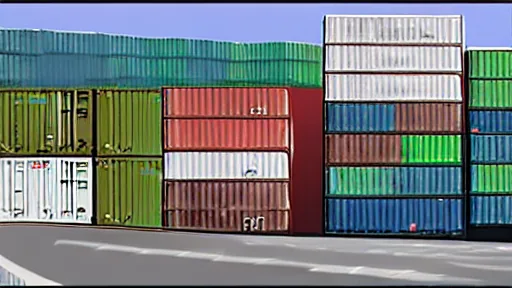
The consequence is not an abstract inefficiency. It is a second set of tests, paid for twice, on goods that already passed a first one.
The scope of the finding matters as much as the number. It covers goods — the cars, circuit boards and medicines that must be certified before they cross a border — and prices one specific piece of missing paperwork rather than the whole exit. As the IPPR’s co-author Joseph Sassoon puts it, thousands of products made and certified in the UK must be tested and certified by EU bodies before they can be exported. A mutual recognition agreement would mean a product approved by one side’s regulators is accepted by the other’s without a second inspection. The narrowness is why the figure is usable: it is a bill for something that was never negotiated, attached to a question — whether to negotiate it now — that has returned to the centre of British politics.
A Former Prime Minister
Asks for a Decade In October 2026, Sir Tony Blair told Andy Burnham that Britain should commit to rejoining the European Union within the next 10 years, and called for a “new approach” to post-Brexit ties. [1] He urged Burnham to demand a “structured relationship” with the bloc and to abandon Sir Keir Starmer’s piecemeal approach, which he described as “inching towards” Europe as a result of public opinion. He was equally clear about what he does not want: a straight return to single market and customs union membership would be wrong. The target, in his framing, is a “significantly reformed” EU — reformed so that Europe could act as a superpower able to challenge the United States and China.
The vehicle for that argument is a report from the Tony Blair Institute titled “Beyond Leave and Remain: A Path to Rejoining a Reformed Europe”, published in October 2026, for which Blair wrote the foreword. That objective, it argues, should, as of October 2026, be a cornerstone of the UK government’s forthcoming 10-year plan.
Tone Langengen, director at the Tony Blair Institute and author of the report, frames the case historically and then turns it forward. “Europe reorganised itself around peace after the Second World War, and around integration after the Cold War. Now it must reorganise around the condition of today - power,” she said. The 2016 referendum, in this telling, is a reference point to be managed rather than relitigated.
What the Polls Can and Cannot Deliver
Neil
Kinnock has gone further than the report’s authors were willing to go, saying Burnham will take Britain back into the European Union. “Andy makes the declaration of his determination to change the relationship, and it’s obvious that his objective is to join again,” he said, adding, when pressed on whether Burnham was the person to do it: “Yes, sure, sure, sure. His commitment is authentic.” Burnham himself has been more careful. Asked in parliament whether his planned renegotiation was meant to end in rejoining, he told a Conservative MP he was “getting way ahead of himself”. Kinnock’s reading of that caution is tactical rather than substantive — a matter of deciding when, not whether, to have the debate.
The electoral arithmetic behind the pressure comes from a YouGov survey of almost 14,000 adults across every constituency in England, Scotland and Wales, commissioned by Best for Britain. On central estimates, a manifesto commitment to EU membership would secure Labour 321 seats — five short of an absolute majority — and would douse any threat of a hung parliament with Reform UK holding the most seats. Tom Brufatto, executive director of policy and research at Best for Britain, draws a narrower conclusion from the trade numbers: “Everything points to there being little scope to further deepen UK-EU relations without revisiting the UK Government’s red lines. Only full EU membership can grow the UK economy by at least £92bn per year, and it is supported by a majority of the electorate, particularly Labour’s coalition of voters.” [1] Naomi Smith, the organisation’s chief executive, argues that waiting for Brussels to reform first gets the sequence backwards: “That would be like saying you’ll only join the team once they’ve won the league, and Britain’s economic outlook isn’t exactly looking match fit.” The direction of public opinion is the third pillar. Sir John Curtice, described as Britain’s leading pollster, has said support for rejoining the EU is at its highest point since the 2016 referendum, while a separate analysis found that all but four of the 632 constituencies in Great Britain would support returning to the bloc. Ahead of the parliamentary debate on rejoining set for 12 October, a letter-writing campaign coordinated by the European Movement UK in support of the petition behind the debate has passed 20,000 sign-ups. Mike Galsworthy, chair of the European Movement UK, points to the friction of trade as the reason: “Brexit’s 40 million pieces of paperwork per annum are squashing the life out of our exporters and importers.” What none of this can yet answer is the question the whole argument turns on. Blair’s decade is conditional — the objective is to rejoin a reformed EU, “subject to internal EU reform” — and no think tank report determines whether the other 27 member states want that reform, or would offer Britain the terms its advocates describe. The polling measures a commitment that has not been made, in a manifesto that does not exist, against a hypothetical ballot question rather than a real one. The seat estimate lands five short of a majority, which is to say the model produces pressure without producing a result. And the £6.5bn prices a deal that was never signed, at the top of a range whose floor is £3.7bn. That gap between what can be counted and what must still be decided is not a flaw in the research. It is the most accurate description available of where Britain’s European argument actually stands.
Sources
Mentioned organisations (context, not sources)
- European Union — Organisation (homepage)
- Institute for Public Policy Research — Organisation (homepage)
- Tony Blair Institute — Organisation (homepage)
- UK Government — Organisation (homepage)
- UK Parliament — Organisation (homepage)
- YouGov — Organisation (homepage)
- Best for Britain — Organisation (homepage)
- Labour — Organisation (homepage)
- Reform UK — Organisation (homepage)
- European Movement UK — Organisation (homepage)