Adult Neurogenesis Debate in Human Brain
A Dogma Cracks, Then Holds
The most unsettling discoveries in biology are the ones that force us to redraw a line we thought was permanent. For nearly a century, one such line ran through the human brain: the idea that we are born with a fixed supply of neurons and spend the rest of our lives spending them down, like coins from a purse that can never be refilled. That assumption shaped textbooks, medical training, and the quiet fatalism many people feel about aging. Then it started to crack.
The crack appeared first in animals. In the 1960s, Joseph Altman, then at the Massachusetts Institute of Technology in Cambridge, found signs that adult rats and cats were producing new nerve cells. [1] The finding did not land gently. Rusty Gage, a neuroscientist at the Salk Institute for Biological Studies in La Jolla, California, says Altman “really didn’t get tenure at MIT as a result of this.” [2] The reason was simple: “It was just hard for people to believe that there could be new cells being born in the nervous system of the adult.” [2] Two decades later, the case strengthened. In the 1980s, neurogenesis was discovered in adult birds, where it was thought to play a part in song learning. Evidence in many other animal species followed. The idea moved from heresy to accepted fact — at least in animals. The human question remained open, and it is a very different question from the animal one, because you cannot inject a living person with a tracking chemical just to satisfy curiosity.
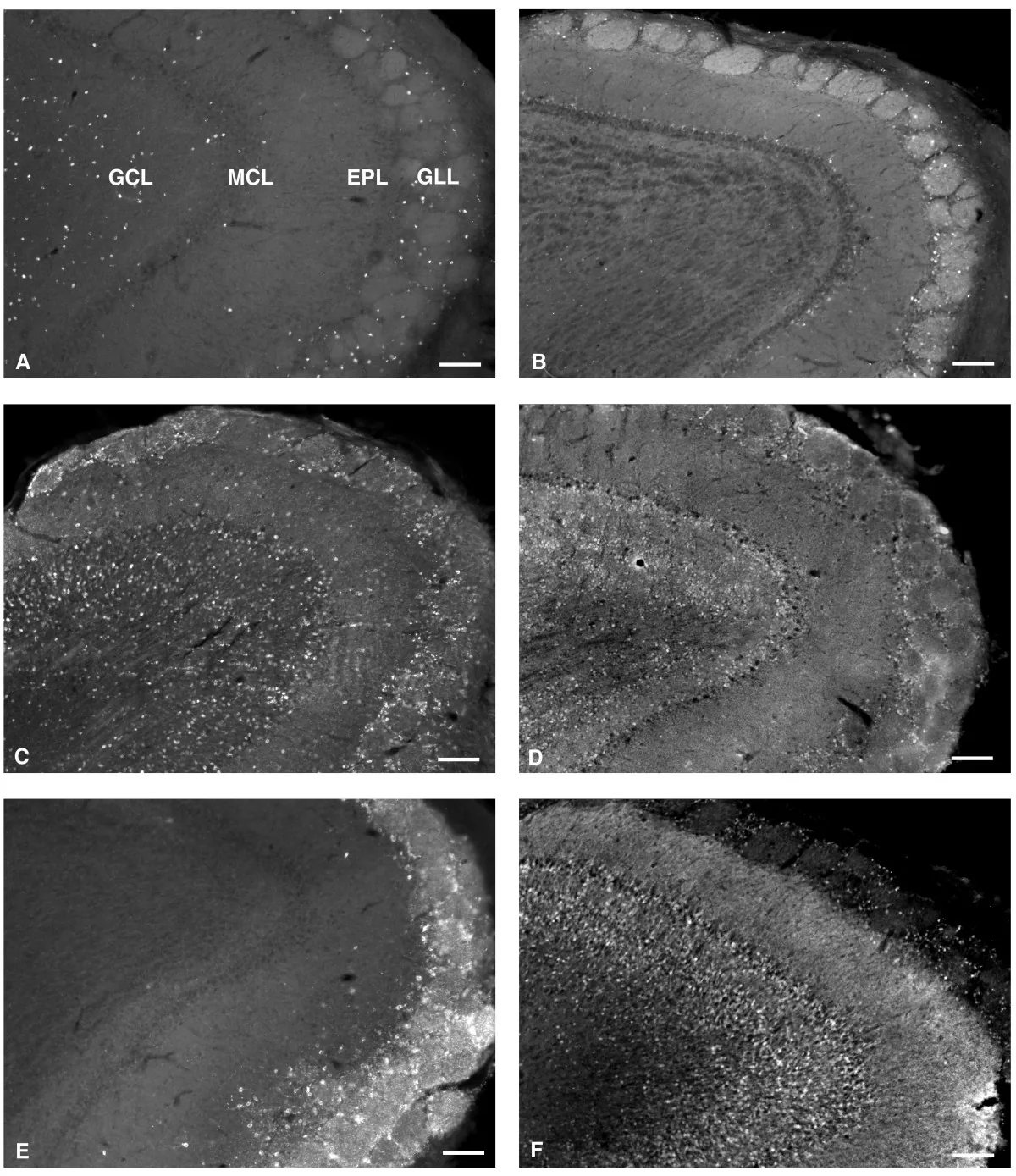
The window that opened was accidental. In the 1990s, Gage and his colleagues realized that bromodeoxyuridine, or BrdU, was sometimes used as a diagnostic tool in people with cancer to check how rapidly their tumours were dividing. If researchers could examine the brains of those patients soon after death, they could check whether neurogenesis had occurred in the interval. The team focused on the hippocampus, a brain region involved in memory and learning, because neurogenesis had been observed there in other adult animals. “So, we were able to do it,” Gage says. The researchers saw cells that had incorporated BrdU, meaning they had originated from dividing cells. Some were non-neuronal, but the team identified others as neurons. “We knew this was important,” Gage says. They brought in scientists from other laboratories to inspect the samples and sent tissue to collaborators in Sweden, who reached the same conclusion. The findings, based on brain tissue from five people, were published in 1998. [1] A light-hearted editorial in the same journal declared there was no longer a reason to lose sleep over “the inevitable, gradual loss of our precious and predetermined 100 billion neuronal quota.” The case looked settled.
The Positive Control That Came Back Empty
Twenty years later, the settlement came apart — and it came apart not in a grand experiment but in a routine check. Shawn Sorrells, a neuroscientist now at the University of Pittsburgh in Pennsylvania, was a postdoc in the lab of Arturo Alvarez-Buylla at the University of California, San Francisco, studying the amygdala, a brain region involved in processing emotions. Because neurogenesis had been established in the hippocampus by Gage and other groups, Sorrells’s project was to probe the amygdala for proteins indicative of cell division and immature neurons. When a lab technician was sectioning a sample of human brain tissue, Sorrells asked him to take sections from the hippocampus as well, so the tissue could serve as a positive control. Given the earlier findings, he thought newly generated neurons would definitely be found there. None showed up.
The confusion turned into a research program. Sorrells collaborated with Mercedes Paredes, another neuroscientist in the group who now has her own lab at the University of California, San Francisco, and with researchers at labs in Spain and China. Together they analyzed 59 brain samples from people of various ages and tested several methods to detect new neurons. [1] “We did this independently in three different labs, because I really wanted to be convinced,” Alvarez-Buylla says. [2] The checking and rechecking took time. “You start to realize it’s not just you, it’s not just the antibodies,” he adds — the pattern held across hands and instruments.
For Alvarez-Buylla, the stakes are personal and scientific at once. “If someone shows it clearly, I’ll be the first to be super happy and say, well, I didn’t waste my life studying a mechanism that is not present in humans,” he says. But when he looks at the data, he just doesn’t see it. That is the strange shape of this debate: the researchers on both sides are not fringe figures. Hongjun Song, a neuroscientist at the University of Pennsylvania in Philadelphia, puts it plainly. “The people who have positive and negative data are the top researchers,” he says, “and they are all doing good science.” When good scientists looking at the same tissue reach opposite conclusions, the disagreement is rarely about competence. It is about method — and about what counts as proof.
From Proving It Exists to Asking What It Does
The tools themselves are part of the problem. Today, detecting neurogenesis relies mostly on genetic markers associated with the process, which provide only indirect evidence that a new neuron exists. That indirection is why the same samples can support different readings, and why the field has spent so long arguing about antibodies and markers rather than about biology. The Sorrells team’s own numbers show how sharp the disagreement is: in their samples, the number of young neurons in the hippocampus drops steeply during a person’s first year of life, falls to a tiny number in later childhood, and is almost absent in anyone past age 13.
Gerd Kempermann, a neuroscientist at the German Center for Neurodegenerative Diseases in Dresden, sees the field entering what he calls a consolidating phase. “Yes, there are some gaps to be closed,” he says. “But at the same time, there’s just an explosion of opportunities.” That is not a verdict on the debate. It is a description of where the work is heading: from proving that the phenomenon exists to understanding what it does and whether it can be harnessed. Some researchers think the evidence for neurogenesis is already strong enough that the focus should shift to what these neurons do and, ultimately, to whether the process can be used to treat diseases involving neurodegeneration. The question of what it would mean if the brain could repair itself — and of how much evidence is enough — remains the live one. The empty positive control did not end the argument. It changed what the argument is about.
Sources
Mentioned organisations (context, not sources)
- Massachusetts Institute of Technology — Organisation (homepage)
- Salk Institute for Biological Studies — Organisation (homepage)
- University of Pittsburgh — Organisation (homepage)
- University of California, San Francisco — Organisation (homepage)
- University of Pennsylvania — Organisation (homepage)
- German Center for Neurodegenerative Diseases — Organisation (homepage)