The Experiment That Reversed an Older Result
The logic behind the new work begins with a result that pointed the wrong way. Earlier experiments by Timothy Wang at Columbia University in New York and his colleagues found that blocking electrical signals in the vagus nerve — the long cable connecting the brain to organs in the abdomen — made pancreatic cancer grow faster in mice. [2] That is a strange finding on its face. Cut a nerve’s traffic and the tumour thrives. So Lu Gan at the Huazhong University of Science and Technology in China and their team asked the obvious follow-up: does pushing signals the other way do the opposite? The answer, in mice, was yes. This is not a new drug. It is the reversal of a switch that was already known to matter. [2].
The hardware is modest. The team built an electrical device roughly one centimetre long that wraps around part of the oesophagus. Ultrasound waves sent from outside the body activate it, and it then delivers electrical signals along a branch of the vagus nerve running from the oesophagus to the pancreas. No wire crosses the skin. [2].
The test had a deliberate sequence. The device was implanted in mice while still inactive. Six days later, cancerous cells were injected into their pancreas. Only after tumours had formed did the team switch the device on — twenty minutes a day in half the mice, while the other half served as controls with the implant left dormant. The delay matters: the stimulation was aimed at established tumours, not at preventing them. [2].
Smaller Tumours, Fewer Escape Routes
The gap between the two groups was not subtle. About two weeks in, tumours in the control mice weighed roughly 230 milligrams on average. In the stimulated mice, the figure was about 190 milligrams — close to a 20 per cent difference. “I don’t think anyone would have predicted that big an effect,” Wang said. [2] Spread told a sharper story than size. In the control animals, pancreatic cancer cells had reached more than ten other parts of the body on average. That is about double the degree of spread seen in mice that received electrical stimulation. Fewer tumours is one thing; fewer tumours with fewer satellite colonies is a different order of result, because it is metastasis that usually writes the ending in this disease.
The team did not measure survival. What the researchers did check was short-term safety, and they found no known issues. The device, at least over this window, did not appear to harm the animals. [2].
The scale of the problem it addresses is worth holding in view. More than 500,000 people are diagnosed with pancreatic cancer each year, and only 13 per cent survive five years. [2] That survival figure makes it one of the deadliest forms of cancer. A 20 per cent difference in tumour weight in a mouse is not a cure, but against those odds, any lever that moves the tumour is worth mapping.
Why the Immune System Was Locked Out
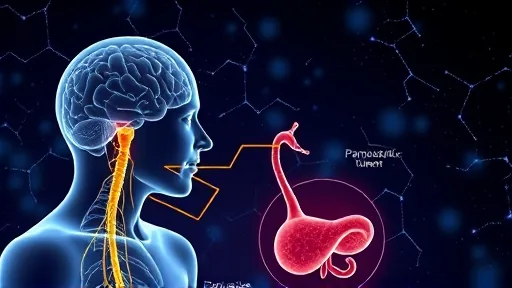
The mechanism the team found is about who gets inside the tumour. Electrical stimulation appeared to raise the number of cancer-killing immune cells — T-cells and natural killer cells — within the tumours. At the same time, it reduced the abundance of another immune population, called MDSCs, which suppress T-cells. In plain terms: more attackers, fewer guards telling the attackers to stand down.
How the nerve does this is not settled. Prior studies suggest that stimulating the vagus nerve increases the release of a neurotransmitter called acetylcholine, which can bind to receptors on the surface of immune cells and cancer cells and alter their behaviour. [2].
The immune angle matters because of a wall that has stopped other treatments. Pancreatic cancer is notorious for an almost zero response to immunotherapy, and most believe the reason is its tremendously fibrous structure, which keeps immune cells from getting in. Wang’s framing is direct: if electrical stimulation lets T-cells infiltrate the pancreas, immunotherapy stands a better chance. [2].
The team tested that idea with a drug called anti-PD1, which activates T-cells but is usually ineffective against this cancer. Given alone, anti-PD1 had no substantial effect on tumour growth in the mice. Combined with electrical stimulation, it slowed tumour growth and stopped cancers from spreading more than stimulation alone did. [2].
Wang’s assessment of what this could mean for patients is blunt. “That could be very significant for patients,” he said. [2] “Getting immunotherapy to work is the holy grail right now for pancreatic cancer. It’s thought to be key to long-term survival.”
The Road From a Mouse to a Patient
The next step the work itself points to is replication in a harder model. Further research should first test whether the findings hold in other mouse models of pancreatic cancer that better mimic what happens in people — for instance, mice genetically engineered to develop pancreatic tumours. Those studies could also assess survival outcomes, the measure this first round skipped. If that succeeds, trials in people could start within the next couple of years. [2].
There is also a question of pairing. Wang suggests the approach may be even more effective when combined with a non-immunotherapy drug called daraxonrasib, which roughly doubles survival time in people with pancreatic cancer. That is a combination hypothesis, not a tested result, and it sits downstream of the replication work. [2].
The precedent that shows what to expect sits in another tumour type. Electrical stimulation is already used to treat some kinds of brain cancer, such as glioblastoma. That modality, known as Tumour Treating Fields, is non-invasive and uses a specific sinusoidal electric field ranging from 100 kHz to 300 kHz at an intensity of 1 V/cm to 3 V/cm, with the purpose of inhibiting cancer cells. [2]. Wang’s own words place the new work in that lineage: “It’s the first study I know where electrical manipulation has been used to treat tumours outside the brain.” [2] The distinction is not cosmetic. Brain cancer sits behind a barrier that has long made electrical approaches attractive there; the pancreas does not. Extending the principle to an organ in the abdomen, reached through a nerve branch and switched on by sound waves from outside the body, is a different physical problem with a different set of risks. The brain work shows the concept can survive contact with patients. Whether a one-centimetre cuff on the oesophagus can do the same is the question the next round of experiments is built to answer. [2].