Optogenetics Neutrinos and Chiral Molecules Win Nobel Prizes
Flipping a Neuron With a Beam of Light
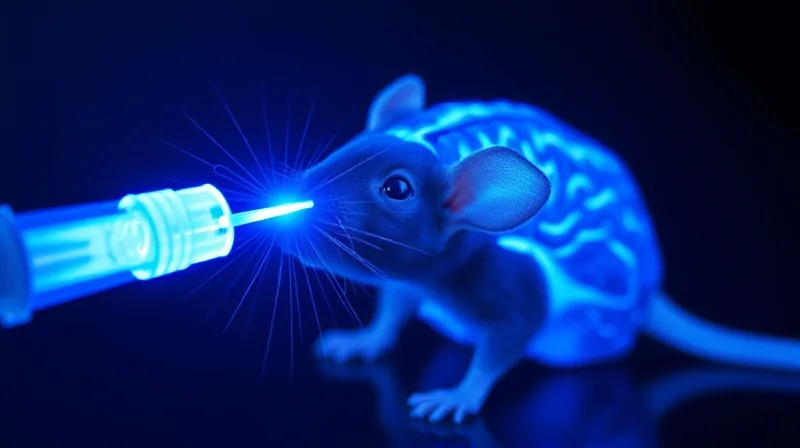
Somewhere in a laboratory, a thin fiber optic cable carries a pulse of blue light into the brain of a living mouse. The 2026 Nobel Prize in Physiology or Medicine went to Karl Deisseroth, Peter Hegemann and Georg Nagel for exactly this — the discoveries concerning light-gated ion channels and optogenetics. [1] Hegemann and Nagel found the raw material first: a light-sensitive protein called channelrhodopsin in single-celled algae. Deisseroth then built the rung above it — a method to place that switch into nerve cells and use it to switch their activity on or off. Before this work, controlling a specific neuron meant electrodes, chemicals, or lesions, all of which are blunt instruments that treat a circuit like a room wired to a single breaker.
What changed is not just precision but addressability. The Nobel organization states the technique makes it possible to switch on, or off, the activity of individual nerve cells in a living brain. Memory, emotion and behavior are not properties of one neuron; they are properties of circuits. Silencing a single node and observing the resulting change in the animal’s behavior turns a correlation into a causal test. Researchers now use optogenetics to investigate neural circuits involved in memory, emotions and behavior, which is why the breakthrough sits at the center of modern neuroscience rather than at its periphery.
The same tool that lets a scientist ask what a circuit does also raises the question of who gets to ask, and about whom. A method that can activate or silence nerve cells in a living brain is a method that, in principle, touches the machinery of thought itself. The three laureates share 12 million Swedish kronor, a sum that is split precisely because the discovery was never one person’s alone: the protein came from algae, the tool came from engineering, and the questions came from medicine.
A Kilometer of Ice as a Telescope
The second limit being tested this week is not spatial but statistical. A particle called the neutrino passes through the Earth as if the planet were fog. It carries no charge, interacts almost never, and arrives from sources so distant that the light from them left before our solar system existed. How do you catch something that refuses to be caught? You build the largest detector you can and you wait. Francis Halzen, a Belgian particle physicist and professor at the University of Wisconsin-Madison, received the 2026 Nobel Prize in Physics for decisive contributions to the IceCube Neutrino Observatory and the discovery of high-energy neutrinos of astrophysical origin. [1]
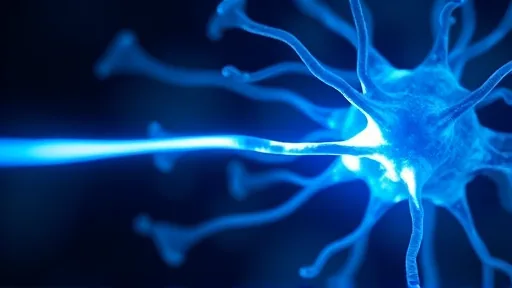
IceCube is not a building. It is a cubic kilometer of Antarctic ice, instrumented with sensors buried deep enough that the ice itself becomes the detector medium. When a neutrino does interact, it produces a faint cone of light, and the sensors reconstruct the direction it came from. The 2026 Physics citation names the discovery of high-energy neutrinos of astrophysical origin — particles that did not start on Earth, that crossed interstellar space, and that arrived here carrying information no photon could deliver.
Astronomy has always been a science of what light can reach us. Neutrinos are a second messenger, and a second messenger changes what counts as observable. A supernova that is hidden behind dust, a black hole that swallows its own light — these become visible in a channel that ignores the obstacles.
The Chemistry prize this year went to Henri B. Kagan and Kenso Soai for discoveries involving asymmetric organic synthesis — research into how molecules can exist as mirror images of one another and how chemical reactions can favor one particular form. [1] Where IceCube reads the universe by catching what almost never interacts, Kagan and Soai read molecules by exploiting a difference that is almost invisible: the handedness of a shape.
The Mirror Image That Decides Whether a Drug Works
They have identical atoms, identical bonds, identical mass — and they are not the same substance, because your body is itself handed. Receptors, enzymes and transport proteins are themselves handed, and a molecule’s orientation can influence how medicines interact with the human body. Kagan and Soai’s work explored how chemical reactions can favor one particular form, which is the difference between a synthesis that produces a medicine and a synthesis that produces a medicine plus its useless or harmful twin. The discoveries have significant implications for pharmaceutical development, where a molecule’s orientation can influence how medicines interact with the human body.
This is the ethical and societal dimension in its most concrete form. A drug is not a formula; it is a formula plus a geometry, and the geometry decides whether the molecule docks or bounces. Thalidomide is the historical shadow here — the same compound, two mirror forms, one therapeutic and one teratogenic — and it is why regulatory agencies now demand that chiral drugs be characterized form by form. Kagan and Soai’s contribution is not a single drug but a set of rules for making the right mirror image on purpose. That is the difference between finding a needle and manufacturing one.
Optogenetics works because light-sensitive proteins can switch the activity of individual nerve cells on or off. Asymmetric synthesis works because a catalyst presents a chiral surface that steers a reaction toward one geometry. The 2026 Nobel season began on October 5 with Medicine and continued through Physics, Chemistry, Literature and Peace, with the Sveriges Riksbank Prize in Economic Sciences in Memory of Alfred Nobel still to be announced on October 12. [1]. Each full prize this year is worth 12 million Swedish kronor, following a one-million-kronor increase announced by the Nobel Foundation in September, and each can be shared by up to three laureates — which is why the Medicine award is divided three ways and the Chemistry award two.
The Literature prize went to Canadian author and poet Anne Carson, whose writing blends classical influences with contemporary storytelling and who has built a career spanning poetry, essays and experimental narratives. The Peace Prize went to South African jurist Navanethem “Navi” Pillay, a former UN High Commissioner for Human Rights who has served as an International Criminal Court judge and investigated serious violations of international law, with landmark work addressing apartheid, genocide and accountability for atrocities. The Norwegian Nobel Committee announced her selection on October 9. The ceremonies themselves are still months away: the laureates are announced in October, while the formal award ceremonies take place on December 10, the anniversary of Alfred Nobel’s death, with physics, chemistry, medicine, literature and economic sciences presented in Stockholm and the Peace Prize in Oslo.
Sources
Mentioned organisations (context, not sources)
- Nobel Foundation — Organisation (homepage)
- University of Wisconsin-Madison — Organisation (homepage)
- IceCube Neutrino Observatory — Organisation (homepage)
- United Nations High Commissioner for Human Rights — Organisation (homepage)
- International Criminal Court — Organisation (homepage)
- Norwegian Nobel Committee — Organisation (homepage)