
Why a Spacecraft Bears a Moon Captain’s Name
For decades, one question nagged at mission planners: how do you keep a resupply ship’s identity meaningful when the same basic vehicle flies again and again? Northrop Grumman’s answer has been to name each Cygnus after a figure whose life advanced spaceflight. This mission carries the name S.S. James “Jim” A. Lovell, honoring the former NASA astronaut who flew four missions — Gemini VII, Gemini XII, Apollo 8, and the Apollo 13 mission around the Moon. The naming ties a routine cargo flight to a specific human story.
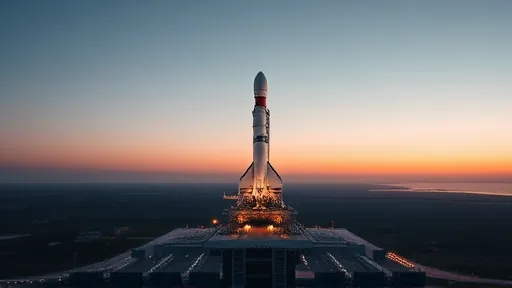
The spacecraft itself is the Cygnus XL variant, riding atop a SpaceX Falcon 9 rocket. Launch is targeted for no earlier than 10:47 a.m. EST on Sunday, Nov. 29, from Space Launch Complex 40 at Cape Canaveral Space Force Station in Florida. [1] The mission carries the designation Northrop Grumman CRS-25.
The payload is roughly 11,000 pounds of cargo — science investigations, supplies, and equipment bound for the International Space Station. That is roughly 11,000 pounds packed into a single uncrewed freighter. A prelaunch media teleconference is set for Monday, Nov. 23, at 12 p.m., streamed on NASA’s YouTube channel. The listed participants are Gaurang Patel, operations integration manager for NASA’s Low Earth Orbit Program; Jennifer Buchli, chief scientist for the same program; Dave Schiller, vice president for civil space and sciences at Northrop Grumman; and Jared Metter, director of flight reliability at SpaceX. [1] The panel spans integration, science, spacecraft, and rocket teams.
The Handoff in Orbit and the Long Stay
Arrival is its own choreography. NASA astronauts Jessica Watkins and Luke Delaney, living and working aboard the station, will use the Canadarm2 robotic arm to capture the Cygnus XL on Tuesday, Dec. 1. [1] Ground controllers then install it to the Unity module’s Earth-facing port for unloading.

The spacecraft is scheduled to remain at the orbiting laboratory until May 2027. That is not a delivery; it is a long-term tenant. When it finally departs, it will carry several thousand pounds of disposal items and other unneeded cargo, burning up harmlessly during re-entry. The freighter arrives full and departs loaded with disposal items, burning up during re-entry.
The research manifest is where the mission earns its keep. The investigations aboard aim to improve drug delivery for cancer and osteoarthritis, predict cancer spread, and advance treatments for muscle loss. They also target improved radiation sensing and advanced food production for future long-duration missions.
The precision matters. These are investigations into drug delivery and disease models, not cures handed to patients. These are investigations into drug delivery and disease models, not treatments ready for patients.
Food Production as the Forward Horizon
The forward-looking thread in this manifest is food production for future long-duration missions. That phrase is the hinge. Every experiment listed is framed against a horizon beyond the station’s own needs — a crew that must eat, stay radiated-aware, and keep muscle and bone intact far from resupply.
Coverage of the launch and docking will stream across NASA’s platforms, with live streaming and blog updates beginning no earlier than 10 a.m. on Nov. 29 as countdown milestones occur. On-demand video and launch photos follow shortly after liftoff. Members of the public can register to attend virtually, receiving curated launch resources, notifications about changes, and a stamp for the NASA virtual guest passport after launch. The virtual guest program is a small thing, but it turns a launch into an event a family can attend from a kitchen table.
Seen broadly, CRS-25 is a reminder that the station’s value is cumulative. A single cargo run delivers pounds and experiments; a sequence of them, sustained until 2027 and beyond, delivers a body of knowledge about how humans and their medicine behave off the planet.