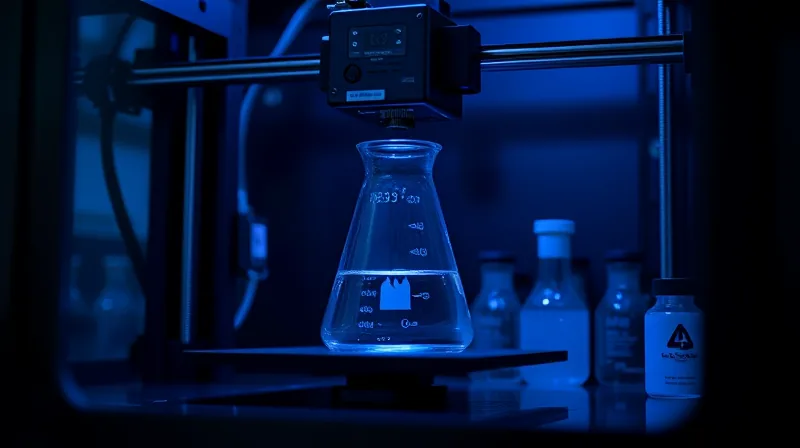
3D Printers Transform Scientists into Lab Equipment Makers
The first 3D printers were built for engineers prototyping machine parts. They laid down plastic layer by layer, creating brackets and housings for industrial products. The technology was expensive, slow, and confined to well-funded manufacturing floors. Researchers in biology labs rarely gave it a second thought.
That changed when the machines became affordable. Today, an entry-level 3D printer costs less than $2,500, with the cheapest models selling for as little as $200. A researcher can buy a Bambu X1C for roughly $1,200, a Prusa MINI for about $550, or build a Voron 0 from a kit for a few hundred dollars. These prices have put the technology within reach of nearly every laboratory on Earth.
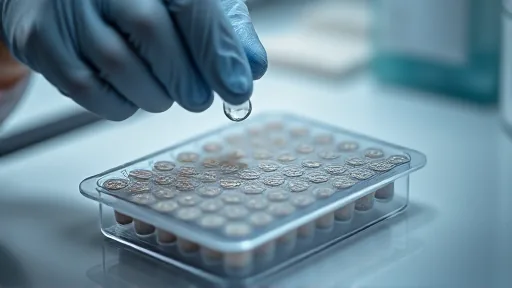
The shift matters because scientific research is full of tedious manual tasks. Trevor Rife, a plant scientist at Clemson University in South Carolina, knows this well. [2] During his PhD in genetics, he had to extract DNA from freeze-dried tissue by grinding it in a 96-well plate. The process required placing a ceramic bead into each well by hand, capping the plate, and shaking it so the beads would crush the tissue and release the DNA.
The task was not difficult, but it was a chore. Automated bead dispensers existed, yet his laboratory could not afford them. So Rife made do with manual labor, spending hours on a task that a machine could handle in minutes. It was exactly the kind of bottleneck that slows down research and drains morale.
From Industrial Prototyping to Lab Bench Essential
Rife now has all the bead dispensers he needs. He did not buy them. He builds them using a 3D printer. Each dispenser costs roughly $10 to make, a fraction of the price of commercial equipment. [2] He concedes the hardware is not groundbreaking. But the savings in time and money make these dispensers his favorite tools created with 3D printing.
The COVID-19 pandemic accelerated this trend dramatically. When companies stopped shipping materials to laboratories, researchers found a workaround. They could still get printer filament, and with it, they could manufacture their own tube racks and other essential items. The supply chain broke, but the 3D printer did not care. It just kept laying down plastic.
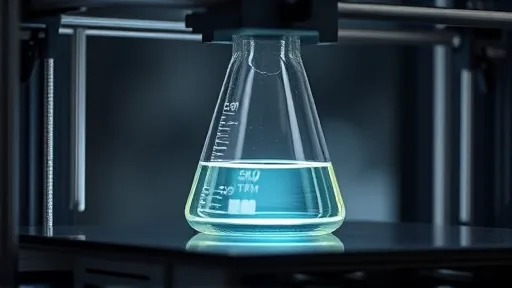
The approach has become a lifeline for scientists worldwide. Rife has designed several simple tools for plant geneticists, including a tray for counting seeds, squares to sort seeds by size, and a hole-punch adapter for tubes used to collect tissue. Each design solves a specific, mundane problem that researchers face daily.
His goal is to make plant research more accessible globally. E-mailing a design file is far easier than shipping a piece of equipment across borders. A researcher in a low-resource setting can download a file, print the tool, and get to work. The barrier to entry has collapsed from expensive procurement to a few dollars of plastic filament.
A Parallel Path to Affordable Research Tools
The idea of using 3D printing for scientific equipment is not unique to Rife. Researchers across disciplines have embraced additive manufacturing for years. The technology, also known as additive manufacturing because it builds objects layer on layer, has become a standard tool in many laboratories. It is no longer a novelty but a practical solution to chronic funding constraints.
The Nature feature that reported on Rife’s work also documented how researchers in fields from chemistry to marine biology are printing their own centrifuges, microscope parts, and custom reaction vessels. [1] Each had found a different application, but all shared the same motivation: commercial equipment is too expensive, and custom solutions are too slow to source. A 3D printer solves both problems at once.
The combination of cheap hardware and open-source design repositories means that a scientist can download, modify, and print a tool in days, not months. The feedback loop is tight, and the cost of iteration is nearly zero.
The implications extend beyond convenience. When a researcher can print a tool for $10 instead of paying hundreds for a commercial equivalent, they can allocate their budget to other priorities. More experiments, more samples, more data. The math is simple, and the impact compounds over time.
The Unanswered
Questions of a Maker Revolution
The enthusiasm for 3D printing in science raises questions that researchers are actively investigating. How much of a laboratory’s equipment could be printed rather than purchased? Which tools are too complex or too precise for additive manufacturing? Early results suggest that even sensitive instruments like spectrophotometers and pH meters can be printed with sufficient accuracy for many routine assays.
What is clear is that the technology has changed expectations. A scientist no longer has to wait for a supplier or a grant to acquire a simple tool. They can design it, print it, and test it in the same week. The shift is quiet but profound, altering the relationship between researchers and their equipment.
Rife’s bead dispensers are a small example of a larger movement. They are not groundbreaking hardware, as he puts it. But they represent something important: the democratization of laboratory infrastructure. When the tools of science become cheap and accessible, the science itself becomes more open.
The movement is still young, and its limits are unknown. But for researchers who remember the days of hand-placing ceramic beads into 96-well plates, the change is already revolutionary. The next question is not whether 3D printing belongs in the lab. It is how far the approach can go — and which commercial monopolies will fall first.