The Missing Hedge
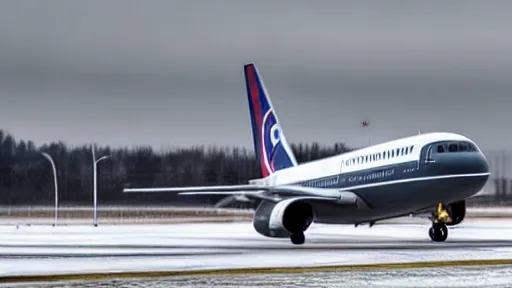
If jet fuel stays near this autumn’s levels, the winter timetable of 2027 points one way: a market run by carriers with a refinery next door, a hedging book — the portfolio of fuel-price contracts an airline holds — deep enough to swallow a doubling, or a state willing to stand behind the losses. The arithmetic already points in that direction. One hard marker of it arrived on a Friday in late November 2026. According to Al Jazeera on 27 November 2026, the board of Norse Atlantic Airways AS filed a bankruptcy petition with the Agder District Court in Norway. [2] Its stated conclusion was that there was “no longer a basis for continued operations.” [2] The Norwegian operating unit of the long-haul budget carrier cancelled every flight. Ticket sales stopped. Two days earlier the company had described its financial position as “critical.” On Thursday its shares closed 85 percent lower. The rescue never arrived: “Despite extensive efforts, the company has so far not been able to secure sufficient funding to meet its short-term liquidity needs,” Norse Atlantic ASA said. [2].” The petition covers only the Norwegian subsidiary. The listed parent, Norse Atlantic ASA, and a UK subsidiary are still hunting for a solution for the rest of the group.
Behind the filing sits a single line item. Long-haul flying burns large volumes of kerosene per seat. For some low-cost carriers, fuel can reach 60 percent of total costs. Airlines normally insure against this in two ways: they hedge future fuel purchases, and they stockpile supply. A hedge is a contract that fixes a price in advance; without one, the market price applies on the day of purchase. Norse did neither. Aviation analyst John Strickland described the gap in plain terms: “Many airlines hedge their fuel purchases and stockpile fuel to protect themselves against crises like this. Norse Atlantic did not hedge at all, so it had no protection against rising prices.” [2] The consequence is mechanical. An unhedged carrier pays the spot price — the price for fuel bought today for immediate delivery — for every tonne it burns. On routes that consume fuel in bulk, that price lands directly on the income statement. Norse was selling seats on price alone. There was no cushion between the barrel and the balance sheet.
The retreat had begun long before the petition. More than 700 flights were cancelled after the war started. In May, 75 jobs went, with a $50m savings target attached. The Los Angeles summer schedule was dropped in April. The New York routes were pulled later. Then came the step that closed the exit. The lessors of the Boeing 787 fleet issued termination notices for all of the aircraft, a move the airline is contesting. A lessor owns the plane and rents it out; when the rent looks unsafe, the asset is taken back. Strickland’s reading: “It means Norse Atlantic is unlikely to continue operating because the lessors have terminated those contracts.” Those owners were protecting their own finances, he argued, and doubt about payment is enough to end a contract. The leases Norse held before termination were favourable, and terms like them are unlikely to come again. Chief executive Eivind Roald’s summary was shorter: “We were unable to absorb the extra cost … Fuel is what toppled this company.” [2].”
The Crack Spread Broke the Arithmetic
Fuel did not simply become expensive. It became expensive faster than crude, and that gap is where the airline math fails. Airlines buy jet fuel, not crude oil, so the premium between the two matters as much as the oil price itself. Global jet fuel averaged about $99 a barrel on February 27, the day before the war began, on IATA figures. By April it had more than doubled, to $209. Prices eased in early summer, then climbed again. Early October brought an average of roughly $190 a barrel, and more than $200 in Europe. The reason is a map of refineries. Before the war, Gulf plants supplied about one-fifth of the world’s jet fuel and kerosene exports. Disrupting that supply pushed the “crack spread” — the premium of jet fuel over crude oil — to record levels. Jet fuel therefore rose far faster than the oil it is made from.
The industry-wide bill follows directly. IATA expects airlines to spend about $350bn on fuel this year, up from $252bn in 2025. Fuel now accounts for 31.4 percent of operating costs, against roughly 25 percent before. Global airline profits are forecast to halve, to $23bn — a net margin of just 2 percent. [2]. Willie Walsh, IATA’s director general, put the revision bluntly: “War-related disruptions in the Middle East and rising fuel costs have shifted the outlook for airlines to the worse.” The association’s chief economist, Marie Owens Thomsen, called the numbers “eye-watering stuff,” and added: “It will affect absolutely everyone in the global economy.” [2].” A two-percent margin leaves almost nothing to absorb a shock that arrives by the barrel. [2].
Spirit Airlines, the US ultra-low-cost carrier, ceased operations on May 2. It had flown for 34 years and had filed for bankruptcy twice since 2024. Talks over a $500m federal rescue failed, and fuel prices were cited among the causes: “It is with great disappointment that on May 2, 2026, Spirit Airlines started an orderly wind-down of our operations, effective immediately.” In Europe, Latvia’s airBaltic gave up its expansion plans in August and entered Chapter 11 restructuring in the United States, the court-supervised process that keeps a company flying while debts are renegotiated. On October 5 it said it would cut 500 to 700 of its roughly 3,000 jobs, fly a smaller fleet and serve fewer destinations. Barcelona-based Volotea opened formal negotiations with creditors on September 29 under Spain’s pre-insolvency procedure — a Spanish legal route for negotiating with creditors before formal bankruptcy. It puts the extra cost of fuel since March at about 150 million euros ($174m) and plans to shrink from 44 aircraft to 30-35, while flights continue. Spain’s Plus Ultra suspended Colombia flights in June and, on November 17, its Madrid routes to Buenos Aires and Lima indefinitely, leaving Venezuela as its only market. Even the large trimmed: United cut capacity by 5 percent on less profitable routes, and KLM and Finnair extended suspensions of flights to Gulf hubs into 2027. [2].

Part of the cost has been passed on. US airfares were 23.4 percent higher in August than a year earlier. The five biggest US carriers earned 18 percent more passenger revenue in the third quarter, while traffic grew by less than 1 percent. That is pass-through — when a cost increase is shifted into the price the customer pays — at work, and it has a ceiling. As Oliver Wyman consultant Scott Laurence told Reuters: “Fares are really determined by demand rather than the cost inputs.” [2].” Demand, not cost, sets the price a passenger will accept, which is why deeper capacity cuts carry their own risk. What is certain is narrower than it first appears. The shock is measurable in dollars per barrel, and it moves value from carriers with thin balance sheets to carriers with thick ones. It does not automatically move to the traveller. Someone in the chain absorbs the difference, and the question is who has the fewest options.
Deep Pockets Absorb the Same Barrel
Survival in this market is a function of two things: where an airline’s fuel comes from, and how much cash stands behind it. The Gulf carriers have both. Emirates reported a 68 percent drop in profit before tax, to $1bn, for the six months to September 30. Capacity — the number of seats an airline offers for sale — fell 17 percent. Passenger traffic fell 25 percent. A bad half-year, and still a profit. Geography is the first advantage. Emirates, Qatar Airways, Etihad and Saudia operate close to some of the world’s largest refining centres. With Gulf refiners unable to export normally, local stocks grew instead of leaving. Qatar’s reserve cover — how long a country’s stored fuel would last at current use — rose by more than five months, and the UAE’s by about 15 days. In early October, jet fuel averaged about $165 a barrel in the Middle East, a visible discount to what carriers elsewhere were paying. The same barrel costs different money in different places.
Financial depth is the second advantage. Emirates’ fuel costs rose 60 percent before hedging. Hedging gains of $1.9bn cut the net increase to 13 percent. The region’s big airlines also entered the crisis with large cash reserves. Competition thinned at the same time. Finnair has suspended flights to Dubai and Doha until March 27, 2027, and KLM’s Dubai service is suspended until March 2027, which leaves more of the market to the home carriers. Gulf governments are working the supply side as well. Thani bin Ahmed Al Zeyoudi, the UAE minister of state for foreign trade, expects a plan to cut reliance on the Strait of Hormuz, particularly for oil, to reach zero by the end of this year. The advantage has limits. Qatar Airways trimmed departures by about 7 percent for the northern winter schedule. The Gulf carriers remain exposed to any renewed fighting in the region, and their refining advantage is only as durable as the peace around it.
Beyond this winter, protection is thinner almost everywhere. Ryanair has hedged only about 25 percent of its fuel for the year from April 2027. Turkish Airlines has hedged 12 percent. Air France-KLM is modelling a 2027 fuel bill after hedging of 10.4 billion euros ($12bn), against 9.2 billion euros this year. There is a reason for the hesitation. Ryanair chief executive Michael O’Leary warned of the risk “that oil prices might roll off and we catch ourselves on the wrong side of the market.” Some airlines are already testing whether they could withstand $200-a-barrel jet fuel that year. The dividing line is no longer size but market power. [2].
Sources