A House in al-Turbah, and a War Nobody Can Audit
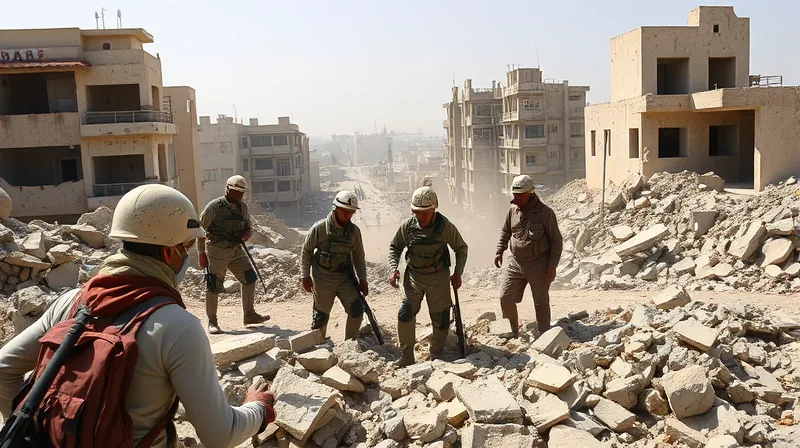
On Friday, in al-Turbah, a town south of the provincial capital Taiz in southwestern Yemen, rescue teams worked through a collapsed residential building. They recovered eight bodies. [1] Three people were still unaccounted for beneath the rubble. [1] The toll circulated by media affiliated with the Houthi armed group was 11 civilians killed, and most of the victims were children. [1] Every element of that account reached the outside world from one side of a front line.
The strike has not been independently confirmed. The Saudi-led coalition that supports Yemen’s internationally recognised government did not immediately comment on the al-Turbah report. This is the structural difficulty of covering Yemen in 2026: the count of the dead is produced by the organisations that are fighting the war. Houthi-affiliated television publishes one ledger, the Yemeni military’s spokesmen publish another, the coalition publishes a third, and none of the three can be audited from outside the country.
The same Friday produced the mirror image of that problem. The Houthis accused Saudi forces of striking a civilian boat and killing 19 people — a claim as unverifiable as the one from Taiz. [2]. Later in the day the coalition reported that it had destroyed a drone launched by the Houthis toward the Riyadh region. [1].
What connects the house in Taiz and the drone over Riyadh is timing rather than geography. Both fall inside the same twenty-four hours, and both belong to a war that now runs on two tracks at once — the slow battle for ground in the south, and a long-range exchange over cities, ports and power stations.
Missiles Over Riyadh, Fire at Hodeida
Before this July, the file looked frozen. A truce reached in 2022 had held for four years, and the war that began when the Houthis seized Sanaa in 2014 and Saudi Arabia assembled its military coalition in March 2015 had settled into a stalemate. That ended when the ceasefire collapsed in July 2026, as the United States’ war on Iran escalated hostilities and the front lines woke up. Since then the conflict has marked an uptick in violence after months of hostilities.
The coalition’s answer came in the form of what it described as a “special operation” against Hodeida port, aimed at what its spokesman, Turki al-Malki, called “targeted operational capabilities at Hodeida port that were used in smuggling operations and the transport of weapons and ballistic missiles”. [2] Strikes also hit Sanaa, Saada and Taiz governorates. [2] The Houthi reply was immediate and aimed at the centre of Saudi economic life. Two explosions were heard in Riyadh shortly after authorities issued and then lifted an alert warning of a hostile aerial threat; the coalition reported intercepting and destroying three ballistic missiles bound for the capital. [2] A tower in Riyadh’s financial district was struck, and Riyadh’s tallest skyscraper, which houses the sovereign wealth fund—a state-owned investment pool of the country’s savings—was damaged. [2].
The target list reads less like a battlefield map than like a balance sheet. The Houthis’ military spokesman claimed “accurate and direct” strikes on the Al-Shuqaiq power station and Jizan port, with “extensive damage”; two ballistic missiles were intercepted over the Jizan region and debris fell in Al-Shuqaiq. [2] The group warned airlines that Saudi airspace was unsafe except for the airspace over Mecca and Medina, sent emails telling shipping companies using Jeddah port to evacuate, and named Riyadh’s King Abdullah Financial District a military target. [2] A strike on a telecommunications facility in Hodeida killed 10 people and injured more than 20, according to the Houthis. [3] Read together, the pattern suggests that the assets being hit are the ones tied to the kingdom’s ports, finance and power.
On the ground, the direction of movement has been one-way. The Houthis launched a sweeping offensive in September, government forces withdrew this month from positions near the Bab al-Mandab strait and ceded territory, and the group has advanced close to Aden, the interim capital of the government that fled the Houthi takeover in 2014—that is, the temporary seat of a government that has lost its capital. [2] The casualty accounting matches the scale. The Houthis say coalition strikes killed 41 people in 24 hours; the Saudi-backed military says its own operations killed or wounded 193 Houthi fighters, and describes 647 strikes and targeting operations in recent hours — 16 airstrikes, 545 artillery strikes (gun fire from the ground), 36 drone attacks and 50 rocket-artillery strikes (rocket fire from the ground, as opposed to airstrikes) — that killed or wounded 122 field commanders and fighters and destroyed 56 vehicles and pieces of equipment. [2][4] On Monday, military spokesman Col. Majed Abdullah al-Nazili reported two civilians killed and eight wounded by a ballistic missile and a sniper in Taiz, and a missile launched toward Aden that fell in Dhamar province; local authorities in Lahj, according to the official SABA news agency, condemned an attack on trucks and passenger buses. [4].
The Shelter Appeal That Isn’t Funded
Some 13,343 people have been killed or injured since August, according to the World Health Organization. [1] On Friday the Food and Agriculture Organization and the World Food Programme listed Yemen among the conflict hotspots—places identified in advance as at risk of acute hunger—facing severe food insecurity, meaning not having reliable access to enough affordable food. [1].
The organisations doing the relief work describe a system running below the level of the need. The Norwegian Refugee Council warned this week that renewed fighting has displaced thousands of people and piled pressure on dangerously underfunded aid efforts, and noted that aid from the United States, Germany and others has shrunk considerably in recent years. [1] The concrete number: the council has received only 12% of the funding it requires for emergency shelter support in Yemen so far this year. [1]. “Fighting has again displaced entire communities, while disrupted supply routes have driven up food and fuel prices,” said Jan Egeland, secretary-general of the Norwegian Refugee Council, warning that families across Yemen are being pushed deeper into need. [1] “All parties to the conflict bear responsibility for the vast scale of harm here,” Egeland stated, demanding that “the powerful countries backing the armed actors must commit to making this a reality” on humanitarian access—aid agencies’ ability to physically reach people in need—and civilian protection. [1].
That demand points to the question the coming months will have to answer, and it is a question of accounting before it is one of politics. The 12% figure is produced by the aid system itself, not by a combatant, which makes it the rare number in this war that can be checked. What remains unresolved is whether the shortfall is money that has not been pledged or access that has not been granted — and whether the capitals supplying the weapons on both sides will accept that distinction as their own responsibility. [1].

Sources
Mentioned organisations (context, not sources)
- World Health Organization — Organisation (homepage)
- King Abdullah Financial District — Organisation (homepage)
- SABA news agency — Organisation (homepage)
- Food and Agriculture Organization — Organisation (homepage)
- World Food Programme — Organisation (homepage)
- Norwegian Refugee Council — Organisation (homepage)