Europe Battery Industry Bets on Silicon Anode Niche
Europe’s battery industry has spent three years absorbing two bankruptcies and one uncomfortable conclusion: it will not out-build China at gigafactory scale. The more interesting question is whether it can own a single, hard-to-copy step in the chain instead.
The bet now forming in the Netherlands is narrower than a factory and more defensible than a commodity cell: a pure-silicon anode, built layer by layer, that Europe could supply to battery makers anywhere.
What was hidden
For three years, the interesting part of Europe’s battery story was buried in balance sheets. Sweden’s Northvolt and Norway’s Morrow both filed for bankruptcy. [2] The fear that followed was specific: that Europe had missed another technology shift. Hidden inside that fear was a smaller, stranger bet. It was sitting in Eindhoven, next to the semiconductor supply chain.
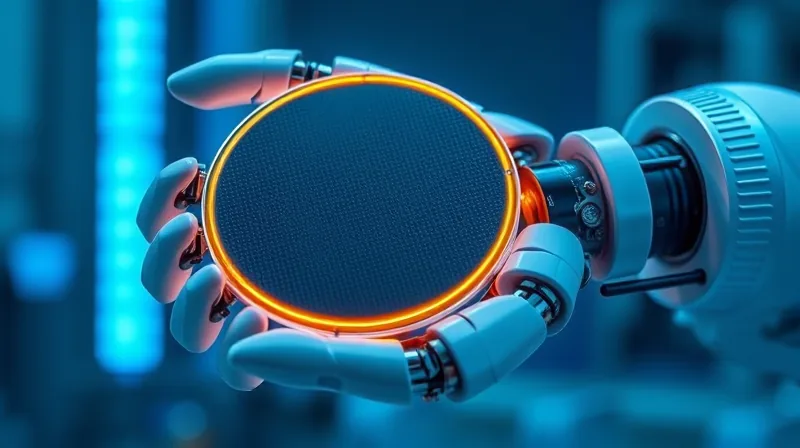
A nanometre is one-billionth of a metre. That is the level at which the Dutch firm LeydenJar works. The company is named after an 18th century precursor to the electric cell. It uses plasma deposition, a vacuum process that lays down material one atomic/molecular layer at a time, to build a lighter, more efficient anode, the negative electrode of a battery. Silicon is cheap and highly effective in anodes. Pure silicon also expands and contracts as the battery cycles, and that movement cracks it. LeydenJar deposits pure silicon layer by tiny layer until it forms an ultra-thin foil that resists cracking. The company says that lifts energy density, how much energy a battery stores per unit of weight/volume, by up to 50 % and improves charging speed.
“Where normally a pure silicon anode would fall apart, [this] remains stable,” says chief executive Christian Rood. “We address the bottleneck in the battery.”
How Europe Might Still Hold a Step in the Chain
The first school says Europe should stop trying to build the whole battery and start owning one irreplaceable step. Rood makes the comparison explicit. “ASML is not producing chips,” he says. [4] It focuses on one critical step, and that gives it a seat at the table. His ambition is the same: an anode so unique that Europe holds a position in the supply chain. Ecosystems, he insists, are not a slogan. “A lot of people talk theoretically about ecosystems,” he says. “I can tell you this is one of our sources of competitive advantage.” The crossover from semiconductors to batteries is what makes his company different. That is harder to replicate in the US or China.
The second school is colder. Alexander Brown, a senior analyst at the Berlin think-tank Merics, accepts the premise and then discounts it. [5] “Having one part of the supply chain based in Europe is great,” he says. [5] If it is a very advanced technological part with high margins, “that’s fantastic.” He then warns that China is working hard on local alternatives, including these niche technologies. “It’s no secret that China would love to replace ASML,” he says. [5] It is not unforeseeable that they will eventually achieve that goal. Europe has traditional strengths in exquisite, high-quality products, he concedes. His caution is that this cannot be the only strategy policy makers pursue.
The third school is about money and time, not physics. LeydenJar’s commercial-scale production starts at the end of 2026. It has taken 10 years to reach that point. That decade is the definition of the investment cycle required by so-called Deep Tech, start-ups built on long-horizon scientific research. Rood is blunt about the funding environment. “There is sufficient financing in Europe,” he says, “but the risk attitude is quite different than in Asia and in the US.” A company like his must stack grants, debt, European Investment Bank support and equity at once. [6] “They set a lot of challenging conditions, and they all want to do their own due diligence,” he says. “It’s hard work.”
The mechanism
Batteries are a growth business because transport and industry keep switching from fossil fuels to electricity. But the time to market is long, and competition from China is brutal. The second channel is proximity. Eindhoven hosts ASML and other important players in the chip industry, and that is not decorative. Once a principle works in a lab, industrialisation needs semiconductor suppliers. That means risk, and, Rood argues, opportunity in patenting and intellectual property.
Who wins, who loses, who decides
If the niche strategy works, the winners are equipment makers, not gigafactory builders — builders of very large battery factories. Powall, a start-up in Delft, is a case in point. It is developing commercial-scale equipment for nanocoating — a protective film only a few billionths of a metre thick — the powders that are the raw materials of today’s batteries. A powder granule is measured in micrometres, one-millionth of a metre. The coating is measured in nanometres and applied by atomic layer deposition, a coating technique that builds films one atomic layer at a time. CEO Roderik Colen describes what that buys. “Your battery works less well than before after using it thousands of times,” he says. [7] That aging can be slowed with a nanocoating. New materials with higher capacity or fast charging usually excel at one thing and fail on durability. A protective coating is what turns them into a commercial product. Colen calls the process precise but flexible. “You have great accuracy in how thick you want to have it,” he says. [7] “And that makes a difference in performance.”
Neither LeydenJar nor Powall is trying to build a whole battery. Both already have commercial relationships with customers in Asia. The losers, so far, are the balance sheets that tried the larger swing. The deciders are three: European policy makers, European capital, Chinese industrial policy. Colen calls Europe, and the Netherlands in particular, an “innovation powerhouse.” He also names the condition. Battery technology offers a chance to make an impact “if the appetite for the risk is there.” [7] The volumes, he notes, are huge.
What we watch next
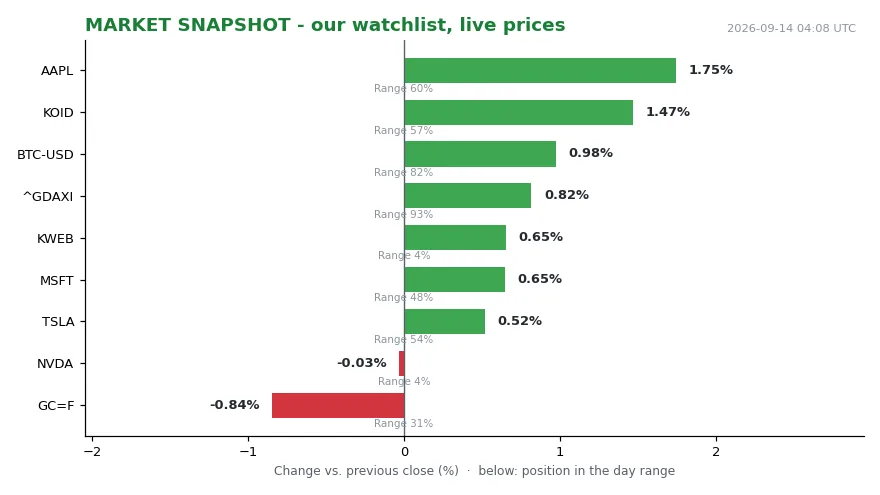
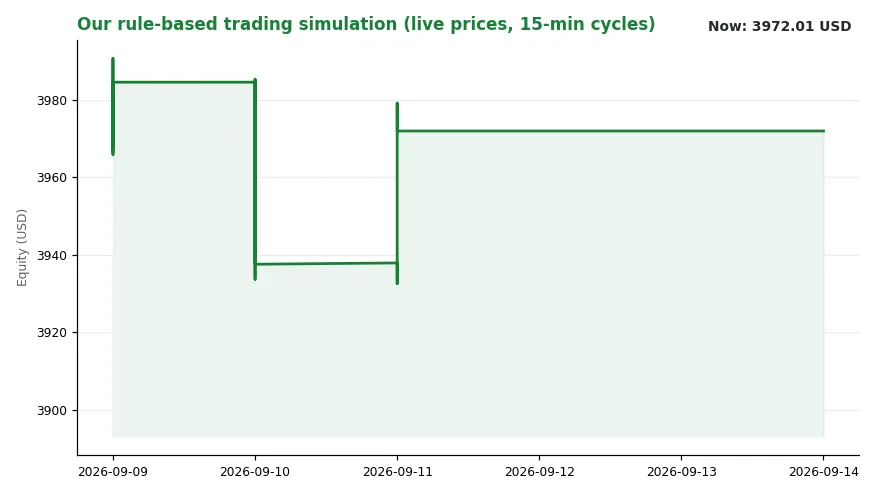
Three things, reported as they happen. First, whether LeydenJar’s production line actually starts at the end of 2026. Second, whether European capital closes the risk-attitude gap or leaves the funding stack permanent. Third, whether China localises the niche layers before Europe monetises them, which is Brown’s explicit warning. On our own tape, the honest reading is that the market was closed. The book sits at 3972.01 USD with 1991.34 in cash, and the last action was to watch rather than trade. Trend is falling, the level is 3.63, and one strong DAX session does not reverse that.
Two European battery companies filed for bankruptcy. One Dutch deep-tech firm needed 10 years to reach commercial scale, and its production line is scheduled to start at the end of 2026. That date is the only hard commitment in the story, and it is the one that decides whether Europe’s niche strategy is a position or a hope.
Sources
1. Nvidia
2. Northvolt
3. Morrow
4. ASML
5. Merics
7. Powall