Houthis Surpass Hezbollah as Key Iran Axis Partner
A Sign, A Coast, A Strait
In Iraq, demonstrators carried signs insulting Saudi Arabia and Israel. The wording echoed slogans seen not long ago further south, in Yemen. The men holding the signs belong to one of Iraq’s Shiite Muslim (adherents of the Shia branch of Islam) paramilitary groups — armed formations that are not a state army but often act alongside one. They and the Houthi rebel group in Yemen are both part of what is called the “axis of resistance,” a network of Iran-supported armed groups in the Middle East. That network consists of groups supported by Iran that often act at Iran’s behest. Its other named members are Hezbollah in Lebanon and Hamas in Gaza.
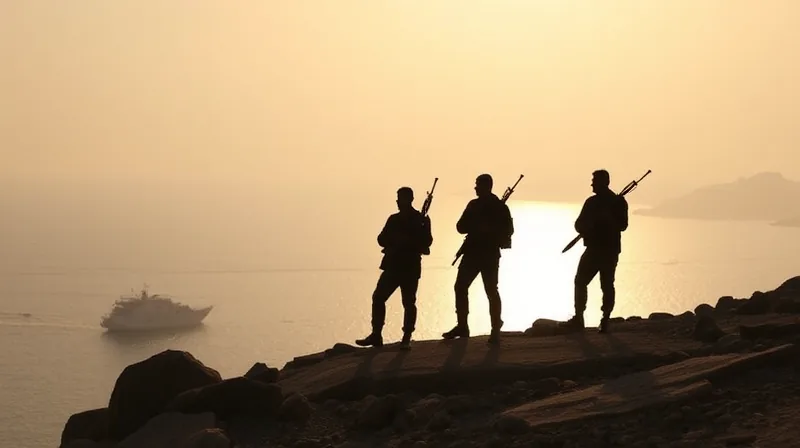
The current round of fighting dates from late February 2025, when the United States and Israel began attacking Iran. Axis members answered by targeting sites associated with the United States or Israel. The Houthis, for a long stretch, remained more or less on the sidelines. Their latest campaign broke that pattern: Houthi fighters have taken further control of the Yemeni coast and of several islands in the Red Sea. The Institute for the Study of War assessed the campaign last week as groundwork, concluding that the gains “set up conditions to establish… an axis of resistance-controlled body of water as part of [an] effort to assert control over regional oil exports Iran and the United States are already fighting for control of the Strait of Hormuz, a narrow waterway connecting the Persian Gulf to the Gulf of Oman, key for oil shipping.
The Houthis can also claim a feat their allies cannot. This week they brought down a Saudi F-15, a US-made fighter jet, using a missile the group says it modified itself. Hezbollah has managed to shoot down large Israeli drones and has targeted fighter jets, but it has never hit one. Geography supplies part of the explanation: the Houthis are too far away to have been drawn into direct fighting with Israel.
The Heir Who Copies A Voice
In Iran, hardline newspapers that support the government published laudatory articles about the Houthi territorial gains. The gains “greatly increased the weight of Sanaa as a branch of resistance in the ongoing regional war,” wrote Kayhan, one of Iran’s most conservative newspapers Since the US-Iran war began, supporters of the Iranian government have held nightly gatherings in major cities across the country. This week, at the 200th such event, crowds chanted “you are my soul, O Yemen! That is the kind of praise once lavished on a different member of the axis. Hezbollah’s armed faction, degraded by recent Israeli attacks and by the loss of its base in Syria, looks less intimidating these days.
Two researchers who follow the region argue that the Houthis have become the more valuable partner. Farea al-Muslimi, a research fellow focused on Yemen at the UK think tank Chatham House, puts it plainly: the Houthis “have become more valuable than Hezbollah could ever be Hezbollah had decades of experience, he notes, and it was Hezbollah that built the Houthis’ capacity over years. The students have now exceeded their teachers. Andreas Krieg, a senior lecturer at the School of Security Studies at King’s College London, confirms that the Houthis are “increasingly performing a similar strategic function for Iran… and in some respects a more useful one The division of labor is easy to state. Hezbollah gave Tehran deterrence against Israel from Lebanon, meaning preventing an attack by threatening retaliation. The Houthis give Iran leverage over Saudi Arabia, over Israel and over global shipping. As Hezbollah has come under much greater pressure, the Houthis’ strategic importance to Tehran has risen sharply, Krieg says
Lineage explains part of the shift. Houthi leaders, including current chief Abdul Malik al-Houthi, were devoted admirers of Hezbollah’s leader Hassan Nasrallah, killed by Israel in 2024 and seen as a hero for his organization’s part in forcing Israel to withdraw from Lebanon in 2000 Al-Muslimi, who co-founded the Sanaa Center for Strategic Studies, notes that al-Houthi even tries to imitate Nasrallah in his speeches In his assessment, al-Houthi now holds more leverage than Nasrallah ever did. Nasrallah once worked as “the fixer” for the axis — the conduit between factions, the man who gave orders to Iran-supported fighters in Lebanon, Yemen and Syria. Al-Muslimi believes al-Houthi is moving into that role. One recent attack on Saudi pipelines, he points out, actually came from Iraqi members of the axis.
How much control Tehran actually holds over the Houthis remains disputed. A press review by the Iraq-based outlet Amwaj found that Iranian media celebrated the Houthi gains as a victory for the axis, while Houthi-run channels concentrated on their own fight against Saudi Arabia, which has set up a blockade on Houthi-controlled territories Krieg sees autonomy as the biggest difference from Hezbollah: the Houthis have their own leadership, ideology, domestic constituency and territorial project Tehran can enable them, arm them and benefit from what they do, he argues, but it cannot necessarily switch them on and off at will. Al-Muslimi is not so sure. Allison Minor, previously the US deputy special envoy for Yemen, wrote last week that “even as Houthi leaders frame their actions in local terms, their alignment with Tehran appears to have tightened
Taxes, Tankers And A Zero-Sum Ledger
Everyone who studies the Houthis agrees on one thing: they will be hard to rein in. Past military campaigns by Saudi Arabia, the United States and other countries have failed. Sanctions and economic pressure tend not to work either, because the group does not operate within the international financial system — the banks, payment channels and markets such penalties are built to reach.
The internal economy follows a different logic than a state’s. Al-Muslimi describes a zero-sum approach: the Houthis collect taxes but do not pay salaries or provide public services Everything they take in goes towards fighting. The group’s founding father argued that contemporary Muslim societies were too “soft,” and that poverty and hardship are a divine test. Scarcity does not weaken this structure; it feeds it.
Hezbollah is built differently, and that difference constrains it. The Lebanese group has a political branch at home and offers social welfare services. It must also balance its relationships with other demographic groups in Lebanon. The Houthis carry none of those restraints. They do not care if the Israelis bomb the airport or the US bombs a hospital, al-Muslimi says It actually serves them very well, he argues, because their ideology is all about martyrdom and sacrifice. That makes them potentially more dangerous than Hezbollah, above all for Yemeni civilians. They are a major international threat, he agrees. But in his assessment they are also the biggest threat ever to the idea of a republic and citizenship in Yemen’s history. Whether the Houthis are taking Hezbollah’s place as the most important and possibly even more dangerous force in the axis remains an open question?
Sources
1. Hezbollah
2. Institute for the Study of War
6. Sanaa Center for Strategic Studies
7. Amwaj
8. Kayhan