
Two Roads Running Toward One Water
Two forces are moving toward the same narrow water on different clocks. Since mid-September, Houthi forces have pushed south along Yemen’s Red Sea coast in an attempt to take control of the Bab al-Mandab — the narrowest waterway carrying ships from the Red Sea into the Indian Ocean. The race runs in two lanes: terrain and men on one side, missiles on the other. The Houthis now describe their objective as control of the ground around the strait.
The missile method delivered its answer on Monday, and it was the largest single loss of life since the civil war reignited in September. Three ballistic missiles — rockets powered on the way up and then falling on their target without engine thrust — struck al-Alam camp in the Jardan district of Shabwa province while recruits stood lined up in formation. [1] At least 53 people were killed. [1] More than 200 were injured, most of them young recruits. [1] The wounded were carried from the police and army training camp to a hospital in Ataq, the provincial capital, where appeals for blood donations went out. The UN-recognised government called the strike a disaster.
The slow method is still running in Taiz, where Houthi forces are trying to mount a siege. The two methods now run in parallel: one closes roads over weeks, the other closes a barracks in seconds. Houthi forces have cut the road between government-run Shabwa and the Houthi-run Bayda governorate.
The immediate question is mechanical before it is political: how a formation of new soldiers came to stand in the open within reach of a missile arsenal. There will be an inquiry into how so many troops were left so exposed. Shabwa’s governor, Awad bin al-Wazir, visited the wounded in hospital, put the deployment at six fronts and called for additional air defences — the systems that detect and shoot down incoming aircraft or missiles. Houthi forces have also cut the road between government-run Shabwa and Houthi-run Bayda.
Where the Counting Stops Being Guesswork
War issues two kinds of numbers: the ones that are counted and the ones that are estimated. For the past month Yemen has mostly produced the second kind. Reliable assessments of the death toll are hard to gather, and the figure is running into the many thousands. The strike at al-Alam produced the first kind — 53 dead, more than 200 wounded, three missiles, one camp, one district, one province. That is the threshold this month crossed: from a war described in ranges to an event described in bodies. On one side of it sits an estimate that can be argued about indefinitely; on the other, a list that cannot.

What al-Alam camp was is now contested, and the contest decides whether the dead were combatants or something else. The Houthi military spokesperson describes the target as the Saudi enemy’s mobilisations in al-Alam camp, which is run by Saudi officers in the eastern regions. The difference is not semantic: a police training centre is a domestic security institution, while a camp run by foreign officers is a foreign military presence. A Yemen government spokesperson said the site was not a military target linked to the current fighting but a training centre where new recruits in the internal security forces of Shabwa receive training and qualification programmes.
Rashad al-Alimi, president of the UN-recognised government, identified the dead as new recruits and promised an immediate hard response. He said the incident affirmed that targeting the recruits reflects the Houthi militias’ approach of resorting to cowardly terrorist attacks whenever they face pressures or their Iranian-backed sabotage plots falter. He also phoned the UN secretary general, António Guterres, to ask that the UN classify the Houthis as a foreign terrorist organisation. The Shabwa provincial authority said targeting recruits constitutes a military escalation and a blatant assault on the province’s security. The Houthi military spokesperson said the armed forces targeted the Saudi enemy’s mobilisations in al-Alam camp, which is run by Saudi officers in the eastern regions, and warned the deceived ones against responding to the Saudi enemy’s calls to lure them with his defiled money to the pyres of death, and to exploit them instead of his soldiers who are indifferent to their lives.
The same week produced the mirror image. A Saudi airstrike on Sunday killed nine people, among them five children and two women.
Cairo Prices a Vote It Has Not Cast
Egypt’s parliament has postponed a vote on whether to send troops to Saudi Arabia, even after extending the debate to a second day. The vote is now likely to be held next week. It requires a two-thirds majority, a high bar for a chamber in which some opposition parties have signalled they will vote against or abstain.
Three questions divide the chamber. The first is the extent of the mission. The second is whether Egyptian troops would go into Yemen to help Saudi Arabia. The third is whether Egyptian soldiers stationed inside Saudi Arabia would become targets for Houthi attacks. The third question has evidence behind it: Houthi attacks have reached Saudi airports and energy installations this month.
The delay is a waiting room with two doors. Behind the first, Cairo gets time to see whether Iran can persuade the Houthis to hold back. Behind the second, Saudi Arabia gets time to confirm the renewal of loans Egypt badly needs. Both items are attached to the same week of delay: the vote is being priced before it is being cast.
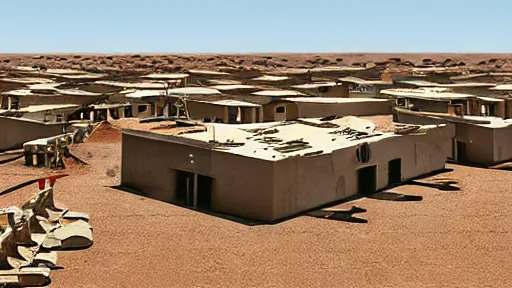
Egypt has resisted a ground intervention in Yemen before, and the precedent comes with numbers. In the 1962-67 war, Gamal Abdel Nasser sent troops to back the republicans in North Yemen against royalists supported by Saudi Arabia and Britain. The incursion was intended to be minimal. It escalated to as many as 70,000 soldiers. Estimates of Egyptians killed run from 10,000 to 26,000. That campaign is the reference point against which the word “ground” still carries weight in the debate.
The war’s economic reach inside Saudi Arabia is already visible. The Saudi Aramco headquarters was struck last weekend. Some airlines have said they will not yet resume using Riyadh airport, which reopened at the weekend after being attacked this month. Those are decisions made by people who price risk in money, and their answer so far is: not yet. What remains unknown is the other side of the ledger. It is not clear whether the Houthis have chosen to slow the pace of attacks on Saudi airports and energy installations, or whether they are running low on munitions. Those are two different futures — one is a decision, the other a shortage — and they will look identical until the next target is hit or is not. The size of the stock is the number this account cannot supply. Until it can, every calculation above — Cairo’s vote, the airlines’ schedules, the next camp’s defences — rests on a guess?