
A Prediction Machine Built on Borrowed Bones
GenoMorph, the machine learning platform Colossal Biosciences announced on October 14, does not study dodos. [1] It studies chickens, quail, ducks and pigeons — birds whose embryos can be sampled, staged and measured in a laboratory — and then extrapolates toward a species that vanished around 1690. The software ingests genetic data from those living birds at different points in embryonic development, combines it with the genomes and skull measurements of more than 70 bird species, and searches for DNA regions that switch on during beak formation. From that pattern it projects which stretches of the dodo genome matter for beak length, width and thickness. The output — roughly 2,300 candidate DNA regions — is presented as a map for gene editing. What the map actually represents is a statistical guess dressed in the grammar of discovery.
The gap between those two things is the story. A prediction about a bird that no longer exists cannot be checked against the bird. It can only be checked against other predictions, other models, other species. GenoMorph’s 2,300 regions are not observations of dodo biology; they are inferences about it, generated by software trained on animals that are not dodos. The platform’s apparent precision — a number, a list, a priority ranking — creates an impression of measurement where the underlying operation is extrapolation, and that gap is where the story of GenoMorph actually lives.
What the Software Actually Does
Anna Keyte, Colossal’s avian species director, describes GenoMorph as a type of machine learning software that identifies which parts of an organism’s DNA are switched on at different stages of development. During beak formation, for instance, it can flag which sections of DNA are active and tied to beak shape. The platform then uses those patterns to predict what areas of a dodo genome are most important for different aspects of beak morphology.
That is a genuine shortcut through a notoriously long and grueling process. Before making any tweaks to an organism’s DNA, scientists must first identify the areas they should be changing, and that identification step has historically consumed years. GenoMorph compresses it. The compression, however, is where the ambiguity enters: a shortcut that skips the verification stage is not the same as one that reaches the same destination. The model tells researchers where to look. It cannot tell them whether looking there will produce a dodo, because no one has ever tested a dodo genome against a living dodo.
Beth Shapiro, Colossal’s chief science officer, frames the platform’s value in terms of pattern recognition that exceeds human capacity — it can consume a lot of data and find patterns the human brain cannot find by itself. “It finds a pattern that we can then use to narrow down our hypotheses about which genes we have to target to make a dodo,” she said. [1] The word “hypotheses” is doing quiet, honest work in that sentence. A hypothesis is a candidate, not a conclusion. Yet the announcement’s framing — 2,300 regions “identified,” “prioritized,” guiding “future research” — slides from hypothesis toward finding without marking the border.
The Single Genome Problem
Colossal has exactly one dodo genome available for its research. One. The number of dodo genomes researchers can study is very limited, which makes it difficult to distinguish genetic differences that actually make a dodo a dodo from variations that occur naturally within any species — the same kind of variation that makes individual people look different from one another.
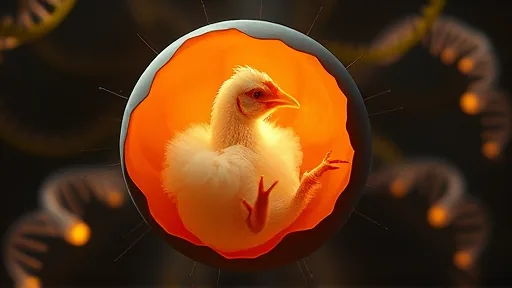
This is the data pool problem in its purest form. GenoMorph’s predictions about dodo DNA rest on a sample of one, compared against a Nicobar pigeon, the dodo’s closest living relative. A model trained on dozens of bird species and applied to a single extinct genome has no way to separate signal from noise at the dodo end of the pipeline. The software can find patterns; it cannot find out whether those patterns are dodo-specific, pigeon-specific, or artifacts of comparing one genome to many. Shapiro names the underlying difficulty directly: one of the hardest problems in biology is knowing which parts of a genome are responsible for determining the way an organism looks and acts. “This software is a way of solving that problem,” she said. [1] Solving and appearing to solve are different accomplishments, and a single genome cannot adjudicate between them.
Where the Confidence Comes From
The platform’s authority derives partly from its provenance. Colossal Biosciences is the Dallas-based biotech company most known for its mission to bring back extinct animals — the woolly mammoth, the dire wolf, the dodo — and GenoMorph arrives as part of that mission’s momentum. The company has raised $200 million and generated sustained press attention for de-extinction. [1]. A new AI platform announced within that narrative inherits the narrative’s confidence. Readers encounter “AI identifies 2,300 DNA regions for dodo” and absorb it as a finding, because the surrounding story has trained them to expect progress.
Machine learning’s contribution here is real but narrower than the framing suggests. The algorithms make it possible to consume a lot of data and find patterns, as Shapiro notes. What they do not do is validate those patterns against ground truth, because for the dodo there is no ground truth to validate against. The model’s confidence is a property of its architecture, not of its evidence. A system that outputs a ranked list of 2,300 regions looks decisive; a system that output “we cannot determine which of these regions are dodo-specific” would look useless. The format of the output shapes the perception of its reliability, and that is, in this reading, a form of deception that no one at Colossal needs to intend.
The Beak as a Stand-In for the Bird
The 2,300 regions are associated with beak size, thickness and width. Beak shape is a visible, measurable trait, which makes it a convenient proof of concept — something the platform can demonstrate on data it has. But a dodo is not a beak. Recreating a bird requires far more than the geometry of its bill, and the platform’s demonstrated capability covers only the trait for which developmental data exists across the training species.
Here the deception sharpens. A successful prediction about beak morphology creates a halo that extends to the entire project. If the software can find beak genes, the reasoning goes, it can find the rest. But the rest may not have comparable training data. The model performs where the data pool is deep and thins out where it is shallow, and the dodo’s genome sits at the shallowest end. The 2,300 regions will be prioritized in experimental testing and help guide future research, according to Colossal’s press release [1] — a statement that is accurate and, read quickly, misleading. Prioritized for testing is not the same as confirmed by testing. Guiding research is not the same as concluding it.
What the Pattern Cannot Tell Us
The deepest version of the gap concerns what a genome does versus what a genome contains. GenoMorph identifies regions of DNA that are switched on during development and correlated with physical traits. Correlation in a training set of living birds is a reasonable basis for hypothesis generation. But the step from “this region is active during beak formation in chickens and quail” to “this region is important for beak shape in dodos” crosses an evolutionary distance the model cannot measure, because it has only one dodo genome and no dodo embryos.
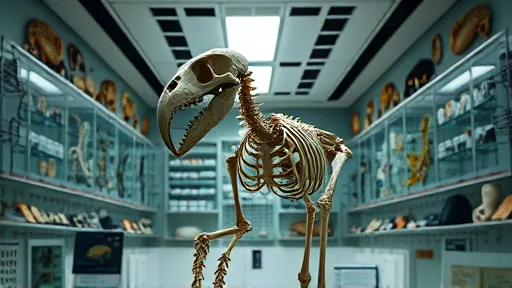
Every claim about the dodo’s development is therefore a claim about the model’s extrapolation, not about the bird. The platform cannot be wrong in any way that would reveal itself, because there is no dodo to contradict it. Its errors would surface only later, in experiments that take years and may never produce a living animal. By then, the 2,300 regions will have circulated as established fact, cited in funding documents, press releases and follow-on research. The number will have hardened into knowledge before anyone has tested whether it deserves the name.
The Question That Reverses the Frame
Shapiro’s formulation — the software narrows hypotheses about which genes to target — is the honest version of the story. The dishonest version, the one the announcement’s structure invites, treats the narrowed hypothesis as an identified target. The distance between those two readings is the distance between science and its promotional shadow, and it is not measured in bad faith. It is measured in the ordinary human tendency to hear a confident number and stop asking what it was computed from.
So the question that reassesses everything above is not whether GenoMorph works. It is what “works” could possibly mean for a model whose subject is extinct. If the platform’s predictions can only be validated by successfully recreating a dodo, then its accuracy is not a property it possesses now — it is a property it will acquire, or fail to acquire, at the end of a process that may never conclude. Until then, the 2,300 regions are a hypothesis dressed as a result, and the disguise fits well enough that most readers will never notice it. The real test of the software is not whether it finds patterns in bird DNA. It is whether the people reading its output remember that a pattern found in living birds is not yet a fact about a dead one.