
Geometry Beats Blueprints for Robot Object Recognition
The quiet revolution in robotics was never about bigger brains. It was about the moment a machine stops asking “what is this object?” and starts asking “which one of these is the one you need?” For years, that second question has been the bottleneck. A warehouse robot can identify a generic bottle, but it cannot tell you which specific bottle, with that particular scratch and that slightly odd cap, is the one sitting on the wrong shelf. The gap between recognizing a category and recognizing an instance is where industrial automation has always stumbled. New research from the computer vision community, detailed in a paper on arXiv, suggests the path forward is not more data or more labels, but a fundamental shift in what the machine looks at first.
The Absence of the Blueprint
Consider the manufacturing floor, where a robot must pick a specific pump housing from a bin of near-identical parts. The traditional solution was to hand the machine a computer-aided design (CAD) model — a perfect, digital blueprint of the object. The robot would then match what its cameras saw against that pristine template. This works, but only in a world where every part has a CAD file, where the lighting is controlled, and where the object has not been scratched, dented, or coated in grime. In the real world, that blueprint is often missing. The part was made by a subcontractor who went out of business, or it has been modified in the field, or it is a legacy component that predates digital design. The research paper, available on arXiv, tackles this exact problem with a disarmingly simple question: what if you did not need the CAD model at all? The authors propose a method that relies on object-centric scanning and geometric understanding rather than pre-existing digital blueprints?
What the team discovered is that a short, object-centric scan — the kind a robot can do by simply turning the object in front of its own camera — recovers the recognition value of that missing CAD file. The scan is processed into a 3D representation using Gaussian Splatting, a technique that builds a viewable, navigable point cloud from a set of images. But here is the crucial insight: the 3D representation itself is not the magic. It is merely a convenient route to a point cloud, a geometric skeleton that captures the object’s true shape. When the researchers tested this on the T-LESS dataset, a benchmark full of textureless, geometrically confusing industrial parts, the geometry-based recognition performed within 1.6 points of the CAD-based approach. On the HOPE dataset, which features household objects with distinct shapes, the results were essentially tied. Both datasets are publicly available benchmarks, and the specific results are detailed in the paper’s supplementary materials. The blueprint, it turns out, was never the source of the robot’s intelligence. The shape was.
Seeing Past the Surface
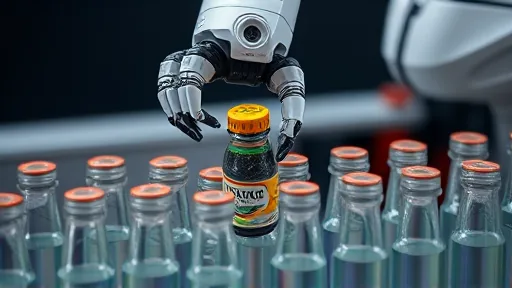
The second finding is where the work moves from clever engineering to something more philosophically interesting. The value of this geometric prior is not uniform. It depends entirely on how recognizable the shape of the object is in the first place. For household objects — a coffee mug, a stapler, a pair of scissors — shape is destiny. Geometry alone reached a recognition score of 0.920, far above the 0.832 achieved by image features alone. The machine can look at the silhouette of a stapler and know exactly what it is, because a stapler’s silhouette is unique. But for the textureless industrial parts on T-LESS, the kind of metal brackets and housings that all look like gray lumps to the untrained eye, geometry alone struggles. Here the gain was modest but real, moving from 0.560 to 0.591 when geometry and image features were fused, demonstrating that even in challenging cases, the geometric prior adds measurable value.
This is the nuance that gets lost in the breathless coverage of AI breakthroughs. The technology is not a universal solvent. It is a complementary tool, one that rescues far more image failures than it breaks successes. The paper is explicit about this: the benefit grows under partial occlusion. When an object is half-hidden behind another, the image features falter because they rely on seeing the whole thing. But geometry persists. The machine can infer the hidden half from the visible half, because physical objects obey physical rules. This is not a magic trick. It is the quiet power of understanding that an object has a back, a bottom, and a structure that continues beyond what the eye can see.
The Unfashionable Truth About Pixels
Perhaps the most counterintuitive finding is what does not work. The researchers tested whether rendering the 3D scan back into 2D images would help the image-based recognition system. It did not. Feeding the machine synthetic views of the object, rendered from the scan, provided zero benefit to the image side. This is a direct challenge to a whole industry of synthetic data generation, which assumes that more views, more angles, and more rendered scenes will eventually teach a model something new. The research suggests that the image side has already extracted everything it can from the pixels. The missing information is not in another perspective. It is in the geometry, the actual three-dimensional truth of the object.
This finding has a broader implication for how we think about training data. The current paradigm in computer vision is to throw more images at a model, hoping it will eventually generalize. This work suggests that for specific object recognition, the bottleneck is not the number of images but the dimensionality of the information. A 2D image of a cup is a projection, a flattening of reality that discards depth, curvature, and volume. No amount of additional 2D images can recover that lost information. You need to change the sensor, not just the dataset. The research also found that the recognition system was nearly lighting-invariant, within 2.5 points across different illumination conditions. This is another quiet victory for geometry. Lighting changes how an object appears, but it does not change how an object is shaped.
The Hidden Cost of Asking the Wrong Question
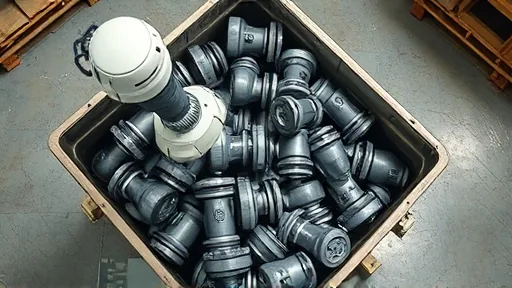
The history of artificial intelligence is littered with systems that excelled at benchmarks only to fail in the real world. The researchers explicitly scoped their work to recognition, not the BOP pose benchmark, which is the standard test for object pose estimation. This is a deliberate choice, and it reveals a deeper truth about the field: the authors prioritized a focused investigation of recognition capabilities over the broader, more complex challenge of pose estimation. Benchmarks measure what is easy to measure, not what is important. A benchmark might ask a system to identify an object in a perfectly lit scene with a clean background. The real world asks a system to identify an object in a cluttered bin, under fluorescent lights, with grease on the lens. The gap between these two questions is where the value of this research lies.
The work also sidesteps the question of whether we are training machines or whether machines are training us. We have become accustomed to feeding AI systems massive, labeled datasets, a process that often involves armies of underpaid workers tagging images for pennies. This approach, which the researchers call “onboarding without a labeled training set,” eliminates that entire apparatus. The robot does not need a human to tell it what a pump housing is. It needs to hold the pump housing, scan it, and understand its geometry. This is a shift from supervised learning to something more akin to apprenticeship. The machine learns by handling, not by being told.
The Real Barrier Is Not Technical
The most profound implication of this research is not the specific technique of fusing geometric priors with image features. It is the demonstration that the field has been asking the wrong question for a decade. The assumption has been that recognition is a problem of appearance — that if we just make the image processing good enough, the machine will finally see. This work shows that appearance is only half the story. The other half is structure, the underlying geometry that persists regardless of lighting, texture, or occlusion. The machine does not need to see better. It needs to understand what it is seeing in three dimensions.
This is a humbling conclusion for those who have spent years optimizing image classifiers. It suggests that the greatest barrier to useful AI is not computational power or algorithmic cleverness, but a conceptual one. We have been so focused on the pixels that we forgot about the object. The research shows that a short scan, a bit of geometry, and a fusion of two different ways of seeing can outperform the most sophisticated image-only systems. The future of robotics, and perhaps of AI more broadly, may not lie in making our machines look harder. It may lie in making them understand that what they look at has depth, structure, and a reality that extends beyond the frame of the camera. The recognition that the greatest barrier is not technical but conceptual is the quiet, unglamorous lesson of this work. It reframes the challenge for researchers and engineers alike, pointing toward a future where machines perceive the world not as flat images but as structured, three-dimensional realities.