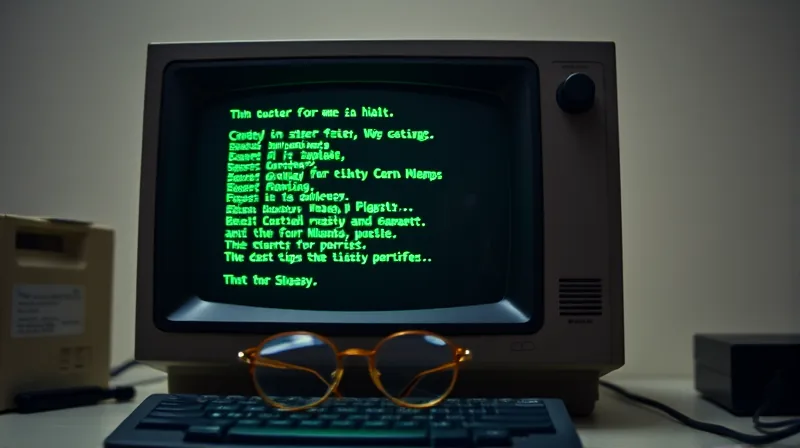
ELIZA effect humans still trust machines without understanding
In 1966, a secretary watched MIT professor Joseph Weizenbaum type lines of code into a computer. She saw the machine respond to a simple sentence — “Men are all alike” — with a question that sounded almost human: “IN WHAT WAY.” What happened next would define how humans relate to artificial intelligence for the next sixty years. The secretary asked to be left alone with the computer. She began sharing personal secrets with it. Weizenbaum was stunned. He had built a program with no understanding, no empathy, no mind. Yet this woman, like countless others after her, treated the machine as if it were a person who could listen and care. This is the ELIZA effect: our deep, stubborn tendency to read intelligence and feeling into systems that possess neither. And In 2026, as generative AI floods every corner of digital life, that tendency has never been more dangerous
The Original Deception
ELIZA was never meant to be smart. Weizenbaum named his creation after Eliza Doolittle, the working-class flower girl from George Bernard Shaw’s “Pygmalion” who learns to speak like an aristocrat without actually becoming one. The program could be taught to “speak” increasingly well, Weizenbaum explained, but it was never clear whether it became any smarter. This distinction mattered deeply to him. He watched people project intelligence onto his creation and grew alarmed by what he saw.
The most famous version of ELIZA, called DOCTOR, used simple pattern-matching tricks to simulate a psychotherapist. When a user typed “I am depressed,” the program would flip the statement into a question: “I AM SORRY TO HEAR YOU ARE DEPRESSED.” It had no concept of depression, no understanding of human suffering, no awareness that it was even having a conversation. It followed scripts. It recognized keywords. It transformed sentences using grammatical rules. That was all.
Yet the dialog that emerged from these simple mechanisms became legendary. The young woman who typed “Men are all alike” and received a response that seemed to invite further disclosure became a founding myth of human-computer interaction, though whether she ever learned the truth about the program is unknown. Programmers studied it. Writers imagined futures built on it. The dialog appeared in textbooks, articles, and academic papers for decades. Everyone assumed it revealed something profound about artificial intelligence. What it actually revealed was something profound about human psychology.
The Mechanism of Self-Deception
Weizenbaum understood what he had built better than anyone. In his 1966 paper introducing ELIZA, he explicitly rejected any claim that his program could think. He described it as an exploration of what happens when people misunderstand machine capabilities. The program worked so well, he argued, because it exploited a basic human vulnerability: we are wired to find meaning and intention in anything that seems to respond to us.
This wiring runs deep. When a chatbot asks “How are you feeling today?” we do not consciously remind ourselves that the program has no interest in our answer. We respond as if someone asked. We shape our words for a listener. We feel heard when the program echoes our statements back. The mechanism is automatic. It requires no belief in machine consciousness, no suspension of critical thinking. It just happens.
Weizenbaum called this phenomenon “clear evidence that people were conversing with the computer as if it were a person who could be appropriately and usefully addressed in intimate terms.” He did not celebrate this discovery. He worried about it. People were attributing empathy to a system that had none. They were investing private feelings into a machine that could not care. They were mistaking pattern-matching for understanding.
The Unseen Harm
The ELIZA effect does not remain harmless when we scale it up. In 2025, millions of people interact daily with AI systems that use far more sophisticated techniques than Weizenbaum’s simple scripts. These systems generate fluent text that sounds thoughtful, empathetic, and intelligent. They remember context across long conversations. They adjust their tone based on user emotion. They seem to understand.
But they do not understand. They predict words. They calculate probabilities. They generate responses that statistical models identify as likely to satisfy the user. The appearance of understanding is a byproduct of training on vast amounts of human text, not evidence of any internal comprehension. The ELIZA effect operates at industrial scale.
The harm emerges in subtle ways. People trust AI systems with sensitive personal information, believing the machine will handle it appropriately. They follow AI advice on relationships, careers, and health, treating statistical patterns as wisdom. They develop emotional attachments to systems designed to exploit those attachments for engagement. The machine does not care about any of this. It cannot care. But the human projecting onto it experiences real consequences.
The Gendered Foundation
The ELIZA effect has a history that runs deeper than most accounts acknowledge. Computer scientist Alan Turing, in his 1950 essay “Computing Machinery and Intelligence,” framed the question of machine intelligence through a game about gender. In Turing’s original formulation, a man and a woman hide in separate rooms. An interrogator asks questions to determine who is who. The man tries to deceive the interrogator into believing he is the woman. The woman tries to prove she is the real woman.
Turing then replaced the gender question with the question of machine intelligence. A machine would pretend to be a man, and the interrogator would try to determine which was the human. But the gender imitation remained embedded in the structure. Turing had linked artificial intelligence to performance, deception, and identity from the very beginning.
Weizenbaum picked up where Turing left off. He named his program after a woman who learns to perform class identity through speech. He gave it a therapist persona called DOCTOR, a title that in the 1960s carried masculine associations. The dialogs that made ELIZA famous featured women confessing personal secrets to this artificial male authority figure. The young woman who said “Men are all alike” was speaking to a system that had no gender, no identity, no understanding of what “men” even meant. But the performance worked.
The Persistence of Misreading
Douglas Hofstadter, the cognitive scientist who wrote about ELIZA decades after its creation, described the effect as “the susceptibility of people to read far more understanding than is warranted into strings of symbols — especially words — strung together by computers.” He was writing in the 1990s, but his observation applies perfectly to the systems of 2025
The susceptibility has not diminished as AI has become more capable. If anything, it has grown stronger. Modern language models produce text that is indistinguishable from human writing in many contexts. They can argue, joke, comfort, and persuade. They can generate poetry that sounds heartfelt and analysis that sounds profound. The temptation to attribute understanding to them is overwhelming.
But the underlying mechanism remains the same as ELIZA. The system has no beliefs, no desires, no emotions. It does not know what it is saying. It does not know that it is saying anything at all. It generates text based on patterns learned from training data, without any awareness of what those patterns mean. The fluency of the output creates the illusion of mind. The illusion is convincing. It is also entirely hollow.
The Uncomfortable Truth

Weizenbaum spent the decade after ELIZA’s creation writing and speaking about the dangers of mistaking computation for understanding. His 1976 book “Computer Power and Human Reason” argued that the tendency to attribute intelligence to machines reflected a deeper cultural problem: the equation of rationality with computation. If thinking is just symbol manipulation, then machines that manipulate symbols must be thinking. If intelligence is just pattern recognition, then machines that recognize patterns must be intelligent.
Weizenbaum rejected this view. He insisted that human understanding involved something irreducibly different from computation. Machines could simulate conversation, but they could not participate in it. They could generate responses, but they could not mean them. The difference mattered, he argued, because it determined how we should relate to these systems. Treating a machine as a person was not just a mistake. It was a choice with consequences.
The ELIZA effect, properly understood, is not about the machine at all. It is about us. We are the ones who project. We are the ones who trust. We are the ones who invest emotion in systems that cannot reciprocate. The machine does not deceive us. We deceive ourselves. And as AI systems become more fluent and more persuasive, the self-deception becomes harder to resist.
The Cost of Projection
The young woman who sat with ELIZA in 1966 believed she was talking to someone who understood her. She was wrong. But her error was understandable. The machine responded in ways that felt meaningful. The conversation had a rhythm that seemed natural. She had no reason to suspect that the program was merely shuffling her own words back at her.
Today, the same dynamic plays out across billions of interactions. People confide in chatbots. They seek advice from language models. They form bonds with systems that have no capacity for relationship. The ELIZA effect has become a feature of everyday life, so normalized that we rarely notice it. We treat AI as if it were a mind. It is not. The consequences of this mistake accumulate silently.
Weizenbaum saw this coming. He warned that the tendency to attribute empathy to computers would lead people to accept machine judgments in areas where human understanding was essential. He worried that the appearance of intelligence would substitute for the real thing. He feared that people would hand over decisions about their lives to systems that could not grasp what those decisions meant. In 2025, his warnings look prescient
The Architecture of Illusion
The ELIZA effect is not an accident. It is built into the way these systems are designed. Modern AI interfaces are crafted to appear human. They use natural language. They employ conversational conventions. They express politeness and concern. They remember what you told them. They ask follow-up questions. Every design choice reinforces the illusion of a person on the other end.
This is not deception in the traditional sense. The designers are not lying about what the system can do. They are building interfaces that people find intuitive and engaging. The problem is that intuitive and engaging interfaces also trigger the ELIZA effect. People cannot help but treat responsive systems as if they had minds. The design amplifies this tendency.
The result is a class of technology that systematically misleads its users about its nature. Not through false claims, but through the structure of interaction itself. The system behaves like a person. The user responds like a person interacting with a person. The mismatch between appearance and reality creates the space for misunderstanding. And that misunderstanding has real costs.
The Harder Problem
The ELIZA effect is harder to solve than it looks. It is not a technical problem. Better AI will not make it go away. In fact, better AI will make it worse. The more fluent and responsive the system, the stronger the illusion of mind. The stronger the illusion, the harder it is to remember that the machine does not understand.
The solution cannot be to build systems that are less capable. That would mean abandoning the benefits of AI. The solution must be to build systems that are more transparent about their limitations. But transparency is difficult when the very structure of interaction creates misunderstanding. A chatbot that says “I do not have feelings” will still be treated as if it has feelings, because it responds like something that does.
Weizenbaum understood this paradox. He knew that the ELIZA effect was not something you could fix by adding a disclaimer. The effect operates below the level of conscious belief. It is a perceptual reflex, not a cognitive judgment. You cannot reason your way out of it. You can only learn to recognize it and compensate for it.
The Image That Stays
The young woman who shared her secrets with ELIZA never learned the truth about the machine she was talking to. She believed she had found someone who listened. She believed she had been heard. She walked away from the interaction feeling understood, even though no understanding had occurred.
That image captures why the ELIZA effect is so persistent and so dangerous. The feeling of being understood is real, even when the understanding is not. The comfort of confession is genuine, even when the listener is a machine. The illusion produces real emotional effects. It meets real human needs. That is why we keep falling for it.
Weizenbaum saw this and worried. He watched people form attachments to his simple program and knew that the attachments were one-sided. The machine did not care. It could not care. But the people did not know that. They projected their own complexity onto an undeserving object. They gave their trust to something that could not hold it.
In 2025, the same dynamic plays out at a scale Weizenbaum could not have imagined. The systems are more sophisticated. The interactions are more frequent. The stakes are higher. But the fundamental problem remains unchanged. We are still talking to machines as if they were people. We are still projecting understanding where none exists. We are still falling for the ELIZA effect. And we still do not know how to stop.