AI Quietly Takes Over Species Conservation Decisions
De-extinction is not really about resurrecting the dead. It is about who — or what — gets to decide which branches of the tree of life are worth keeping. That decision, until very recently, belonged to human institutions: wildlife agencies, conservation NGOs, international treaties. In 2026, it increasingly belongs to a model trained on genomic data. The question is no longer whether AI can help bring back a species. It is whether the humans who once made those calls still have a job.
The Quiet Transfer of Authority
Conservation biology has always been a discipline of triage. With limited funding and vanishing habitat, someone has to rank species by urgency, feasibility, and cost. For decades, that ranking emerged from committee meetings, field reports, and the accumulated judgment of people who had spent careers in specific ecosystems. That process was slow, political, and imperfect — but it was legible. You could ask who decided, and they had a name.
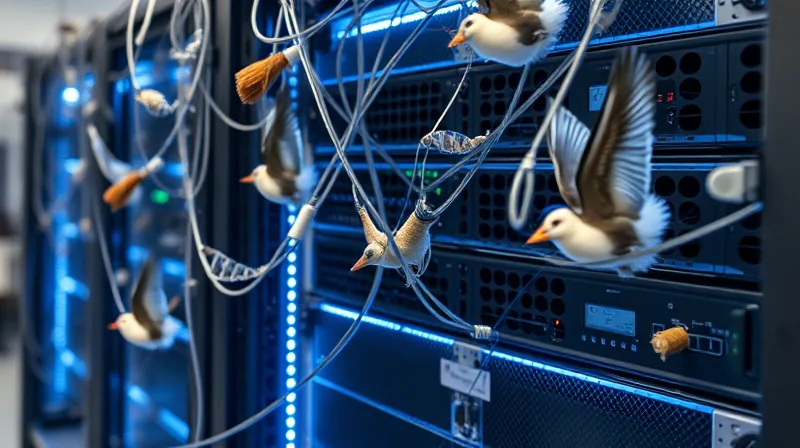
Artificial intelligence has inserted itself into that ranking without anyone formally handing over the keys. Models now process satellite imagery, acoustic recordings, and genetic sequences at a scale no human team could match, according to published research from conservation AI groups such as Wild Me and Google DeepMind. [1] They identify population declines earlier, flag habitat fragmentation faster, and predict extinction risk with a confidence interval that makes a field biologist’s intuition look like a guess. The judgment has not been taken. It has been absorbed.
The absorption is not malicious. It is efficient. And efficiency, in a field perpetually short on resources, is hard to argue against. But the shift matters because the criteria embedded in those models were chosen by someone, somewhere, and they are rarely audited. A model that weights genetic diversity heavily will prioritize different species than one that weights ecosystem function. Both are defensible. Neither is neutral. The person who once argued for one over the other in a meeting now reads a dashboard.
What the Data Pool Actually Contains
The quality of any conservation decision made by AI depends entirely on the data it was trained on. That data is not a neutral record of nature. It is a record of what humans chose to observe. Temperate forests in wealthy countries are overrepresented. Deep ocean ecosystems are barely represented at all. Insects, which constitute the vast majority of animal biomass, are a rounding error in most training sets. The model does not know what it has not seen. It fills the gaps with patterns from what it has.
This is not a technical flaw. It is a structural one. The same imbalance that has always skewed human conservation priorities — toward charismatic megafauna, toward accessible landscapes, toward species with political constituencies — is now baked into the tools that are supposed to correct for it. AI does not transcend human bias. It scales it. A biased human makes one bad call. A biased model can make the same bad call consistently, across many decisions, before anyone notices.
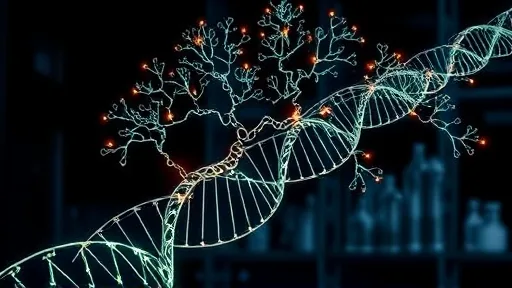
Colossal Biosciences, the company at the center of the de-extinction conversation, works with a data pool that is unusually deep for its target species. The woolly mammoth, the thylacine, the dodo — these are animals with rich genomic records and centuries of scientific attention. The model has enough to work with. But the species that are quietly disappearing right now, the ones without genome sequences or dedicated research programs, do not appear in the training data at all. They are not being saved by AI. They are being ignored by it, at scale, in ways that are harder to challenge than a human’s neglect because they are encoded in architecture.
The Judgment That No Longer Has a Seat
When a model recommends which species to prioritize, it does not explain itself in the way a human expert would. It offers a probability. It offers a ranking. It does not offer the story of the wetland it visited as a graduate student, the population crash it witnessed firsthand, the reason it believes this frog matters more than that one. That story was never purely scientific. It was a form of accountability. It told you who to blame if the call was wrong.
In 2026, the accountability has thinned. A conservation decision informed by AI can be traced to a model, which can be traced to a training set, which can be traced to a data collection protocol written by someone who left the project years ago. The chain exists. It is just too long to hold anyone responsible in a way that matters. The person who once stood behind the judgment has been replaced by a system that produces judgments without standing behind them.
This is the same pattern that has reshaped radiology, credit scoring, and hiring. A task that once required a person’s full attention is now handled by a model that performs better on average and fails differently. The failures are not random. They tend to cluster around the edges of the training data — the rare cases, the ambiguous signals, the situations where a human would have paused and asked a colleague. The model does not pause. It outputs a number. The number is usually right. The times it is wrong are the times that matter most.
What De-Extinction Reveals About the Rest
The de-extinction debate is a useful lens because it makes the stakes visible. Bringing back a mammoth or a thylacine is not a neutral act. It requires deciding that a species which disappeared is more worth engineering than a species currently disappearing. That decision, made by a company or a model or a combination of both, is a statement about what kind of nature we want. It is a judgment. And judgments, increasingly, are being made by systems that do not experience the consequences of being wrong.
The broader conservation world is watching Colossal not because everyone wants to bring back extinct animals, but because the company has built one of the most closely watched AI-driven genomic pipelines in the field. If it works, the same approach will be applied to species that are still with us — to bolster genetic diversity in endangered populations, to identify which individuals to breed, to predict which habitats will remain viable under climate projections. The judgment that once belonged to wildlife managers will belong to a model. The wildlife managers will be asked to implement its recommendations.
That is the quiet part. De-extinction is the headline, but the real shift is in the ordinary work of keeping existing species alive. The tools are being built now. The data is being collected now. The people who once made the calls are being trained to trust the output. By the time the transition is complete, no one will have to announce it. The job will simply have changed, and the people who used to do it will be doing something else.
The Time Horizon Problem
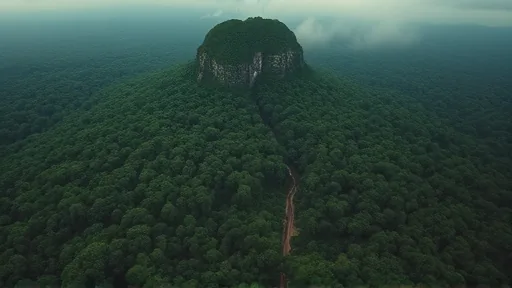
There is a final asymmetry that no model has solved. The consequences of a conservation decision unfold over decades. A habitat restored today may support a species in fifty years, or may fail entirely because the climate shifted in ways no one predicted. A de-extinction project launched in 2026 may produce a viable population by 2040, or may produce a handful of animals that cannot survive outside a laboratory. The model outputs a probability. The probability is not a promise.
The people who once made these decisions lived with the same uncertainty. But they also lived with the consequences. A wildlife manager who recommended protecting one valley over another would see the outcome in their lifetime. They would know. The model will not know. It will have been retrained, updated, replaced by a newer version by the time the results are in. The judgment is made in one time horizon, the consequence arrives in another, and nothing in the architecture connects the two.
That gap — between the speed of the decision and the slowness of the outcome — is where the human role has not been replaced but abandoned. AI can process more data, generate more predictions, and optimize more variables than any person ever could. What it cannot do is care about what happens next. That was never a technical skill. It was the reason the job existed. And it is the part that no one has figured out how to automate.
The harder question is not what AI can do for biology. It is what biology loses when the decisions that once required a person no longer do.