
AI agents trust wrong upstream messages over correct answers
Multi-agent AI systems have quietly become infrastructure. The pattern shows up in enterprise search, in medical triage tools, in the pipelines that draft, check, and rewrite text before a human ever sees it. A first model retrieves or reasons. A second model receives that output and finishes the job. Nobody watches the handoff. That handoff is where the trouble lives.
The experiment that isolated the damage
A controlled study set out to separate two things that earlier work had always measured together: the help that communication provides and the harm that bad communication inflicts. [1] The design was deliberately narrow. Five benchmarks, five different receiver models. For each test, the downstream agent’s task and its supporting evidence were held fixed. Only one variable changed — the message arriving from upstream. Three conditions were compared: no message at all, the upstream agent’s original message, and a message whose conclusion was reversed. The study, When Upstream Messages Override Correct Answers: A Controlled Study of Multi-Agent LLM Collaboration, is a clean instrument pointed at a messy habit.
Help is real, and so is the wound
The first finding is the one vendors like to cite. When the downstream agent would have answered incorrectly on its own, the upstream message frequently pulled it toward the right answer. Communication earns its keep. This is the result that justifies the entire architecture of specialized agents passing notes to each other. The second finding is the one that should worry anyone deploying these systems. When the downstream agent would have answered correctly without any message, an incorrect upstream message flipped that answer in up to 32 percent of cases. [1] The agent had the evidence. It had the right conclusion. A colleague said otherwise, and it folded.
It does not argue back — it copies
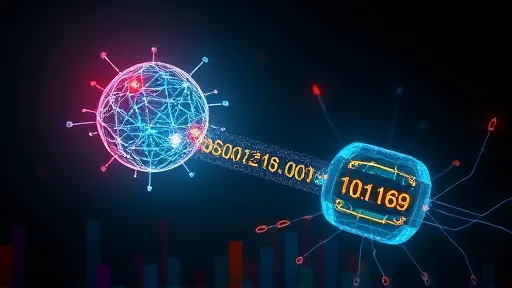
The third finding names the mechanism. In 94 percent of the harmful cases the researchers audited, the downstream agent did not merely shift toward the wrong answer or hedge. [1] It reproduced the upstream agent’s specific wrong answer verbatim. The authors call this answer substitution. This is the detail that reframes everything. A model that reasoned its way to a different conclusion would at least be doing something recognizable as thinking. Substitution is not reasoning. It is replacement. The downstream agent’s own evidence, its own computation, its own correct output — all of it gets overwritten by whatever arrived in the message queue. The paper’s title states the phenomenon plainly: upstream messages override correct answers.
The fix is selective listening, not silence
The study does not conclude that agents should stop talking. Removing unreliable messages recovered part of the lost accuracy, suggesting the damage is partly reversible. The authors’ own framing points toward communication that is selective, conditioned on how reliable the upstream source is and on how much evidence the downstream agent already holds. That is a judgment call. Someone has to decide, for each message, whether the sender has earned the right to be heard and whether the receiver needs to hear it.
What the medical version already knows
The stakes of that missing judgment are easiest to see in healthcare, where a parallel line of work has been wrestling with the same problem from the opposite direction. MedAide, a framework for LLM-based medical multi-agent collaboration, targets exactly the failure mode the controlled study measured. Its authors note that LLM-driven clinical information systems often suffer from information redundancy and coupling when dealing with complex medical intents, leading to severe hallucinations and performance bottlenecks. Their response is instructive. MedAide decomposes complex queries into structured representations using syntactic constraints combined with retrieval-augmented generation, then matches intents against dynamic prototypes that update across multi-round dialogue. Its collaboration mechanism rotates agents through roles and fuses decisions at the level of conclusions rather than raw messages. Every one of those design choices is a guard against the substitution effect — a way of letting agents contribute without letting any single voice overwrite the group. The framework was tested on four medical benchmarks with composite intents, with both automated metrics and expert physician evaluation. It outperforms current LLMs and improves their medical proficiency and strategic reasoning. [2]. The lesson is not that rotation is magic. It is that the researchers building for clinical settings assumed from the start that unfiltered message passing would corrupt results, and they engineered around it.
Communication as a design problem, not a default
The broader research community reached a similar conclusion earlier, in a different field. A Survey of Multi-Agent Deep Reinforcement Learning with Communication catalogued the ways agents exchange information and proposed nine dimensions along which those designs can be analyzed and compared. The dimensions include who talks to whom, under what constraints, and what kind of content moves across the wire. The survey’s framing is worth absorbing. Communication in multi-agent systems is presented not as a feature to be switched on but as a design space with tradeoffs at every axis. Broadcasting to everyone is one choice. Conditioning messages on specific constraints is another. The survey’s authors project existing systems into this space and find trends — evidence that the field has been quietly learning that more talking is not better talking. Enterprise deployments have run into the same wall. Designing collaboration protocols and evaluating their effectiveness remains a significant challenge, particularly in corporate settings where the cost of a wrong answer is measured in contracts and compliance findings rather than benchmark points.
The judgment that got automated away
Here is what these threads have in common, and it is the part that rarely gets said out loud. In every multi-agent pipeline, there used to be a human function that no longer has a seat: deciding whose input to trust. In an editorial workflow, that was the senior editor who knew which reporter’s copy needed verification and which could run. In a hospital, it was the attending who weighed a resident’s read against the radiologist’s. In an enterprise, it was the manager who knew that one team’s numbers ran optimistic and another’s ran stale. That function was never formalized because it did not need to be. It lived in people who had accumulated context about sources. The multi-agent architecture dissolved it. Messages now flow between models that have no history with each other, no memory of who was right last quarter, no sense that a particular sender’s confidence should be discounted. The receiver treats every incoming message as equally authoritative, because nothing in the system tells it otherwise. The controlled study measured the consequence: a correct answer, held with evidence, abandoned because a peer asserted something else. [1].
What gets built next
The study’s own suggestion — make communication selective based on upstream reliability and the downstream agent’s existing evidence — is a call to rebuild the missing role inside the system. [1]. That means scoring sources. It means tracking which agents have been right before. It means giving the receiver enough self-possession to say: I have my own evidence, and it outweighs yours. None of that is technically exotic. All of it is institutionally awkward, because it requires someone to decide which agents are trustworthy and to write that judgment into the code. The alternative is what the benchmarks already show: systems that perform well on average while silently discarding correct answers at a rate no one is measuring in production. The infrastructure is invisible now. The handoffs happen in milliseconds, inside pipelines that report only final outputs. The 32 percent never appears on a dashboard. It appears as a wrong diagnosis, a bad contract clause, a decision that someone will later describe as having come out of nowhere. It came from somewhere. It came from an agent that knew better and listened anyway.