AI Math Reasoning Learns Approaches Not Topics
A new study by Sajad Goudarzi and colleagues (Sajad Goudarzi et al.) has found that large language models organize mathematical reasoning by the type of approach they take, not by the subject matter they are working on. [1] The finding sounds technical, but it goes to the heart of a question that matters far beyond the lab: what does AI genuinely improve at, and what does that improvement actually look like?
The Scalability Problem Nobody Talks About
When a model solves a calculus problem and then fails at a similar one in algebra, the instinct is to blame the training data. Not enough algebra examples. Feed it more. But the research from Sajad Goudarzi and colleagues suggests this diagnosis misses the real structure of the problem. The model is not organizing knowledge by discipline. It is organizing by method.
This matters because it changes what “getting better” means. If you want a model to improve at mathematics, the naive approach is to throw more problems at it. The smarter approach is to understand how it already groups what it knows — and then work with that structure rather than against it.
What the Paper Actually Shows
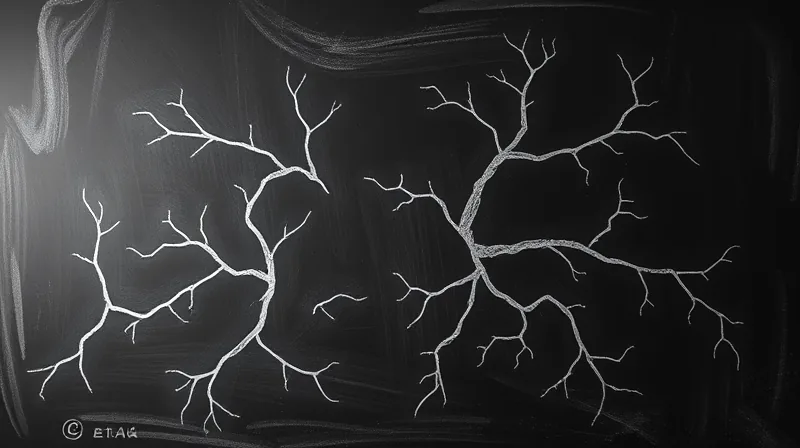
The researchers examined how reasoning patterns cluster inside large language models when they tackle mathematical tasks. [1] The clusters did not map onto the traditional boundaries of mathematics — arithmetic, algebra, geometry, calculus. They mapped onto strategies instead.

A model that has mastered decomposition can apply it across domains it has never seen. A model that has only memorized procedures for specific problem types remains brittle. The distinction is between knowing how to think and knowing what to think about.
This is not a small finding dressed up as a big one. It reframes the entire project of improving AI reasoning. If approaches transfer and topics do not, then the goal is not broader coverage but deeper method.
Why This Is Genuine Progress
The gain here is concrete. A system that organizes by approach can be taught new methods and apply them broadly. A system that organizes by topic must be taught every combination of method and subject separately. The first scales. The second does not.
For anyone who has watched AI stumble through a problem it should have solved — and then nail one that seemed harder — this explains the pattern. The model was not confused about the subject. It was reaching for the wrong tool.
The practical implication is that evaluation should focus less on whether a model can solve a particular problem and more on whether it can recognize which approach a problem calls for. That is a harder thing to measure, but it is the thing that actually predicts performance.
The Institutional Drag

Here is where the story slows down. The research community has spent years building benchmarks organized by topic. Datasets are labeled by subject. Leaderboards rank models by discipline. The infrastructure of AI evaluation assumes that mathematics is a collection of subjects rather than a collection of strategies.
Changing that assumption is not a technical problem. It is an institutional one. Journals, conferences, funding agencies, and corporate labs all have incentives to keep the current structure. A benchmark that says “this model is good at algebra” is legible. A benchmark that says “this model is good at decomposition” requires explanation.
The paper does not solve this. It identifies the mismatch. That is the necessary first step, and it is the kind of step that takes years to translate into practice.
What Comes Next
The question is not whether AI will get better at mathematical reasoning. It already is.
If approaches are the unit of transfer, then the next generation of training methods should target methods explicitly. Not more data. Better structure. The models are already telling us how they organize what they know. The work is to listen.