
AI Masters Hidden Information in Stratego and Beyond
The Gap Between a Published
Result and a Shipped Tool A paper appears in Nature. It describes a system that defeated top-ranked human players by a large margin. The result is real, measured, and reproducible. The distance between a laboratory win and a deployed decision aid is the subject here — not because the gap is scandalous, but because understanding its shape tells you what this particular advance actually contributes. The MIT-led team behind Ataraxos did not merely produce a stronger game player. They produced a cheaper one. That distinction matters more than the headline margin, and it is where the concrete gain lives.
What the System Actually Does
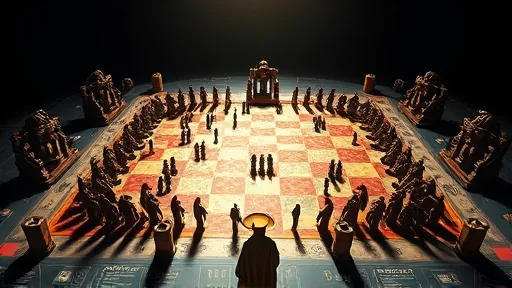
Stratego is a two-player board wargame in which each side arranges its pieces, and the identity of every piece stays hidden until two collide. The lower-ranking piece is removed. The game tree is vast, making the game a standing challenge for any system that has to reason under uncertainty. Previous work, notably Google DeepMind’s DeepNash, attacked this problem with computationally demanding methods. [1] Those models reached a human expert level. The MIT-led collaboration took a different route. They combined efficient training algorithms with techniques built specifically for calculated decision-making when information is hidden. The resulting system reached strictly higher playing strength than DeepNash while using less than one hundredth of the training examples and less than one thirtieth of the self-play games. That efficiency gain, not the scoreline, is the finding that should stop you.
Two Mechanisms, One Missing Piece
The training pipeline has two stages. First, self-play reinforcement learning: the model plays against itself many times to develop a strong “blueprint strategy” — a baseline approach to arranging pieces and opening the game. The algorithms were designed to learn quickly and to avoid a common failure mode, getting stuck trying to enumerate every possible move. Second, and this is the part the researchers identify as the missing piece, decision-time planning. Before each move, Ataraxos uses a generative model that estimates the probable identities of the opponent’s hidden pieces. It evaluates future choices against those probabilities, then selects. Rather than guessing blindly, the system narrows in on the specific board state and opponent in front of it. Gabriele Farina, an assistant professor in MIT’s Department of Electrical Engineering and Computer Science and a principal investigator at the Laboratory for Information and Decision Systems, framed the difficulty in terms of scale. [1] With Stratego, there is an explosion of possible universes you might have to deal with. That word — provably — is doing real work. It is not a claim about vibes or benchmark rankings. It is a claim about the method’s properties.
Why Hidden Information Is a Different Beast

The contrast with chess is instructive. In a game with hidden information, the value of an action depends on how your opponent reads it. The more you bluff, the more your opponent expects it, and the less each bluff is worth. Reasoning about that feedback loop is not obvious, and it is exactly the kind of reasoning that real-world decision-makers face constantly. Traders in financial markets may not know the rationale behind others’ trades. Military forces likely don’t have full knowledge of enemy positions. In both cases, the decisions parties make and the decisions they choose not to make are intertwined in ways that make the next best step genuinely hard to determine. This is where the efficiency gain becomes more than a cost story. A method that scales is a method that can be pointed at problems whose state spaces are too large to enumerate. Poker solvers work because the game’s structure permits certain shortcuts. Stratego does not offer those shortcuts. Neither do most of the messy, high-stakes situations where hidden information is the defining feature.
The Generalization Test
One game proves nothing about generality. The researchers adapted Ataraxos for other imperfect information games, including Barrage Stratego, Hanabi, and Dou dizhu. The system achieved superhuman performance in each instance. That is the result that separates a specialized game engine from a general-purpose method. The same underlying approach — efficient self-play training plus decision-time planning with a generative model — transferred across cooperative and competitive settings, across different player counts, across different information structures. The researchers describe the method as general-purpose, and the cross-game performance supports that description rather than merely asserting it.
What Composure Looks Like in a Machine
There is a behavioral detail worth noting because it illuminates what the system is doing differently. Farina observed that Ataraxos is good at calculating risk in a way that humans are not. A human might start freaking out if their most valuable piece is exposed, but the bot can be surprisingly composed. It doesn’t overcorrect and give away its secrets. This is not a claim about machine consciousness or even about superior judgment in any broad sense. It is a claim about consistency under pressure. Human players, facing a threat to a high-value piece, tend to react in ways that leak information — overcorrecting, changing patterns, revealing what they value. The system holds its strategy steady because its decision-time planning is grounded in probability estimates rather than emotional salience. That composure is a direct product of the architecture, not a personality trait.
The Audit Problem
The researchers are candid about what remains unfinished.Building interpretability measures into Ataraxos — so the system can explain its reasoning in terms a human could understand — is future work. This is the honest boundary of the advance. The system can outperform top humans at calculating risk under hidden information. It cannot yet tell you why it chose a particular move in a way you could scrutinize. For a game, that is acceptable. For a business negotiation or a cybersecurity response, it is a prerequisite that has not been met. The gap between the published result and the deployed tool is not primarily about performance. It is about legibility.
What the Efficiency Shift Makes Possible
The training-cost reduction deserves its own moment because it changes who can participate. When a result requires millions of dollars and massive compute, only a handful of organizations can reproduce it, let alone extend it. When the same or better performance arrives with less than one hundredth of the training examples and less than one thirtieth of the self-play games compared with DeepNash, the barrier to entry drops by orders of magnitude. More groups can test the method, adapt it, find its failure modes.
That is how a technique becomes a foundation rather than a headline. The efficiency numbers are what make broader adoption structurally plausible rather than aspirational.
The Consequence That Follows
The system’s contribution is not that it won at Stratego. It is that it won while being cheap enough and general enough to be pointed at other problems. The decision-time planning with a generative model is the transferable insight. The efficiency is the enabler. The cross-game results are the evidence that the insight travels. What follows necessarily is a period of adaptation. The researchers have shown the method works across cooperative and competitive imperfect-information games. The next step — building interpretability so humans can audit the recommendations — is the gate between a strong result and a usable one. Until that gate opens, Ataraxos remains what it is: a demonstration that machines can reason well under hidden information, cheaply, and across domains. That is a genuine lift. It is not yet a tool you can hand to a decision-maker and walk away.