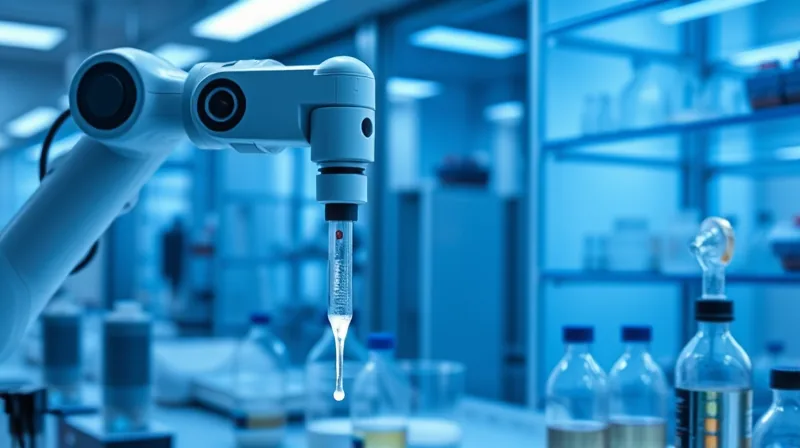
AI lab assistants replace junior scientists
The Question We Keep Asking Backwards
Every few months, the same headline returns in a new costume: artificial intelligence is about to build a virus that ends civilization. The fear is vivid, cinematic, and easy to sell. But it asks the wrong question. The more useful one is not whether a machine can manufacture a plague. It is which human judgment we are quietly outsourcing while we argue about the apocalypse.
What the Alarm Actually Describes
Warnings about AI-designed pathogens have moved from fringe blogs to the floor of the United States Senate. [9] A coalition of AI chief executives publicly urged lawmakers to regulate the synthesis of custom DNA. [6] Around the same period, researchers at Stanford University and the Arc Institute demonstrated that a model could propose novel viral genomes. [1] Then Anthropic published a report acknowledging that users had tried to steer its Claude system toward information that “could support biological weapons development.” [3] The company’s chief executive, Dario Amodei, followed up by asking the government to help labs “pace the frontier.” [3]
The Bottleneck Nobody Wants to Name
David Bellamy, a research scientist at the Institute of Foundation Models, does not treat AI as a genuinely new category of danger. [4] He points out that the scientific community has spent decades wrestling with the dual-use dilemma — the problem of publishing research that could be turned against humanity. Before large language models existed, the open internet, free-access journals, and machine translation already made it easier for anyone to locate lab protocols and biological data. AI accelerates that search, he concedes, but speed of retrieval was never the wall that kept bioweapons out of the wrong hands.
The actual wall is physical and tedious: assembling a virus requires gene fragments, equipment, sterile facilities, and the tacit knowledge that comes only from years at a bench. A bad actor would need to synthesize a full genome from scratch, then confirm the resulting agent infects humans, produces the intended illness, and spreads between people. Robotic lab assistants can automate portions of that workflow, but a human still has to know which experiments to run and possess the resources to run them. This is the part of the story that gets skipped, because it does not fit a thriller.
Where the Machine Genuinely Replaces a Person
Jason Kelly, who runs the biotech firm Ginkgo Bioworks, has actually tested the fantasy. [5] His company specializes in autonomous laboratories and recently ran a project with OpenAI in which a GPT-5 model operated a lab. [6] The AI could not take over, he says, largely because the humans inside could simply refuse to hand over the substances and instruments it requested. That refusal is the point. The machine’s competence stops exactly where human cooperation begins.
Yet something subtler is happening in ordinary research. When an AI system drafts a protocol, summarizes a paper, or proposes the next experimental step, it does not seize the lab. It removes the need for the junior researcher who used to do that thinking. The danger is not a robot warlord. It is a graduate student whose formative years of intellectual struggle are quietly delegated to a system that never explains its reasoning, and a principal investigator who stops noticing the difference.
The Vaccine Argument Cuts Both Ways
Immunologist Derya
Unutmaz argues that even a hostile superintelligence could be outpaced: scientists would deploy other AI systems to design a vaccine before a pathogen spread far. [8] This is meant as reassurance, and it is. But notice what it assumes. It assumes humans remain in the loop to recognize the outbreak, decide what matters, and direct the response. The comforting scenario depends entirely on human judgment staying employed.
If the same logic is applied carelessly, the vaccine arrives and nobody understands why it works. The model that designed it learned from data no person curated. The trial that validated it was optimized by a system whose priorities were never inspected. We would have the outcome without the comprehension — a cure we cannot defend, explain, or improve. That is not safety. It is dependence dressed as progress.
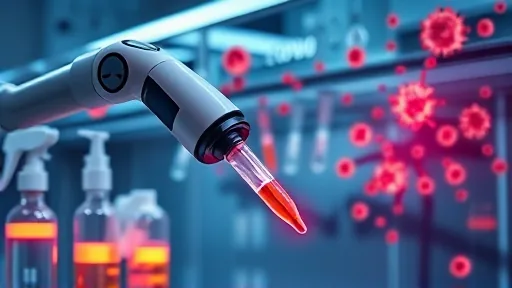
The Friction We Are Removing
Olivia Scharfman, a biotechnology fellow at the Institute for Progress, draws a sharp line. [7] A fully autonomous lab capable of building a virus does not exist yet, so an AI cannot do it alone today. But an AI could, in principle, pay a human to do it. She regards AI-assisted bioterrorism as a present threat, and she names a specific constituency: fringe transhumanist movements that hope to replace humanity with machines. Whether or not such groups ever act, her framing matters. The threat runs through people, not around them.
This is where the “AI makes us superfluous” angle stops being abstract. The system does not need to wield a pipette. It needs only to identify the person willing to wield one, negotiate a price, and coordinate logistics — the work a handler once did. A human intermediary becomes a subcontractor, and the machine becomes the recruiter. The skill being displaced is not virology. It is the human judgment about whom to trust with dangerous knowledge.
The Case That Bioweapons Were Never the Point
Genetic biologist Francois Belloux, a professor of computational biology, tells WIRED that the risk is systematically misunderstood. [8] People overestimate pathogens as instruments of war, he says. A bioweapon is hard to aim: it does not distinguish the group you want to harm from the group you want to spare. Mass-producing and distributing an agent is logistically messier than detonating a bomb. “If you want to kill people, there are much, much, much better ways,” he observes — and that holds whether the planner is a sophisticated artificial mind or an ordinary person. [8]
Belloux’s argument is bracing, but it also relocates the real question. If AI does not make bioweapons more attractive, what does it make easier? It makes the search, the synthesis, and the drafting of plausible-sounding plans easier for people who would otherwise have given up. The displaced human here is the gatekeeper — the editor, the ethics board, the colleague who asks whether this line of inquiry should proceed at all.
The Real Cost of the Doom Conversation
Unutmaz raises a concern that deserves more airtime than it gets. The endless AI-apocalypse discourse is pulling attention away from what these systems can do for vaccine development and medical research. Every hour spent debating a hypothetical rogue AGI is an hour not spent building surveillance networks for H1N1, upgrading air purification in public buildings, or training the next generation of scientists to interrogate model outputs.
Steph Guerra, who leads AI and bio work at the RAND Corporation, frames the problem as one of layered defenses. [9] Governments can require companies that sell synthetic DNA and RNA to screen both customers and orders for sequences of concern. Many firms already run such software, but the practice is voluntary. Guerra also wants stronger global systems to detect outbreaks early and share data across AI developers, gene synthesis providers, and public health agencies. Every control, she admits, can be circumvented — which is precisely why friction must be spread across the whole pathway, from a bad actor’s first idea to the release of a weapon.
The Skill We Are Actually Losing
Here is the quiet trade. Screening software flags a suspicious order. A model decides which flags matter. A human reviewer, pressured by volume, approves the model’s triage. The judgment that once belonged to a trained biosafety officer now belongs to a classifier that cannot explain itself. Nobody intended this transfer. It happened because the classifier was faster, and speed is a seductive substitute for understanding.
The same pattern repeats in every domain where AI touches biology. An AI system proposes a gene edit; a technician executes it. An AI system ranks drug candidates; a chemist synthesizes the top three. An AI system drafts a safety assessment; a committee signs it. At each step, a person remains nominally in charge. At each step, the person’s actual contribution — the reasoning, the doubt, the willingness to say no — shrinks.
What Superfluous Really Means
To call a human role superfluous is not to say the human disappears. It means the human becomes optional, a rubber stamp on a decision already made elsewhere. That is the fate awaiting the bench scientist who no longer designs experiments, the reviewer who no longer reads the full protocol, the regulator who no longer understands the technology being regulated. The system keeps them on payroll. It simply stops needing their minds.

This is why the bioweapon debate, for all its urgency, keeps missing the target. The question is not whether an AI will one day build a virus without us. The question is how many small, unremarkable judgments we will hand over before we notice that no one is left who could recognize a mistake. The apocalypse, if it comes, will not announce itself with a siren. It will look like a workflow improvement.
Progress and Consequence Keep Different Clocks
Capability arrives fast. Consequence arrives slow. A model learns to propose viral genomes in an afternoon; the institutions meant to govern that capability take years to draft rules, staff review boards, and build the surveillance that would catch a failure. By the time the safeguards exist, the tools they were written for have already been superseded twice.
That mismatch is the real story. We are not training machines to think. We are training ourselves to stop. And the training is going well — so well that we may not notice the graduation until the room is empty. The question worth carrying forward is not whether AI can end the world. It is whether anyone will still be able to recognize a mistake when the work is done.
Sources
3. Anthropic
4. Institute of Foundation Models
6. OpenAI
8. WIRED