
AI Efficiency Trap Erodes Human Judgment and Adaptability
The machine solves in seconds what once took weeks. It finds the pattern, optimizes the route, eliminates the waste. This is the promise of artificial intelligence, delivered daily in factories, hospitals, and logistics hubs across the globe. The concrete gains are real, measurable, and often breathtaking. But there is a quieter, more troubling dimension to this efficiency revolution. The same systems that streamline our workflows are also flattening our judgment, compressing our decision-making into a narrow band of algorithmic preference. We are not just delegating tasks; we are outsourcing the very criteria by which we define a job well done.
The Hidden Cost of Optimization
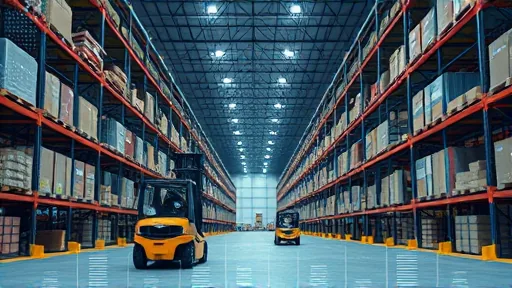
Consider the warehouse manager who once knew every aisle, every worker, every bottleneck by instinct. Today, an AI dashboard tells them where to send the forklifts, which orders to prioritize, and when to schedule breaks for maximum throughput. The system is undeniably efficient. It shaves minutes off every pick, every pack, every dispatch. Yet the manager’s expertise, the hard-won intuition that comes from years of hands-on problem-solving, slowly atrophies. The AI does not just assist the decision; it replaces the need for the decision-maker’s judgment. When the system encounters a novel disruption, a snowstorm, a supplier failure, a sudden spike in demand, the manager is left with a tool that cannot adapt and a skill set that has gone stale.
This is the efficiency trap. It emerges when the optimization of a single metric, like speed or cost, comes at the expense of resilience, learning, and adaptability. The AI improves the system within its defined parameters, but it simultaneously erodes the human capacity to operate outside those parameters. The gains are immediate and visible; the losses are gradual and diffuse. A study of customer service centers found that agents using AI-assisted response tools became measurably faster and more consistent in their replies, but their ability to handle complex, emotionally charged, or unusual complaints declined sharply over six months. They had become excellent at following the script, and poor at reading the room.

The pattern repeats across industries. Radiologists who use AI to flag suspicious scans report higher accuracy on routine cases, but they also show a marked decrease in their ability to identify rare pathologies that the AI was not trained to recognize. Financial analysts who rely on AI-driven risk models are better at predicting common market movements, but they are less prepared for the black swan events that defy historical data. In each instance, the AI lifts the baseline performance while simultaneously lowering the ceiling of human capability. The system becomes a crutch, and the muscle of independent thought weakens. The cost is not paid in the moment of optimization; it is paid later, when the unexpected arrives and the human mind, long unexercised, fails to rise to the occasion.
A Lesson from the Cockpit
The problem is not new, and it has a name. Aviation experts have called it “automation complacency” for decades. When the autopilot was introduced into commercial aircraft, it transformed the industry. It reduced fuel consumption, smoothed out flights, and allowed pilots to focus on strategic decisions rather than constant manual adjustments. The safety record improved dramatically. But as the technology became more reliable, pilots began to trust it implicitly. Their manual flying skills, the very skills needed to take over in an emergency, deteriorated. When the automation failed, as it occasionally did, the pilots were often slow to react, confused by the sudden shift in control, and tragically, sometimes unable to recover the aircraft.
The aviation industry learned a hard lesson. It responded with mandatory manual flying hours, simulator training that deliberately introduces automation failures, and a cultural shift that emphasizes the pilot’s role as the ultimate authority, not the autopilot’s backup. The AI is a tool, the industry now insists, not a replacement for judgment. This precedent is instructive for the broader deployment of AI across every sector of the economy. It proves that the efficiency gains of automation are real and valuable, but they come with a hidden liability. The liability is the slow erosion of the human skills that make the system resilient in the first place.
The current wave of AI reasoning models, the engines behind the latest chatbots and analytical tools, threatens to accelerate this erosion. These systems are trained to solve problems, to reason through complex scenarios, and to generate solutions. They are being integrated into everything from legal research to software development to medical diagnosis. The potential for efficiency gains is enormous. A lawyer can review thousands of documents in minutes. A programmer can generate boilerplate code in seconds. A doctor can get a second opinion on a diagnosis instantly. The promise is that these tools will free up human experts to focus on the more creative, strategic, and interpersonal aspects of their work. The risk is that they will instead become dependent on the tool’s reasoning, accepting its conclusions without the critical scrutiny that comes from having worked through the problem themselves. The difference between assistance and abdication lies in whether the expert still owns the reasoning process.
The Thin Line Between Assistance and Dependence
The question is not whether AI can improve our performance. It demonstrably can. The question is what happens to our own capabilities when we rely on it. The answer, increasingly, is that they diminish. The gains are real, but they are purchased with a currency we rarely account for: our own cognitive sharpness. The AI becomes a permanent crutch, and the muscle of independent thought continues to weaken. The line between assistance and dependence is thin, and it is crossed not with a dramatic leap, but with a thousand small, convenient steps.
Research from EpochAI, an independent research institute tracking AI compute trends, projects that the rapid scaling of AI reasoning models will encounter significant constraints in the coming years. The exponential growth in training compute, the raw horsepower behind these systems, is approaching practical and economic limits. This means the dazzling improvements we have seen, the leap from one model generation to the next, will slow down. The pace of AI-driven efficiency gains will plateau. This is not necessarily a bad thing. It gives us a moment to pause, to reassess the relationship we are building with these tools. It forces us to ask a difficult question: are we using AI to become better, or are we using it to become less necessary?
The answer will shape the next decade of work. If we treat AI as an oracle, a source of definitive answers, we will surrender our judgment and become mere operators of a system we no longer understand. We will be the warehouse manager who has forgotten the aisles, the pilot who cannot fly without the autopilot. But if we treat AI as a sparring partner, a tool that challenges our assumptions and forces us to articulate our reasoning, we can preserve, and even sharpen, our own capabilities. The efficiency gains are real, but they are not the whole story. The real story is about what we choose to do with the time and attention that AI frees up. Do we invest it in deeper thinking, or do we let the machine do more of the thinking for us? The open question is not about the limits of AI. It is about the limits we are willing to place on ourselves.
Sources
1. EpochAI