Yunnan Cave Yields Richest Denisovan Fossil Trove
What Sat Buried Beneath a Chinese Hillside
Southwestern China’s Yunnan
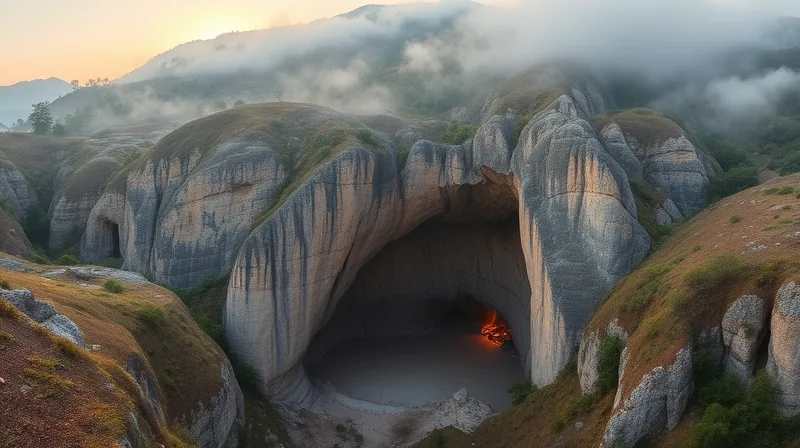
Province is a landscape of limestone ridges and river valleys. For decades, one particular hillside there held no special interest — until an ecological restoration project at an abandoned quarry peeled back the ground in 2019 and exposed the mouth of a buried cave. That cave, now called Bianfu Cave, has turned out to hold the richest trove of Denisovan fossils ever found outside Siberia, according to two studies published on September 9 in Nature
The Denisovans were a close relative of modern humans who lived across Asia between roughly 400,000 and 30,000 years ago. Researchers have recovered only a handful of their fossils in total, a stark contrast to the thousands of Neandertal remains held in museum collections. That imbalance has kept the Denisovans in the shadows ever since their existence was first revealed in 2010, when DNA analysis of a single finger bone from a Siberian cave announced an entirely new human species to science.
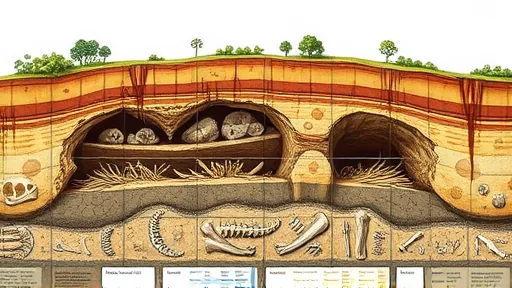
What makes the Yunnan discovery different is not merely the number of bones. It is that the fossils sit in the same sediment layer as butchered animal remains and more than 1,300 stone tools. For the first time, archaeologists can examine what Denisovans ate, how they worked, and what they left behind at a single site. “The cave tells us a little about how Denisovans actually lived on the landscape,” says Shara Bailey, a paleoanthropologist at New York University. [2] “Denisovans are becoming a bit less mysterious.”
Proteins and Scans Reveal Who Lived There
Identifying the cave’s occupants required two independent lines of evidence, neither of which relied on ancient DNA. The first was protein analysis. Every sample from Bianfu Cave carried a Denisovan-specific variant of collagen, the main structural protein in bone, says Qiaomei Fu, a molecular paleogeneticist at the Chinese Academy of Sciences in Beijing. That molecular fingerprint alone clinched the identification.
The second line was shape. The team used micro-CT scans, a technique that builds three-dimensional images of internal structures from X-ray slices, to compare the teeth against those of several human species. “As soon as he saw a picture of the tooth, I immediately assumed that they were probably Denisovan,” says Clément Zanolli, a paleontologist at the University of Bordeaux, France. [3] The teeth shared distinct features with other Denisovan teeth recovered in Laos and Tibet, reinforcing what the proteins had already indicated.
Together, the evidence confirmed that the fragmentary remains — four teeth, two pieces of a skull, and part of an arm bone — belonged to at least three Denisovans. The individuals lived between 167,000 and 134,000 years ago. The tools found alongside them span a wider range of dates.
A Species That Hunted Differently in Different Places
The animal remains at Bianfu Cave tell their own story. Researchers catalogued identifiable fragments, mainly deer and other ruminants, the hoofed, plant-eating mammals that chew their cud. Few of the bones show signs of carnivore gnawing, but some bear the telltale marks of cutting and scraping.
That pattern differs from what has been found at other Denisovan sites, where fossils have turned up alongside different kinds of prey. For Bence Viola, a paleoanthropologist at the University of Toronto who has studied Denisovan remains from Siberia’s Denisova Cave, the butchered deer bones point to flexibility. The species “adapted to their environment. They hunted different things in different ways,” he says. Taken together, the Yunnan material offers “a much more complete picture” of Denisovan life.
One question the site may finally settle concerns authorship. At Denisova Cave in Siberia, researchers did find tools alongside Denisovan remains, but Neandertals and modern humans also occupied that cave, so no one could say with certainty who made them. At Bianfu Cave, the team found no evidence that any other type of human was present. That absence, Fu, Zanolli, and their colleagues argue, suggests the tools were the work of Denisovans themselves.
The broader significance reaches beyond a single cave. Many people alive today — including groups in the Philippines, Tibet, New Guinea, and Australia — carry Denisovan DNA, a genetic legacy that stretches across continents. Yet the fossils behind that legacy have been so scarce that archaeologists could say little about where the Denisovans lived or what they left behind. Bianfu Cave narrows that gap.
Sources
1. Chinese Academy of Sciences
5. Nature