Why More Firefighting Planes Will Not End Europe Megafires
The Debate Treats Symptoms, Not Fire
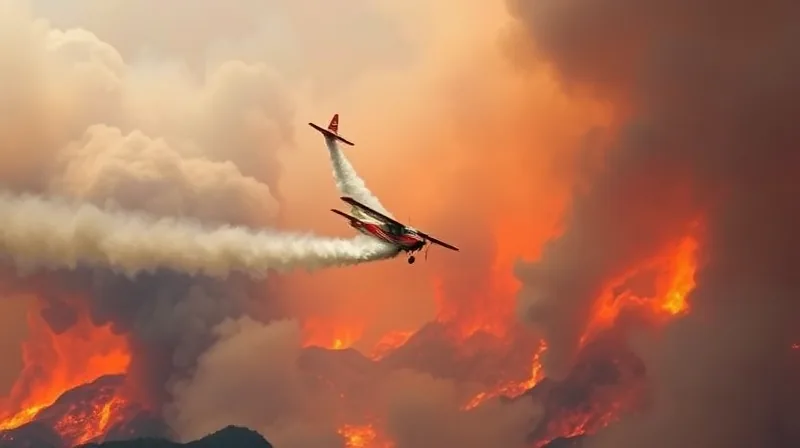
Imagine a doctor who answers every fever with stronger painkillers but never treats the infection beneath it. The patient may feel better for a short time. Then the fever returns, often worse than before. Europe is now making the same mistake with wildfires. As unprecedented fires continue to burn in France and Spain, the blame game has also heated up. Right-wing opposition politicians say both governments under-invested in water bombers. They point out that nearly half of their Canadair planes are out of operation. Canadair planes are aircraft built to scoop water from lakes and drop it onto flames. Officials, in turn, accuse conservative-led regions of undermining fire control. They single out Madrid, where the forest fire service is only half-staffed. Experts who study fire say these arguments all miss the point. The debate is about symptoms, not about the disease.
What would treating the disease look like? Europe must invest more in fire prevention, including prescribed burns. Prescribed burns are controlled fires set on purpose to clear dead vegetation. Europe must also allow some wildfires to burn. This is not only a problem for the Mediterranean. The need for prevention reaches the UK. A wildfire in Suffolk came within 5 kilometres of the Sizewell nuclear power station. Another fire burned 25 square kilometres of moorland and forest in the Cairngorms, Scotland. Those fires show that the danger is not confined to southern Europe. Prevention is the only way to stop it before it starts.
Money spent on planes is money that cannot be spent on prevention. Sebastien Lahaye, a wildfire expert at the French consultancy Warucene, makes the point bluntly. “You can double the number of planes,” he says. [1] “You can triple it.” [1] Such an approach is very, very costly. Every single euro put into aircraft is a euro that is not invested in prevention. Lahaye adds that even with more aircraft, one fire or several fires will escape. [1] Those escaped fires are exactly the ones that become huge. A megafire is a wildfire so large that ordinary control methods fail. No fleet can catch every spark. The only reliable way to shrink a megafire is to reduce the fuel it feeds on.
The Success That Made Forests Explode
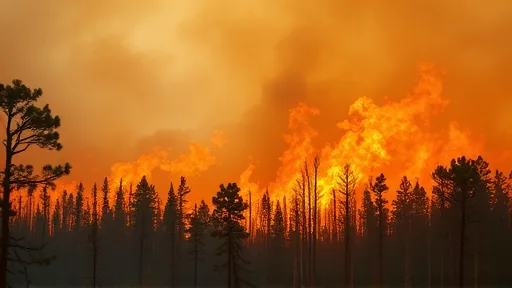
The disease itself has three main ingredients. The first is drought. The second is heat. The third is a build-up of fuel that can burn. Europe has received a generous portion of all three this year. A wet spring in parts of Europe helped vegetation grow. That vegetation then dried out during a widespread summer drought. Much of the continent has since suffered through its fourth heatwave. The result is now visible in the numbers. More than 4,300 square kilometres have burned across the European Union. [5] If that pace continues, it will break the record of 10,800 square kilometres burned in the previous year. [5] Record-sized wildfires near Bordeaux and Madrid forced one of the largest evacuations since the second world war.
Southern Europe did not always lose so much land to fire. A study by Raúl Cordero at the University of Groningen in the Netherlands and his colleagues found that the average number of wildfires each year has declined since 1981. [2] The area burned has declined as well. Mediterranean countries warned the public against campfires and cigarettes in woodlands. They trained firefighters and bought planes and helicopters. They became very good at extinguishing blazes quickly. This crackdown, however, created a tinderbox. Shrubs and brush have proliferated in the absence of frequent small fires. A landscape with more fuel is a landscape where small mistakes become megafires. Researchers call this the suppression paradox: the better you suppress fires, the worse the next one can be.
The suppression paradox has been made worse by social changes. People have left rural areas for cities in large numbers. Former farms and pastures have been left to grow over. At the same time, more houses have sprung up in forests outside cities like Barcelona. That raises the risk of wildfires, which are most often ignited by humans. Global warming is now catching up with all these improvements in fire suppression. Hot, dry and windy fire weather days have more than doubled across much of southern Europe, the study found. [2] Cordero says this year seems to confirm the hypothesis he and his colleagues had been testing. [2] They believed Europe was about to enter a new era of large fires. Such fires did not exist in Europe before, he says, because of the successful fire suppression and education that had kept them small.
Prevention Is Uncomfortable But Necessary
What would a fire-resilient Europe look like? It would not be a Europe that answers every fire with more firefighting. It would be a Europe that makes landscapes able to survive flames. That means embracing uncomfortable tasks. Johann Goldammer at the Max Planck Institute for Chemistry in Germany points to the money problem. In many countries, roughly 90 per cent of the fire budget goes towards fighting fires. [3] Only 10 per cent goes towards preventing them. [3] Goldammer says the split should be reversed. Ninety per cent of available money should go to prevention and proactive measures. [3] Only 10 per cent should be needed for suppression in the end. The European Union has been working to restore nature in 20 per cent of its land area by 2030. [5] But in many cases, woodlands need more intensive management, including sustainable logging, Goldammer argues.
Logging alone will not solve the problem. The fire near Bordeaux raged through Europe’s largest human-made forest in Landes. That forest covers 10,000 square kilometres. The land was once so swampy that shepherds walked on stilts. Napoleon III reclaimed the marshes by planting maritime pines. Those pines are still harvested for paper and lumber. Landowners have built access roads, water ditches and fire breaks, especially since a devastating fire in 2022. But they have also replanted the same pine monoculture, a practice that raises fire risk. Portugal offers a similar warning: eucalyptus monocultures fuelled the Pedrógão Grande fire, which killed 66 people in 2017. Lahaye says diversifying trees in the Landes may be difficult. The fire breaks there at least need to be widened and increased. Elsewhere, trees can be thinned and brush cleared to create fuel breaks. Re-establishing orchards, vineyards, pastures and agriculture can create a mosaic of higher and lower fire fuel loads. That mosaic would replace the uninterrupted tree cover that let fires near Bordeaux and Madrid explode out of control. Spanish regions have even deployed herds of goats, sheep and cows to devour flammable brush. In France, however, only 30 per cent of risky brush has been cleared because wildfire regulations and biodiversity regulations conflict with each other.
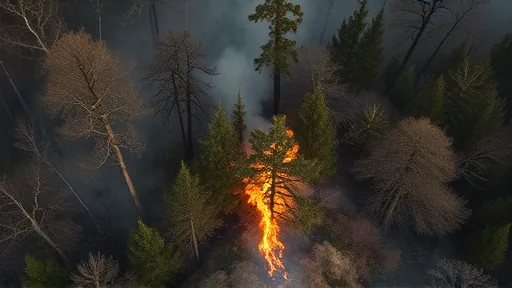
Clearing brush is not always enough. The most effective way to remove undergrowth is often a prescribed burn. The evidence for that comes in part from the western United States. In 2020, wildfires were 16 per cent less severe in areas that had previously undergone prescribed burns. They also emitted 14 per cent less harmful particulate pollution. Europe is much more densely populated, and many locals see prescribed burning as a threat. Regulations sometimes still prevent it. Along roads in the Landes, prescribed burning has been carried out. Inside timber plantations, however, it is excluded. There are even cases where the best answer is to let a wildfire burn. Stefan Doerr at Swansea University in the UK says this can make sense, especially in winter. [4] Firefighters near Barcelona would explain it this way, Doerr says: if a forest fire is burning without strong winds, let it burn, because it will not burn again for a long time under windier conditions. Doerr adds a warning that cuts through the whole debate. “Everybody likes a nice pine forest,” he says, “but it’s a bomb.” Doerr’s warning leaves Europe with a question that no new aircraft can answer: how much of what looks like a forest is actually fuel waiting for a spark?
Sources
1. Warucene