A Night in October
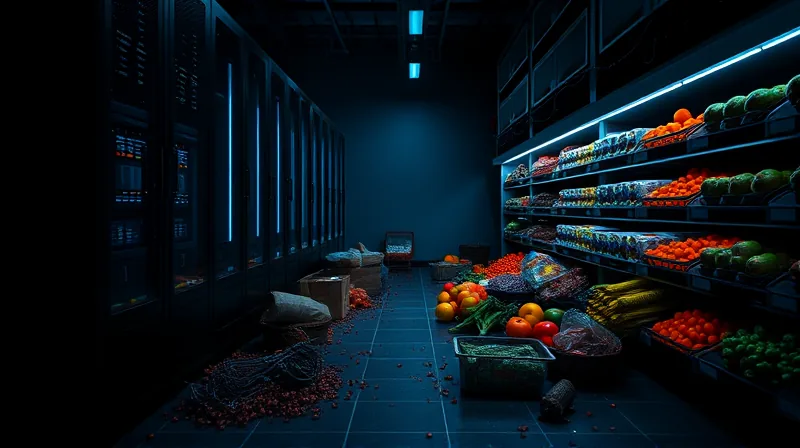
For years, the fingerprints of state-backed hacking were found the way detectives find fingerprints at a burglary: after the damage was done, by sifting through what was left behind. This case worked the same way, but the trail was unusually vivid. One night in October, intruders reached into refrigeration systems at hundreds of supermarkets across France and raised the temperature. [1] Millions of euros of food spoiled in a single sweep. Investigators later found traces of Farsi and other clues embedded in that digital trail, and those traces pointed toward an elite unit of the Islamic Revolutionary Guard Corps.
That unit has a name, and Western intelligence agencies already knew it well. Shahid Kaveh takes its name from Mahmoud Kaveh, an Iranian commander who died during the Iran-Iraq war of the 1980s. It operates as one of several hacking units under the Revolutionary Guards’ Cyber Electronic Command. The group often appears online under the persona CyberAv3ngers. The attribution was not a shot in the dark; it was a match against a file that had been open for years.
The scale is what makes this episode a threshold rather than a footnote in the record of Iranian cyber operations. Hackers have gone after commercial fridges and freezers before. They have never done it at this size, and never in the heart of Europe. State-backed Iranian hackers have rarely struck Europe in this manner at all. October’s operation, in the assessment of experts, marks an escalation in the Islamic republic’s cyber warfare strategy and a new willingness to hit European infrastructure.
The message behind the operation is not hidden. “Iran has very clearly messaged that the global economy will be disrupted as a consequence of it being shut out from the world,” said Ellie Geranmayeh of the European Council on Foreign Relations. [1] France and other European countries have largely stayed out of the US and Israeli campaign against Iran, which began in February. Yet the Islamic republic increasingly treats all Nato countries as legitimate targets, she continued. “This is about sowing panic in Europe and increasing that global pain threshold.” [1]
The Doorbell They Rang First
The technical method reads like a shopping list for anyone who wants to find an exposed machine. French intelligence agencies say the group used a Chinese-made scanning tool to sweep the public Internet for connected refrigeration units. Infrastructure linked to the group also carried out reconnaissance using Modbus, a digital language widely used to control industrial machinery. That technique is not new for Shahid Kaveh — authorities say the group has employed it since at least April. A protocol built to let machines talk to each other became the doorbell the attackers rang before walking in.
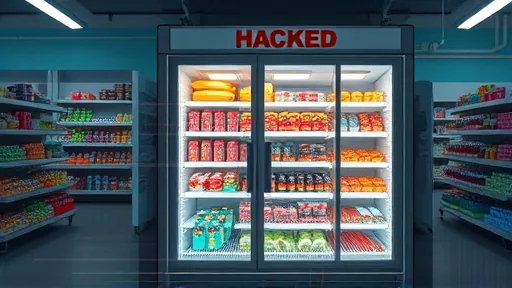
The pattern matches a history that stretches back several years. In 2023 and 2024, the same group hacked Israeli-made industrial control devices inside water, manufacturing, and transportation systems across several US states. Operational disruption in those cases was minimal. The attackers nevertheless left a message each time: “Every equipment ‘made in Israel’ is CyberAv3ngers legal target.” The freezer campaign differs in consequence, not in ambition: what was a signature scrawled on a wall in America became a power cut for the cold chain of an entire country. What was a signature scrawled on a wall in America became a power cut for the cold chain of an entire country.
The modus operandi described by the French authorities is consistent with the Iranian attacks in the US in 2023 and 2024, said Cynthia Kaiser, former deputy cyber director at the FBI. Near-identical hacks have taken place this year, though CyberAv3ngers did not claim responsibility, and US authorities stopped short of explicitly blaming Iran. Kaiser raised a second possibility: a third state could have contracted Shahid Kaveh to conduct the European attacks. “Even if Iranians were behind the keyboard, these attacks really appear more consistent with Russian-type targeting,” she said. “It wouldn’t surprise me if we eventually uncovered collaboration behind the scenes.” Russia, like Iran, has sophisticated cyber capabilities and has shown increasing willingness to use them against Europe. Sanam Vakil, Middle East director at Chatham House think-tank, acknowledged that Russian involvement remained a possibility. The strength of the relationship between the two countries, she noted, is often under-appreciated by Western officials. “Their ties have grown through the context of these wars,” she said, referring to Russia’s full-scale invasion of Ukraine and Iran’s conflict with the US and Israel. In March, the Russian state-sponsored hacking group NoName claimed responsibility for a series of attacks on Israeli targets. Two hands may have been on the same keyboard.
A Weapon Used Once, and a Signature at the Top
Whether Shahid Kaveh acted for Moscow or for another power, the operation would have needed a green light from the top. Gil Messing, chief of staff at the Israeli cyber security group Check Point Software, is explicit on this point. Cyber weapons have a limited shelf life. Once a specific software or hardware vulnerability has been exploited, other potential targets tend to patch it almost immediately. The decision to stage such an operation, and thereby burn out the capability, is something that would have to be authorized by senior levels. “This is not a very sophisticated attack, but it sends a very strong message,” Messing said. A crude tool, used once and thrown away, still needs a signature on the order at the top of the chain.
The political aftermath is already moving through legal channels. Iran has denied any role in the freezer hacks. France is seeking international arrest warrants for three Iranians allegedly involved. One is Hamid Reza Lashgarian, believed by US intelligence to be head of the Guards’ Cyber Electronic Command. The other two are Shahid Kaveh leaders: 37-year-old Mahdi Lashgarian and 35-year-old Reza Salarvand. Both Lashgarians were placed under US sanctions in 2024. The warrants, if granted, would turn a digital investigation into a physical pursuit.
The same method did not stay inside France’s borders. Similar attacks were staged this month against supermarkets in 10 other countries across Europe, though no group has yet been blamed for them. That detail matters more than its brevity suggests: what looked like a single national incident may be better understood as a rehearsal run across a continent, with the same script and, so far, no named author. The freezer is a strange front line. It is also, as October showed, a remarkably exposed one, and the next campaign may already be running.