The Chamber That Waters Itself
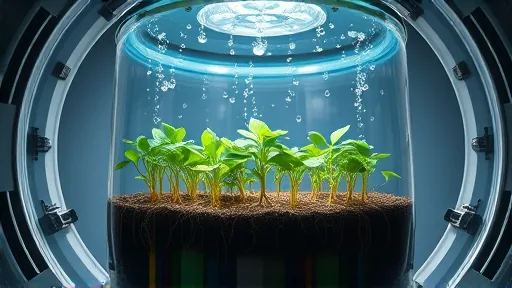
The payload is a prototype growth chamber, the first of its kind built for space crop production, and its job is narrow on purpose. [1] It must validate that its water delivery and volume optimization technology actually works in microgravity.
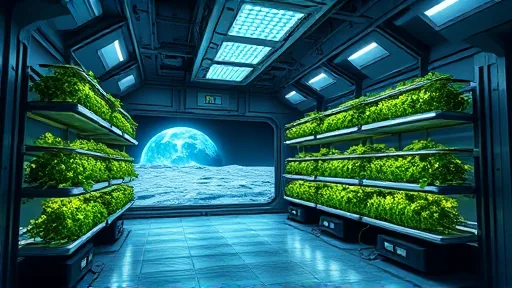
The stakes are laid out plainly. Astronauts who travel farther and stay longer will need sustainable sources of food, and that requirement cannot be met by shipping meals from Earth. The new chamber is meant to yield critical insights for developing safe, nutritious, and reliable crop production systems for future Moon Base habitats and Mars missions. [1].
There is a second audience for the results, and it never leaves the ground. Knowledge gained from the space crop production system could help inform agricultural practices such as vertical farming and indoor growing systems.
Two Investigations, One Division
The mission pairs two lines of work inside a single division. NASA’s Biological and Physical Sciences Division is sending both the crop chamber and a precision health investigation, and the division’s stated purpose is to use space environments for investigations not possible on Earth. [1] Studying biological and physical phenomena under extreme conditions, in the division’s framing, advances the fundamental knowledge required to go farther and stay longer in space while also benefiting life on Earth.
The second investigation is the more delicate of the two. It is the next step toward enabling long-duration studies of human brain tissues in space. [1] It builds directly on a previous investigation that sent small, lab-grown models of the human brain — called miBrains — to the space station. Where the earlier flight carried the tissue, this one carries the plumbing: the experiment will validate a miniature fluid-handling system designed to mix, deliver, and maintain the nutrient-rich liquid that keeps the tissues alive. [1] The crop chamber must deliver water without gravity. The miBrain system must deliver nutrients without gravity.
The payoff for the health investigation is stated in two registers. Researchers could use the findings to help identify potential neurological risks associated with spaceflight and to develop strategies to protect astronaut health. On the ground, the same work may advance human tissue research and neurological disease modeling. [1] A fluid system that keeps a brain model alive for months is a tool for studying disease as much as for studying orbit.