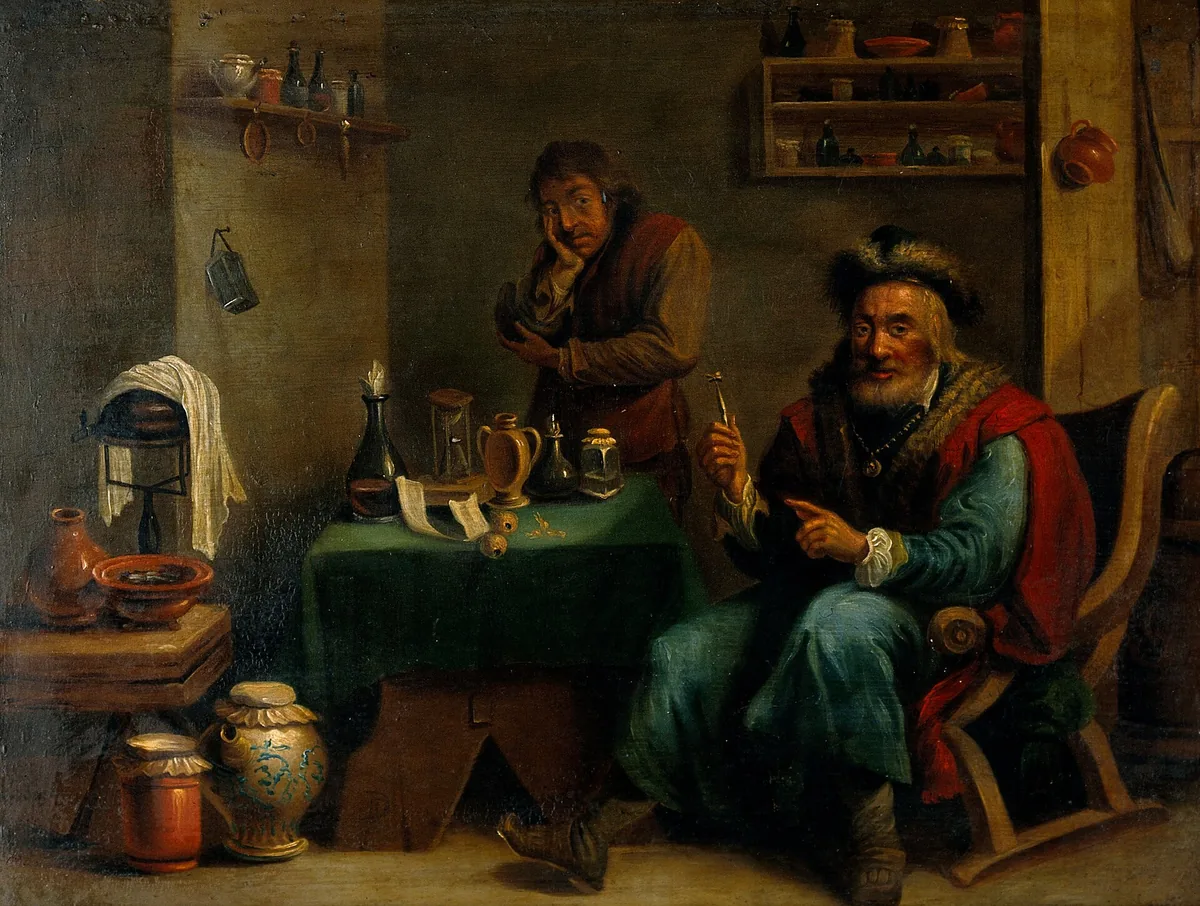
A Diagnosis Made Before a Single Word
Joseph Bell could tell you who a man was before the man opened his mouth. A callus, a stain, a limp — each was a sentence in a language he had taught himself to read. Lindsey Fitzharris, a medical historian, has now written a full biography of the Edinburgh surgeon, Sleuth-Hound: The Case of the Real Sherlock Holmes, and her central point is that this parlor trick was never the whole man. [1] The book arrives in 2026, and it treats Bell as a subject in his own right rather than a footnote to fiction.
The comparison with Sherlock Holmes is the easy part, and Bell himself found it reductive late in life. What Fitzharris recovers is the texture the myth flattens. Bell was deeply empathetic toward his patients. He was a family man. His wife died in childbirth when he was in his thirties, and he never remarried, raising three children alone while holding her memory for the rest of his life. That is not a detective. That is a widower with a demanding practice and a household to run.
The book’s sharpest question is about knowledge, not resemblance. Fitzharris notes that Arthur Conan Doyle knew Bell in his capacity as a student, not as a man. Her husband, the caricaturist Adrian Teal, can only caricature people he does not know well — because caricature lives on first impressions. Doyle, by that logic, drew the most recognizable flashy trait of his teacher and transposed it onto a fictional detective. Fitzharris poses the question at the end of the book: would Holmes exist at all if Doyle had known Bell better, or would he exist in the same format?
Contemporaries who knew Bell recognized the theft immediately. Robert Louis Stevenson read Sherlock Holmes and wrote to Conan Doyle, closing with a line that bothered him: could this be our old friend Joe Bell? The letter is a small hinge in the record — evidence that the resemblance was visible in real time, not excavated by later fans.
When Medicine First Walked Into a Courtroom
The real story Fitzharris tells is not about a detective. It is about the birth of forensic medicine — the moment when medical evidence entered a courtroom and began to decide who would hang. Bell was not merely inspiring Holmes; he was doing the work in practice, officially alongside a police surgeon named Henry Duncan Littlejohn. Littlejohn was himself a pioneer of fingerprinting and courtroom photography. Together they worked on some of the biggest high-profile cases in nineteenth-century Scotland. Fitzharris suggests Littlejohn may also have taught Conan Doyle: Bell gave the young author the method, and Littlejohn gave him the world of forensics. Littlejohn was a professor of forensics in Edinburgh at the time.
The baby farming case shows how brutal that world could be. There was no birth control, so many women bore many children while deeply impoverished, unable to feed them. They turned to baby farmers, who in theory took a fee and placed the child with someone who could care for it. No legal route to adoption existed in the nineteenth century. In the case Fitzharris recounts, the baby farmer Jessie King took the fee and killed the infants. The chapter opens with boys finding a bundle of rags and kicking it around as a football — then opening it to find the decomposing remains of a child. Bell and Littlejohn performed the postmortems and testified at the trial.
Fitzharris names the dark theme directly: much of early forensics was built on the brutalized bodies of women in particular. Many of the crimes were committed on women who never received justice — yet the science outlived what their bodies taught the early investigators.
The Chantrelle case ties toxicology to the same pair. Eugene Chantrelle was a respectable Edinburgh French tutor. His wife Lizzie appeared to be poisoned by a gas leak, a broken pipe in the flat; she was removed from the property and later died. Chantrelle had been abusing her throughout the marriage. Littlejohn is thought to have brought Bell onto the case. The two men discovered opium poisoning, tested the vomit on her nightgown, and tied Chantrelle to the crime. Bell worked in the shadows, as Holmes did, so for earlier cases it is hard to confirm his involvement. But on the scaffold, Chantrelle allegedly looked around at the audience, locked eyes with Littlejohn, and shouted: give my regards to Joe Bell, he did a good job putting the noose around my neck. [1] How Chantrelle knew Bell had worked the case is unexplained — no records confirm it beyond the words he allegedly shouted on the scaffold.
Chantrelle had another life. He drank with Robert Louis Stevenson, and he became one of the inspirations for Dr. Jekyll and Mr. Hyde — the respectable exterior over a sinister interior. The prosecutor told Stevenson this was not Chantrelle’s first victim, claiming he had killed four or five others with opium and cheese parties. Fitzharris calls the Victorian period the golden era of murdering: poisons were available over the counter, some were legal, many were hard to detect, and forensic medicine was only just developing. In her words, you probably had more of a chance in the nineteenth century of getting away with it. Chantrelle had trained as a doctor at one point and bought a huge amount of opium before the murder. Even the chemist found it strange but assumed he was a physician.
A Diary Unlocked After a Century
The evidentiary spine of the book is a document nobody could read for generations. Bell’s diary became available after being locked away for over a century by the Bell family — perhaps, Fitzharris suggests, waiting for enough time to pass. Fitzharris nearly titled the book Sleuth-Hounds, plural, because the diary lets her flesh out what Bell was doing through his partnership with Littlejohn. Court records supply dialogue from the murder trials. Letters and diaries supply the rest. Nothing is made up, though she admits to educated guesses: Conan Doyle was a terrible narrator of his own life, contradicting himself even in his own memoirs, which made it hard to pin down when he first met Bell. She places it in the winter of 1878 and provides the context in the back notes.
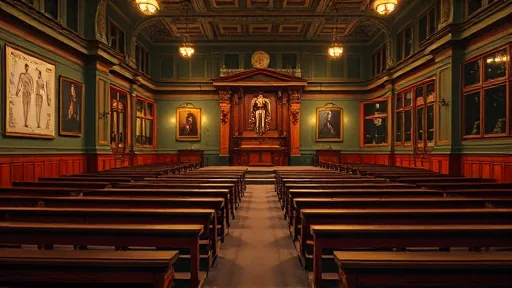
The winter-1878 scene is preserved in detail. A carriage drawn by two chestnut horses named Major and Minor carried Bell through Edinburgh’s cobbled streets before dawn, past ten-story ramshackle houses and chimneys belching coal smoke, to the Royal Infirmary of Edinburgh, where he was senior surgeon. In the amphitheater — a stage enclosed by tiered stands under a large skylight, a wooden operating table at the center with a sawdust-filled tray beneath to catch blood — Bell studied a patient’s dress, mannerisms, features and expressions. He announced the man had been a soldier in a Highland regiment, probably a band musician who played the bagpipes, given his short stature and swagger. The man shook his head. He had never served. He was a shoemaker. Bell later called it rather a floorer, but being certain he was right, he did a pretty cool-headed thing and ordered two more patients brought in. [1]
Fitzharris frames the whole enterprise as medical history being the most universal way into the past. She wants a reader who knows nothing of Holmes or forensics to enjoy it, while the historian’s obligation is a book armed to the teeth with sources. Her stated superpower for 2026 is making people feel good about living today. She has been through cancer herself and calls today the best day to be alive and to receive that diagnosis, with tomorrow a little better. She hopes chemotherapy and radiation become obsolete — they are brutal — and points to a personalized mRNA cancer vaccine on the horizon that cut melanoma death and recurrence by 42 percent.
The forward step she names is not a discovery but a correction of memory. Vaccines for preventable diseases are slipping in the United States: a Pennsylvania measles outbreak has topped 1,000 cases, the largest since the disease was eliminated, and a 39-year-old unvaccinated woman became the sixth measles death in the state. Separately, a coroner confirmed measles killed a six-week-old baby after a disputed death count, and Pennsylvania has issued an alert on congenital measles, something the country has not seen for decades. Fitzharris’s answer is the archive itself: the diaries and letters of brokenhearted parents who lost child after child to measles or polio. She posts pictures of smallpox and people think they are AI — they cannot believe such a thing existed. Smallpox is the only human virus ever eradicated, and she intends to keep banging the drum until the ship steadies and people learn from the past again.