The aging brain’s memory decline and its warning signs
The word memory comes from the Latin memor, meaning mindful or remembering. But the brain’s ability to hold onto moments is not a single faculty. It is a process. It has stages. It has a timeline. And like any biological system, it changes with time.
For most of human history, people accepted that old age brought forgetfulness. Grandparents repeated stories. Names slipped away. Keys vanished. This was seen as natural. It was part of the arc of life.
But in the last century, we began to draw a line. We separated normal aging from disease. We called the disease dementia. And we started to fear the line itself.
The problem is that the line is not sharp. It is not a wall. It is a gradient. And understanding where you stand on that gradient requires knowing what happens to the brain as it ages, what is typical, and what signals something deeper.
The Machinery Slows Down
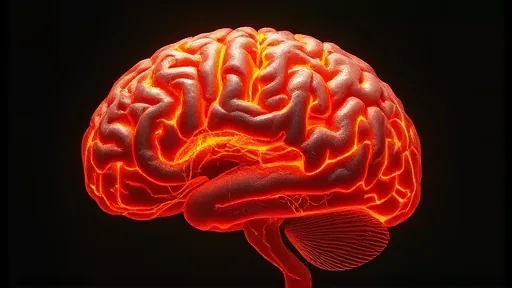
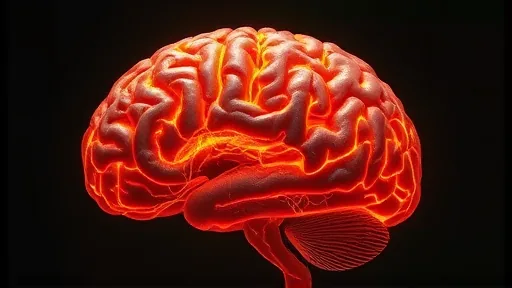
The brain does not age uniformly. Some regions shrink faster than others. Some connections weaken more. The hippocampus, a seahorse-shaped structure deep in the brain, is one of the first areas to show age-related change. This region is critical for forming new memories. It encodes the what, where, and when of your life.
Ulman Lindenberger, a cognitive neuroscientist at the Max Planck Institute for Human Development in Berlin, has studied this process for decades. In a 2025 study published in Nature Communications, Lindenberger and his team analyzed data from over 3,700 cognitively healthy adults and found that age-related memory decline correlates with the degradation of white matter connections between brain regions, particularly in the default mode network.
This deterioration happens because the fatty coating that insulates neurons gradually degrades. This coating, called myelin, allows signals to travel quickly. When it breaks down, communication between brain areas slows. The hippocampus also shrinks. These changes begin in middle age. They accelerate from there.
Lindenberger says that decline in what researchers call episodic memory is a normal part of human cognitive aging. Episodic memory is the memory of events. It is what happened, where it happened, and when it happened. In most adults, this decline becomes apparent in their 60s. It affects all stages of memory. It affects encoding new events. It affects consolidation. It affects retention. It affects recall.
This is not something to worry about. It is a feature of the system. Learning and episodic memory are about forming new associations. The machinery that does this becomes less reliable with advancing adult age.
Many everyday memory failures are not memory failures at all. They are attention failures. If your brain never properly encoded where you put your keys because you were distracted or stressed in the moment, there is not much to retrieve later. The memory was never stored.
The First Red Flag: Repetition
The transition from normal aging to something concerning is subtle. Neurologists take notice when incidental forgetfulness becomes a pattern. This pattern interferes with daily functioning. You forget things you used to remember. You forget important things. The memory loss accelerates in a way that others notice.
Ronald Petersen, director of the Mayo Clinic Alzheimer’s Disease Research Center, notes that clinical concern arises when individuals forget important information, such as appointments or scheduled events, and when family members confirm these lapses are a recurring pattern When it becomes a pattern and those around you notice these episodes, it might be time to seek attention.
One of the best indicators of a concerning pattern is conversational repetition. This is not the occasional retelling of a story. It is repeating the same question multiple times in a short period without awareness.
The reason repetition is a good indicator lies in what happens in the brain during mild cognitive impairment. This is the transitional stage between typical aging and dementia. In Alzheimer’s disease, the most common form of dementia, the earliest changes occur in the hippocampus and entorhinal cortex. These regions are crucial for encoding and consolidating new episodic memories.
People affected struggle disproportionately with forming new memories. They struggle with a recent conversation. They do not struggle with recalling established memories. If someone asks the same question several times in the space of an afternoon, it may be because the memory of asking the question never properly formed in the first place. This is a potential red flag.
The Difficulty of Drawing the Line
There is no hard-and-fast rule about what kinds of forgetfulness indicate something more serious. Getting lost in familiar places is another widely cited cause for concern. But even this can be ambiguous.
Lindenberger says that in advanced old age, the line between the lower range of normal age-related memory decline and dementia is difficult to draw. The problem is that there is not a sharp distinction. This is true in terms of behavior. It is also true in terms of biology.
Everything from anxiety and stress to depression and menopause can temporarily impair attention and episodic memory. Medications can also have this effect. It is always worth considering what else might lie behind signs of cognitive impairment before jumping to conclusions.
A 2025 study in the journal Aging & Mental Health found that older adults with high levels of dementia worry were significantly more likely to misinterpret normal memory lapses as signs of cognitive decline, compared to a control group with lower worry levels. This worry is itself associated with negative health outcomes.
The truth is that knowing what is normal and when to worry about memory loss in old age is difficult even for neurologists. It is harder for the rest of us.
What Stress Does to the Brain
The modern world does not help. Chronic stress is terrible for the prefrontal cortex. This is the part of the brain responsible for attention, planning, and impulse control. When stress is high, the prefrontal cortex works less efficiently. Memory encoding suffers.
Technology also plays a role. We get alerts from our phones and watches. Every time you shift your attention and then go back to what you were doing, your prefrontal cortex has to work to get back up to speed. This constant switching taxes the system.
Sara C. Mednick, a cognitive neuroscientist at the University of California, Irvine, and author of. The Power of the Downstate, has described how chronic stress and sleep deprivation can mimic early dementia symptoms, though the underlying mechanisms are distinct. This is not dementia. But the experience of being unable to complete simple tasks due to stress and fatigue can feel similar.
The overlap between stress-induced cognitive impairment and early dementia creates confusion. People worry. And worry itself can worsen memory.
The Historical Context of Memory Decline
The concept of normal memory decline is not new. Ancient Greek physicians wrote about it. They called it amnesia or forgetfulness. They attributed it to an imbalance of humors. They did not have a framework for distinguishing normal aging from disease.
In the 19th century, doctors began to describe a condition they called senile dementia. This was seen as a natural consequence of old age. It was not until the early 20th century that Alois Alzheimer identified the specific pathology that now bears his name. He saw plaques and tangles in the brain of a woman who had died with severe memory loss.
For decades, Alzheimer’s disease was considered rare. It was not until the late 20th century that it was recognized as the most common cause of dementia. Today, roughly 6 million Americans have dementia. This number is expected to increase as the population ages.
The hereditary connection adds another layer. Children and grandchildren of people with dementia face an unnerving risk. They watch their parents decline. They wonder if the same fate awaits them. This fear can make every forgotten name or misplaced key feel like a sign.
What You Can Do
There is no cure for age-related memory decline. There is no cure for Alzheimer’s disease. But there are things you can do to support brain health.
Physical exercise increases blood flow to the brain. It promotes the growth of new neurons in the hippocampus. Cognitive engagement, like learning a new language or playing a musical instrument, builds cognitive reserve. Social connection reduces stress and provides mental stimulation.
Sleep is critical. During sleep, the brain consolidates memories. It clears out waste products. Chronic sleep deprivation impairs memory encoding and retrieval.
Diet matters. A Mediterranean-style diet, rich in fruits, vegetables, whole grains, and healthy fats, has been associated with slower cognitive decline.
The goal is not to stop aging. That is impossible. The goal is to slow the rate of decline. To build resilience. To know when a pattern is worth worrying about.
The Biggest Frame
Memory is not just a personal faculty. It is a species-level adaptation. The ability to remember where food was found, which path was safe, and who was trustworthy allowed humans to survive and thrive. Memory is the foundation of culture, language, and civilization.
When memory fails in old age, it is not a failure of the individual alone. It is a reminder that the biological systems that built civilization are themselves temporary. The brain that remembers is the same brain that decays.
We are not separate from our biology. We are our biology. And our biology has a lifespan.
The line between normal aging and disease is difficult to draw because it is not a line. It is a gradient. It is a spectrum. And on that spectrum, everyone is somewhere.
The best rule of thumb, according to Lindenberger, is that concern is warranted when memory decline is rapid and begins to interfere with daily routines, such as managing finances or following conversations That is the threshold. Not the occasional lapse. Not the forgotten name. Not the misplaced keys.
The keys in the fridge are not a sign of dementia. They are a sign of distraction. And distraction, unlike neurodegeneration, is something we can address through mindfulness and stress reduction.
The real question is not whether you will forget. It is whether you will notice when forgetting becomes something more.