
Silent Reading Lab Meetings Improve Openness
Reading Before Speaking Changes Who Speaks
The simplest explanation for why laboratory meetings fail is that the wrong person is talking. A principal investigator presents, a postdoc nods, a student scrolls through email under the table. The information flows downhill, and whatever the group actually knows stays locked inside individual heads. Manuel Spitschan, a professor at the Technical University of Munich in Germany and a research-group leader at the Max Planck Institute for Biological Cybernetics in Tübingen, Germany, tried something that looks almost too simple to work. [2] His laboratory gathers every month for a video call that begins with twenty minutes of complete silence. During those twenty minutes, everyone reads a memo written by one member of the group. Only after the reading ends does the discussion begin, and it runs for the remaining seventy minutes.
The memo meeting format comes from industry, where the technology company Amazon introduced it in 2004.
Spitschan’s laboratory investigates how the environment influences human circadian rhythms and sleep across a wide range of biomedical-research areas, including laboratory, field, intervention and modelling studies. The monthly meetings bring those diverse methods into one room, unifying strands of work that would otherwise drift apart. The memo method, as Spitschan describes it, puts everyone on equal footing. A professor and a first-year student face the same six pages. There is no podium, no laser pointer, no advantage of seniority in the room — only the quality of the written argument and the willingness to engage with it.
Since April 2024, the laboratory has written around 50,000 words between them. [2] That is the length of a short novel. The topics ranged from the design of a particular experiment to a postdoc’s uncertainty about her scientific focus. Every one of those topics was covered in a memo no longer than six pages. The word count matters here. Fifty thousand words is not a side effect. It is the visible trace of a group learning to think on paper, month after month, with no editor and no audience except each other.
Why a Slide Can Hide Uncertainty
Presentations can act as a crutch when the speaker is uncertain about something.A slide can carry a line such as ‘n = 40, fully counterbalanced assignment of conditions’ without ever explaining how the counterbalancing is done or what happens if it fails. The audience sees a number and a method name, and the gap between what was written and what was understood stays invisible.
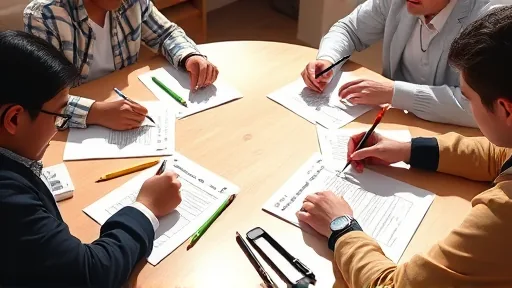
Writing in full sentences requires exacting precision, and any gaps in understanding become apparent to the author while drafting the memo. Those same gaps will also be visible to the reader if the author does not address them.
Writing six pages might seem like a lot more work than throwing together a slide deck. Spitschan acknowledges the asymmetry directly. But he argues it is time better spent. A memo still provides an update for other lab members — that function is preserved. What is added is the development of the writer’s thinking. The difference between those two things is the difference between a meeting that documents and a meeting that thinks.
What Spitschan did not anticipate was that this format would change what topics people were willing to bring to the table. The memo meeting was designed to make the laboratory more efficient. It ended up making the laboratory more open. A postdoc who would never stand up in front of the group to say “I am uncertain about my scientific focus” can write that sentence into a memo. The silence of the first twenty minutes gives everyone the same information at the same time, and the discussion that follows starts from a shared text rather than a shared performance.
The Next Measurement Is the One Nobody Has Taken
Whether the six-page narrative beats alternative ways of sharing information has never been tested empirically. The format is well embedded in Amazon’s corporate practices and is discussed in shareholder letters, but no study has compared it with slide-based meetings on information retention, decision quality, or the willingness of junior members to raise problems.
Spitschan’s own account stops at the observation that the format changed what topics people brought forward. [2] He does not claim to have measured that change. He does not offer a comparison group. The laboratory became more efficient, in his hope, and more open, in his surprise. Those are two different outcomes, and only one of them was the goal. The other arrived uninvited, which is often how the most useful things arrive in a laboratory — not through the protocol, but through what the protocol accidentally makes possible.
What would the measurement look like? It would need to compare memo meetings against presentation meetings on the dimensions that matter: the precision of experimental design, the frequency with which uncertainties are raised before they become failures, the distribution of speaking time across career stages. Until someone runs that comparison, the memo meeting remains what it has been since 2004 — a practice with a strong internal logic and no external validation. Spitschan’s laboratory is now one data point in a study that has not been designed. The silence at the start of the call is the intervention. Whether anyone will measure what happens after it remains open.