A Price Shock That Reopened an Old File
Anyone shopping for storage in 2026 went looking for a cheap terabyte and found instead a market that had flipped against them. Solid-state drives now cost two to three times their historic lows, according to price tracking compiled by Tom’s Hardware. [1] Mechanical drives were supposed to be the safe harbor, and they were not. A Seagate Exos 24TB unit that sold for $298.99 in the summer of 2025 carried a price of $699.99 by August 2026, per PCServerParts. [1] That is a mechanical hard drive more than doubling in a little over a year.
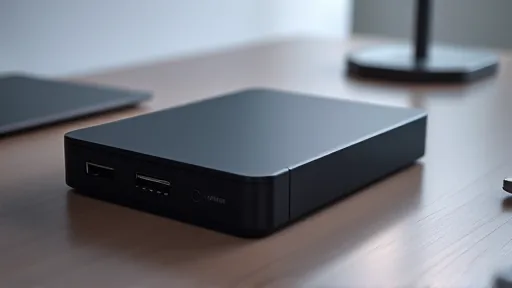
Seagate’s answer, announced on a Tuesday, is to sell both halves of the problem as one product. The FireCuda Forge pairs a traditional plattered hard disk with a solid-state drive the buyer supplies. It is the company’s first drive line powered and managed by a new piece of software called the Alkemi intelligent storage platform. The drives are on sale now through Seagate’s web store in two configurations: 8TB for $699 and 20TB for $899. Neither price includes the SSD.
The rules for that SSD are narrow enough to matter. It must be an M.2 2280 NVMe drive at PCIe Gen3 or higher. Its capacity cannot exceed 1TB, which caps how much data can ever live on the fast side of the pairing. It needs to sustain at least 2,400MB/s read and 2,000MB/s write, and Seagate recommends a unit with DRAM cache. Seagate claims 2,500MB/s read and 2,000MB/s write speeds for the combined system, which connects over USB4 and supports Windows 11 and macOS 26 and later.
A 20TB Forge plus a compliant 1TB SSD buys twenty-one terabytes of pooled space, with roughly one of them fast. That ratio is not a compromise invented for 2026.
The Fragility That Ended the First Wave
The hybrid idea had a heyday in the early to mid 2010s, and its most famous implementation was Apple’s Fusion Drive, introduced in 2012 in the Mac mini. The pitch then was identical in shape to Seagate’s pitch now: one large spinning disk, one smaller flash drive, presented to the user as a single pool. When Ars Technica opened a Fusion Drive unit, the system was found to write in 128KB tiered blocks. New information generally landed on the SSD first and migrated to the hard disk as needed. Files used often could earn a more permanent home on the flash side.
A Fusion setup depended on both drives assembling into a single volume, so a physical failure in either one left the survivor holding only part of the picture. Recovery became difficult precisely because the working drive needed the broken drive’s data to reconstruct the whole.
Seagate’s structural claim is that Alkemi moves the decision-making out of the operating system and into the enclosure itself, where Apple’s Fusion Drive relied on macOS to manage the pool. Where macOS managed the Fusion pool, Alkemi manages the storage pool directly from the drive housing. The company’s own description is that the platform “learns and adapts over time to keep high-demand content fast and accessible on a user’s SSD, while the HDD provides space for growing libraries,” and that “behind the scenes, Alkemi manages data placement, giving users the simplicity of a single storage drive.” [1] The product data sheet calls it a two-tier storage system but does not say whether it works by SSD caching, automated tiering, a combination of the two, or something else.
When a vendor asks a buyer to trust an opaque placement algorithm with that material, the burden of proof is not speed but failure behavior.
What Happens When One Half Dies
The unanswered question has a precise shape, and it is the same one Ars Technica put to Apple fourteen years ago. Two older designs bracket the possibilities. Intel Smart Response Technology kept failure risk low by mirroring data from the mechanical drive to the faster SSD, with the hard disk retaining the authoritative copy — an optional write-back mode could still leave fresh data stranded on the SSD. Apple’s Fusion Drive instead tiered data in 128KB blocks across the pool, storing pieces on both drives. The difference decides whether losing the SSD is an inconvenience or a catastrophe.
Seagate has not published technical documentation on how the Alkemi system handles drive failure or repair. The drives, meanwhile, are already for sale.