Timelines That Refuse to Hold Still
Start with the audio drama “Exoplanet.” Andy Weir, author of “The Martian” and “Project Hail Mary,” produces it; Benjamin Percy writes it. Audible releases it as a full-cast audio drama. A quantum anomaly tears a starship apart. The crew is scattered across different eras of the same deadly exoplanet — one member lands in a machine-ruled future, another in a past crowded with hostile aliens.
Andrew Hunter Murray, whose speculative novel “The Last Day” stopped the planet’s rotation and left one half scorched and the other half permanently dark, returns with a different fracture. [1] A young woman named Esme escapes a dull job by taking tiny potions called The Elsewheres. Each dose lets her visit an alternate version of herself. Then an “incident” makes her the most important person in this universe, or possibly in any of them.
The pattern repeats in the next instalment of a series that layers Groundhog Day with existential dreaminess. Tara has spent 12 years reliving 18 November, while her partner Thomas, to whom she keeps returning, repeats his own identical day. Tara sets off with friends for a community of other time-stranded people and begins to see a life beyond Thomas.
Familiar Furniture, New Hands
Certain genre furniture — the asteroid, the space horror, the Lovecraftian small town — has long belonged to the writers who built it. This month hands the furniture to new hands and watches what changes.
Carole Hailey, whose previous book “The Silence Project” drew praise, takes the asteroid story. Cassie grew up with a father obsessed with an impending apocalypse. Now middle-aged, she learns his teachings might have use after all: an asteroid has been found in the solar system, heading for northern Europe.
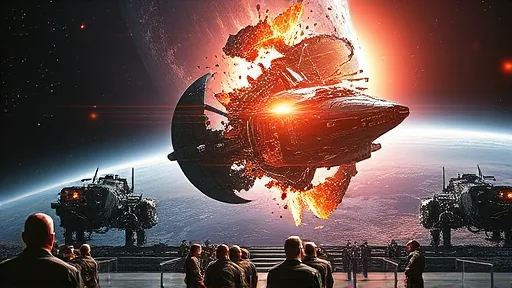
SA Barnes, whom her publisher calls “the queen of space horror,” sends Halley Zwick, on the run, aboard the spaceship Elysian Fields. The vessel was sold to the super-rich as a place to enter cryo-sleep until their immortality could be assured, but it has been silent and dark for decades. Whether it is truly empty is the question the novel hangs on.
John Scalzi bends Lovecraft toward economics. In Richland, Ohio, locals take offence at the actions of a predatory private-equity firm and develop unexpected tentacles. The local police chief, a former resident named Mike, gets entangled in events likely to change humanity forever.
The Frontier at the Edge of the Map
The frontier is usually a place you travel to. This month’s list relocates it to the edge of the map — the colony nobody crewed, the society nobody audits, the tomb nobody can reach in time.
A graphic novel sends four thieves to Bridge Planet Nine, an abandoned colony planet, to rob one of the uncrewed freighter ships that land there. The outpost turns out not to be as deserted as they thought, and that collision between heist and emptiness is the plot.
An Icelandic speculative crime novel by Sigurdardóttir, shortlisted for the Icelandic Crime Book of the Year award, sets Reykjavík in 2052. An artificial intelligence manages society and keeps it almost crime-free. Sabína discovers that her brother, a dissident living outside the controlling AI’s reach, has been murdered, and she investigates his final days.
Ex-con Z is hired to locate the tomb of Ikanto, which is hurtling through space toward a black hole. The client is a floating brain in a jar. Z is desperate and takes the job.
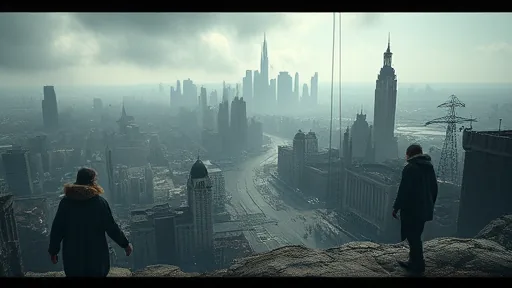
In the second dystopian novel of The Strangeloom Trilogy, humans have moved into virtual reality to escape a world falling apart. The story follows those working against the megacorporation NileCorp to bring it down.
Michael Moorcock, the final part of whose “fictional autobiography” this is, comes with a promise from the publisher: “Moorcock meets ‘Moorcock’ and together they produce a remedy for the world’s pain!