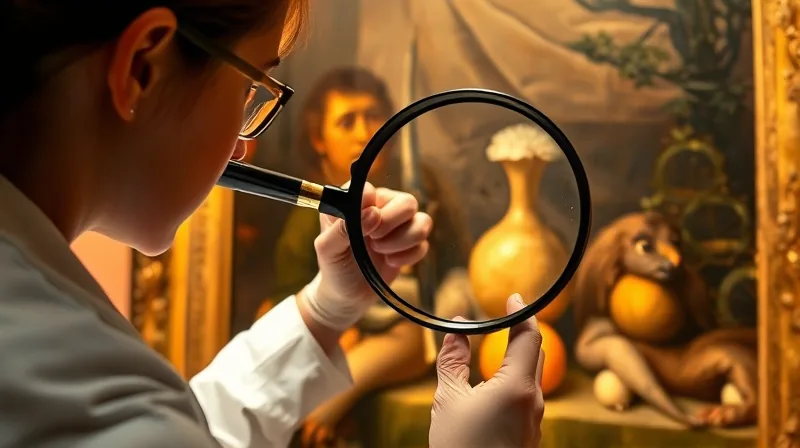
Paintings as Scientific Records of Lost Species
A Dutch Still Life Becomes a Data Set
A naming system built for something else entirely now lets biologists read historical paintings as scientific records. Carl Linnaeus built that naming system in the 18th century to organize specimens. Today researchers use the same system to identify species depicted in artworks made before the science of ecology existed. The tool was never meant for art, and that is precisely why it works.
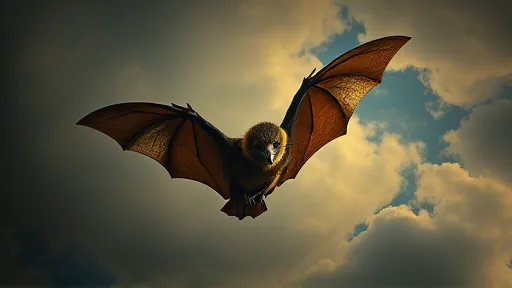
Pedro Romero-Vidal, an ecologist at Doñana Biological Station in Seville, Spain, was studying a 1611 painting by Flemish artist Jan Brueghel the Elder when he noticed something that stopped him. [1] In the upper right corner of the work, titled “Air,” Brueghel had drawn a bat gripping a songbird in its jaws. Romero-Vidal called the image “completely unexpected The animal was a greater noctule bat, Nyctalus lasiopterus, a species that normally eats insects. The artist likely heard about bird-eating behavior during visits to the bat’s home range in Italy.
What makes the image remarkable is timing. Scientists found evidence of bird-snatching in the bats’ fecal remains only in the early 2000s. They confirmed the behavior by listening in on songbirds being eaten in 2025. Brueghel painted it roughly 400 years earlier.
Romero-Vidal’s analysis appeared in 2025 in Proceedings of the National Academy of Sciences He describes the bat as a side project. His main project scans historic paintings for monkeys and parrots, animals often transported from distant places. Such depictions carry ecological information across centuries. He and his colleagues have identified more than 1,500 works showing these animals. Repeated depiction means the artists at least knew about the creatures — whether by observing menageries or hearing about them from other people.
Where Art Historians And Biologists Meet
The finding reaches into taxonomy, botany, and pollination biology. German-born artist Maria Sibylla Merian, active in the late 17th and early 18th centuries, used detailed still life paintings to show ecological relationships. Art historian Anna Knaap of the Museum of Fine Arts in Boston describes what Merian achieved: “She figured out — and people hadn’t done this before — matching the insects with the host plant Merian’s work influenced Linnaeus himself. Knaap calls her “a scientist ahead of her time.”
In 2025, the Museum of Fine Arts mounted an exhibition of works by Rachel Ruysch, another artist of the late 17th and early 18th centuries While preparing, Knaap and fellow museum historian Christopher Atkins wanted to collaborate with researchers. They knew the works might carry scientific weight. So they turned to biologist Charles Davis of Harvard University
Davis was immediately impressed with Ruysch’s botanical knowledge. “There’s all these little kind of nerdy botanical details that only an expert would know,” he says. “They’re in many cases representative of the species’ identity.” Ruysch depicted flower parts such as sepals and anthers with careful accuracy. Davis used those details to identify specific species and trace their origin in the Dutch colonial territories.
He also found an amusing mistake. “In one of her most famous paintings, there’s a carrion flower,” Davis says. Carrion flowers mimic the smell and appearance of dead animals to attract flies as pollinators. But Ruysch’s work showed an unlikely partner approaching the bloom: a swallowtail butterfly of the family Papilionidae. “I sort of laughed,” Davis says. Ruysch probably never saw the plant in its natural habitat with its usual pollinator. She likely encountered it only in botanical gardens.
The Limits Of Reading Old Pictures
The limitation that determines how far this finding reaches is the same one that makes it necessary: art historians cannot always tell whether an artist meant to portray something with realism or took artistic license. . Atkins explains the method. “We look at what visual evidence exists. We make comparisons,” he says. Within a particular artist’s work, repeated motifs sometimes appear. That repetition suggests a feature is not necessarily completely realistic. Art historians can also compare an artist’s original sketches of a landscape with the final product.
These artists may not have left written records of any scientific musings, Atkins says, but they certainly pictured them. A collaboration between art historians and scientists can reveal those insights. “These things have been sitting in pictures for hundreds of years,” Atkins says. “Where it gets really exciting is when the two sides come together and share their expertise.”
Sources
2. Proceedings of the National Academy of Sciences