Optogenetics Wins Nobel Prize After Two Decade Wait
The Model That Waited Two Decades
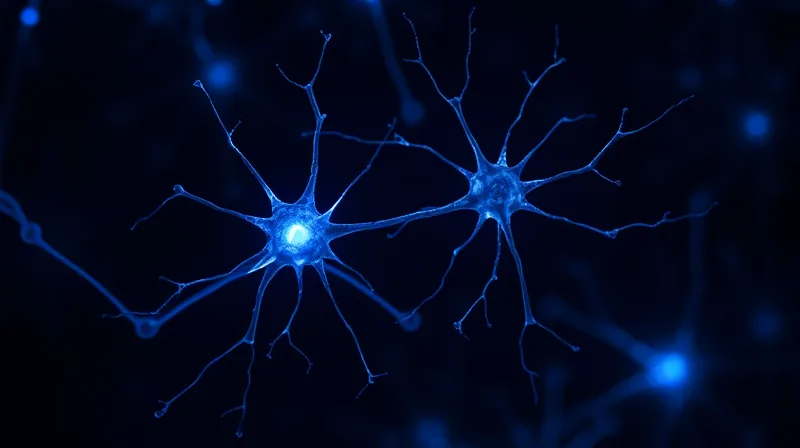
For years, the annual approach of Nobel week followed a predictable script for those who track neuroscience. A shortlist would form in the minds of researchers. Optogenetics — a technique that lets scientists control individual neurons with bursts of light — sat near the top of that list for over a decade. The foundational experiments were done in the early 2000s. The field had already collected its first major international honor, the Brain Prize, in 2013. And yet the call from Stockholm did not come.
That gap — between a discovery that had already reshaped how neuroscientists probe the brain and the highest recognition the field offers — is the central fact of this year’s award. The 2026 Nobel Prize in Physiology or Medicine goes to three scientists: Karl Deisseroth, Peter Hegemann and Georg Nagel. [1] Their work turned light-sensitive proteins into tools that can switch neurons on and off with the flick of a laser. The prize, announced on 5 October 2026, arrives roughly two decades after the foundational papers appeared.
Michael Häusser, a neuroscientist at University College London, put the delay plainly when reached for reaction. “We’ve been waiting for this for a long time,” he said. [2] “What took them so long?” The question is not rhetorical. It points at a real puzzle in how scientific prizes are timed — and at what changed in optogenetics itself to finally satisfy the committee.
Häusser offered a working explanation. The Nobel Committee may have held back because the direct application of optogenetics to human disease and biology has emerged only in the past few years. In other words, The technique spent its early years as a laboratory instrument — powerful, widely adopted, but still a method for studying animal brains rather than a route to treating people. The committee’s own statutes reward discoveries that have conferred the greatest benefit to humankind.” A tool that illuminates how neurons communicate in mice is transformative for science, but the path from that illumination to a patient’s bedside is long and uncertain.
The gap between method and medicine is where the timing question lives. A technique can be universally admired inside a discipline and still wait at the Nobel door until it produces something that touches human health. That is the model optogenetics has now passed through — and the reason this year’s prize feels, to many in the field, less like a surprise and more like a debt finally paid.
A Prize That Names Three, Honors Six
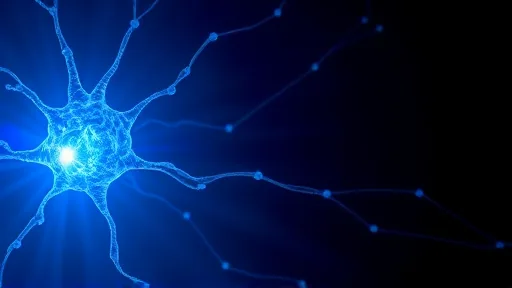
The Nobel Prize in Physiology or Medicine is capped at three laureates per year. That rule, written into Alfred Nobel’s will, creates a peculiar arithmetic problem for fields built by many hands. Optogenetics is exactly such a field. The 2026 award recognizes Deisseroth, Hegemann and Nagel. But the Brain Prize in 2013 — which carries no three-person limit — honored six pioneers of the same technique.
Those additional names matter for understanding how the field actually came together. The Brain Prize also recognized Edward Boyden, Gero Miesenböck and Ernst Bamberg. [1] Each contributed distinct pieces: light-sensitive proteins from algae and archaea, genetic tricks to insert them into mammalian neurons, and the first demonstrations that a flash of light could drive behavior in a living animal. The Nobel’s three-name ceiling does not erase those contributions. It simply compresses a collaborative history into a narrower frame.
The asymmetry between the two prizes is instructive. It shows how scientific credit is distributed differently depending on the rules of the awarding body. A prize with no numerical limit can honor the full cast. A Nobel must choose. That choice is never purely scientific — it reflects the committee’s judgment about which contributions were decisive, and it inevitably leaves co-discoverers outside the citation.
For the researchers named in Stockholm, the recognition is unambiguous. For the field, the three-name limit is a reminder that optogenetics was never one person’s insight. It was a convergence of protein biochemistry, genetics and neuroscience — three disciplines that rarely share a prize stage but did so this year through the work of the three laureates.
The delay and the three-name limit are two features of the same prize. The Nobel rewards depth of impact and limits its laureates. Optogenetics offered depth in abundance but spread its origins across more than three scientists. The committee waited until the human-health dimension sharpened, then picked the three it considered most central. The gap between who was honored in 2013 and who is honored now shows how the prize’s rules shape its choices.
What Comes After the Switch
The precedent for what happens next is already written in optogenetics’ own short history. Over the following decade, that tool spread through the neuroscience community. The Brain Prize marked the moment the field’s founders were collectively acknowledged. The Nobel marks the moment the technique’s impact on human biology came into view.
That sequence — foundational work, broad adoption, then a shift toward human relevance — is the pattern Häusser points to. Häusser’s explanation points directly at it. Once that happened, the case for the prize became harder to defer.
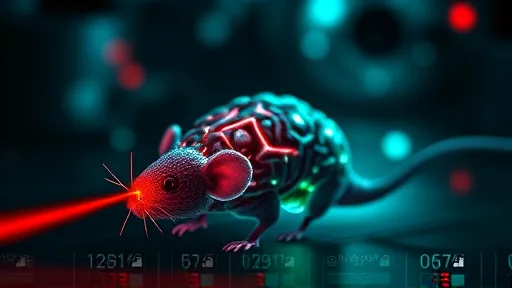
For the current generation of neuroscientists, the story is not about waiting for a prize. It is about what a technique becomes after it leaves its inventors’ hands. Optogenetics began as a way to control neurons with light in a dish or a mouse. It is now part of the standard toolkit for studying brain function, and its reach into human biology is what finally tipped the scales in Stockholm.