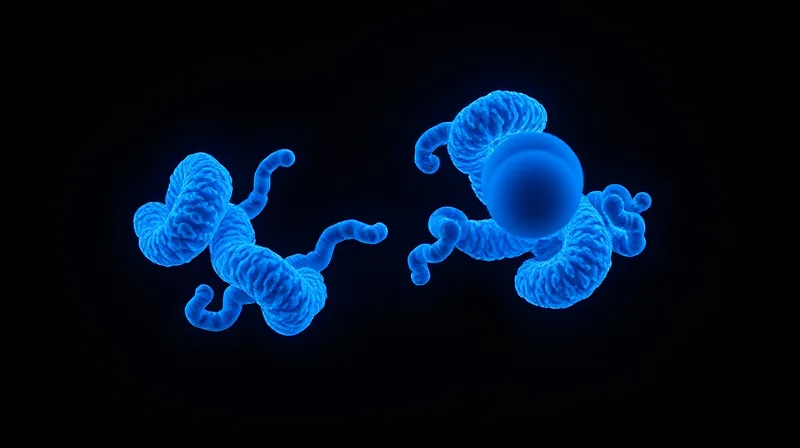
Natural purine nucleotides act as molecular glues
The Unexpected Glue That Cells Already Make
For decades, the textbook model of drug action told a simple story. A drug molecule fits into a protein like a key into a lock, blocking the protein’s activity. That model worked well for many treatments, but it began to fail against its own data. Some of the most powerful new therapies in the past ten years do not block proteins at all. Instead, they bring two proteins together, forcing them to interact in ways that trigger degradation, modification, or activation. These are called proximity-inducing drugs, and they have changed how researchers think about medicine.
Molecular glues form a specific class within this new category. They work by stabilizing weak or temporary interactions between proteins that would otherwise barely touch each other. Until recently, scientists believed that these glues had to be artificially designed molecules, created in a laboratory to force unnatural protein meetings. The natural world, it seemed, did not use this trick.
Varun Jayeshkumar Shah and Ivan Đikić, both at the Institute of Biochemistry II, Goethe University Frankfurt, now report a discovery that overturns that assumption. [2] Writing in Nature, they describe how naturally occurring molecules known as purine nucleotides can function as molecular glues. [3] These are not exotic compounds. Purine nucleotides are the basic building blocks of DNA and RNA, and every cell in the human body produces them constantly. The finding means that the body already has its own set of molecular glues, built into the machinery of metabolism itself.
The researchers went further. They showed that thiopurines, a class of drugs used clinically for at least 70 years, do exactly the same thing. Thiopurines were developed long before anyone knew about molecular glues. They were prescribed for autoimmune diseases and leukemia, and their mechanism of action was poorly understood. Now it appears that these old drugs work by gluing proteins together, using the same principle that drives the most advanced therapies of the present decade.
A Feedback Loop of Abundance and Control
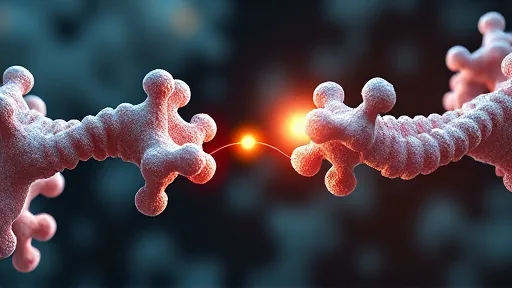
The research conducted by Shah and Đikić, published in Nature, establishes that purine nucleotides act as sensors of their own abundance When a cell has enough nucleotides, these molecules glue together specific proteins that regulate metabolism. The glued proteins then send signals that tell the cell to slow down production. When nucleotide levels drop, the glues disappear, and production resumes. This creates a feedback loop that is both simple and elegant.
The implications for drug development are immediate. If the body already uses small molecules like nucleotides to control protein interactions, then researchers can study these natural mechanisms to design better synthetic glues. The thiopurine finding is particularly striking because these drugs have been in continuous clinical use since the 1950s. Doctors prescribed them for decades without knowing their true mechanism. Now, with this discovery, the existing clinical data on thiopurines can be reinterpreted through the lens of proximity induction.
How long until this finding changes practice? The source does not specify a timeline, but it does point to the next logical step. The authors explicitly connect their work to nutrient sensing, a field that studies how cells detect and respond to the availability of food molecules. Purine nucleotides are not just genetic building blocks. They are also nutrients, and the cell must know how many it has at any given moment. The discovery that nucleotides serve as both building materials and regulatory glues suggests that other small molecules made naturally by cells might have similar capabilities.
Where Metabolism Meets Proximity Biology
The intersection between metabolism and proximity-driven regulation opens a new set of questions. If purine nucleotides can act as molecular glues, what about other small molecules that cells produce in abundance? The authors explicitly ask this question, inviting researchers to search for other natural glues among the thousands of metabolites that circulate inside cells
This line of inquiry connects directly to work done at other institutions. Y.-P. Wang and Q.-Y. Lei, publishing in Signal Transduction and Targeted Therapy in 2018, studied how metabolites regulate protein interactions through what they called “metabolic signaling.” Their work examined how small molecules like acetyl-CoA and ATP influence protein function. The Frankfurt team’s discovery provides a specific mechanism for how such regulation might work. Purine nucleotides do not just influence proteins indirectly. They physically glue them together.
Sources
1. DOI: 10.1038/d41586-026-01945-3
2. Goethe University Frankfurt
3. Nature