
Mummified DNA from Chile Reveals Smallpox History
A Four-Century Silence Breaks
For decades, the story of smallpox in the Americas had a missing chapter. The virus itself left almost no trace. That silence broke when researchers recovered viral DNA from two people who died in modern-day Chile more than 400 years ago. [1] Both people had been infected with smallpox when they died. Their mummified remains held the genetic fingerprint of a disease that had long escaped archaeological detection.
The genetic evidence did more than identify two old infections. It pointed to Europe as the source of the virus. [1] The findings confirm that Orthopoxvirus variola — the virus that causes smallpox — was present in the Americas. That Europe was the source had been suspected. Now the pathogen’s own DNA offers direct confirmation.
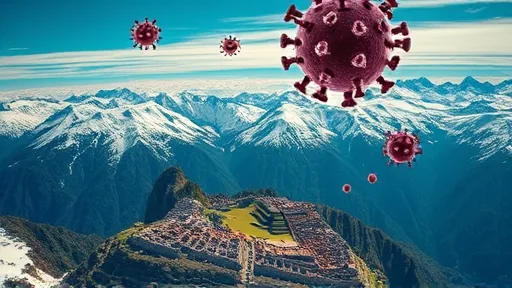
The new timeline matches a known disaster in the Andes. Atahualpa, the last Incan emperor, was captured by Spanish troops in 1532 during the conquest. By then, smallpox had already devastated the Inca Empire, striking around 1524 to 1528. The Chilean genomes are from people who died more than 400 years ago. They provide physical evidence that smallpox was present in the Americas more than 400 years ago.
Who Else Can Use an Ancient Genome
Smallpox was among the deadliest diseases the world has seen. In the twentieth century alone, the virus killed an estimated 300 million people. Smallpox devastated the Inca Empire in the 1520s. The new genomes place a genetic marker at the beginning of that continental tragedy.
The value of the finding reaches beyond the Americas. The study adds to a growing body of evidence that smallpox lost genes as it adapted to human hosts. That mechanism may still be active in related viruses. The virus that causes mpox, for example, is related and may be changing in a similar way today. Ancient smallpox genomes give scientists a long-term example of how such gene loss unfolds.
Terry Jones, a computational virologist at Charite — University Medicine Berlin, says the gap in knowledge remains enormous. [2] “We don’t know anything about the recent history of viruses,” he observes. Studies such as this, he adds, provide a rare snapshot into a pathogen’s past. That snapshot raises a question for other fields. Which of them can benefit from a rare look at a virus from hundreds of years ago?
Older Samples Show What Happens Next
Ancient smallpox DNA has been found only twice before. In the two earlier cases, the samples date from long before the twentieth century. One came from seventh-century Viking remains. The other was a single sequence obtained from a seventeenth-century Lithuanian mummy. Those two samples, separated by a thousand years, had already revealed a virus in motion.
The difference between old and recent virus strains is striking. The seventh-century virus genome is much larger than twentieth-century smallpox genomes. It also contains more active genes. That is the clearest sign that smallpox underwent intense evolution over the centuries. The Chilean data now add a third time point to that record.
The precedent comes from the archaeology of ancient pathogens, a field that has already redrawn the timeline of human disease. That field learned from a seventh-century Viking genome that smallpox is older than the modern record suggested. It learned from a Lithuanian mummy that even one preserved body can yield a full viral sequence. What the Chilean genomes add is a second continent to that timeline. The pattern to expect next is visible: a rare genome here, another there, and gradually the missing history of a virus comes into view.