
Moon holds Helium-3 key to US security
A vital element that Earth cannot produce
The moon contains a resource that does not exist in significant quantities on Earth: Helium-3, also written as He-3. This isotope is an ideal fuel for fusion reactors and will become critical for the future of quantum computing. Both fusion energy and quantum computing are essential to American national security, according to former NASA astronaut Leroy Chiao, who flew four space missions and logged over 229 days in space, including a command of the International Space Station. Humans cannot produce much of this element on Earth, but the moon has it in abundance. The race to return to the lunar surface is therefore existential for the United States, Chiao argues, yet most Americans fail to recognize this security dimension.
The Outer Space Treaty governs how nations may use the moon. This agreement treats the moon much like Antarctica. It stipulates that no country can claim or own the moon. However, the treaty does allow for research and removal of material. This legal framework creates a strategic opening. Nations can extract resources without claiming territory. The United States and other countries are signatories to this treaty. The treaty dates from a time before lunar resource extraction seemed practical. Now it provides the legal basis for what comes next.
Nuclear reactors create protected zones for resource collection
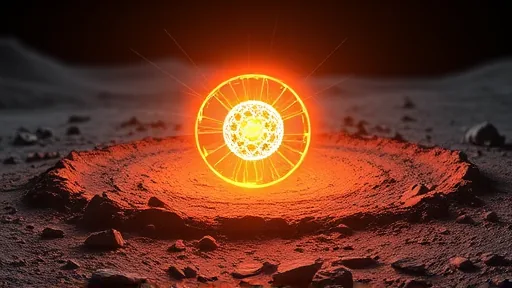
Nuclear reactors on the moon serve two distinct purposes. They provide reliable, continuous electrical power. They also allow the establishment of safety keep-out zones. These keep-out zones offer a workaround to the prohibition on land ownership. As operational areas, they would allow the United States to take full advantage of areas where reactors are placed. The purpose would be collecting Helium-3. Other countries have already begun pursuing this same strategy. America must maintain its lead in human spaceflight to secure access to these resources. The keep-out zone concept transforms a legal restriction into an operational advantage.
During the Apollo missions, the nation understood how important the space race was. America and the Soviet Union were locked in a Cold War that would determine the planet’s future. Beating the Communists to the moon played a pivotal role in establishing Western dominance. At its peak, NASA received more than 4 percent of US spending. Today, the agency receives 0.33 percent. Despite this dramatic reduction in funding, the moon’s role remains just as crucial as it was 50 years ago. The strategic stakes have shifted from ideological competition to resource competition. The fundamental importance of lunar access has not changed.
Private companies accelerate the timeline for lunar return
SpaceX is making great strides with its Starship program. This is a reusable super-heavy-lift launcher. A version of this rocket will eventually serve as a human spaceflight lander. Blue Origin is competing in the same market and making progress as well. This is despite a recent setback when its New Glenn rocket exploded. One or both of these landers will soon be tested in low-earth orbit as part of Artemis III. Private partnerships promise to accelerate progress toward the moon. These companies are nimble and can develop technologies and pivot quickly. They complement NASA’s excellence in space operations and technical expertise.
What is learned in lunar missions will accelerate the path to Mars and all of its resources. The moon is only three to four days away from Earth. Mars is six to eight months away at closest approach. The moon is therefore the ideal place to develop and test hardware. Habitats, rovers, and spacesuits need testing in low-gravity, dusty environments with big temperature swings. The moon provides this testing ground. It will also serve as a key training ground for astronauts. This combination of commercial partnerships and NASA expertise will secure the path to the stars. .

Sources
1. NASA
2. International Space Station
3. SpaceX