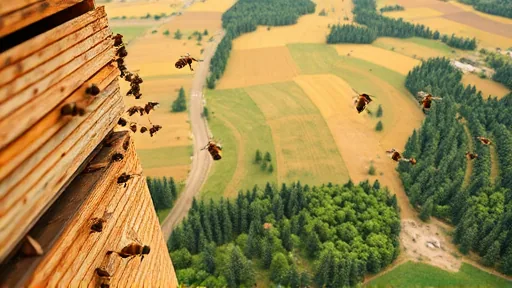
Honey Bees as Living Monitors of Environmental Health
From Pollination to Silent Surveillance
For decades, scientists studied honey bees primarily for what they produce and pollinate. The hive was a source of honey, wax, and a critical service for agriculture. Researchers measured colony collapse, mapped forage patterns, and counted losses from pesticides, but the bee itself was always the subject of study, never the instrument. That distinction matters because it changes what questions researchers ask and what answers they can expect. A 2021 review in the journal Science of the Total Environment described how bee colonies function as ‘passive samplers’ of their surroundings, collecting environmental data with every foraging flight. .
A quiet shift in perspective changes that relationship entirely. Using a One Health approach, researchers now treat the honey bee colony as a biological sensor, a living device that records the state of its environment. The approach connects human health, animal health, and ecosystem health under one analytical roof. The bee becomes not just a creature to protect, but a tool to read the landscape. This framework, endorsed by organizations including the World Health Organization and the Centers for Disease Control and Prevention, recognizes that the health of people, animals, and ecosystems are inseparable. .
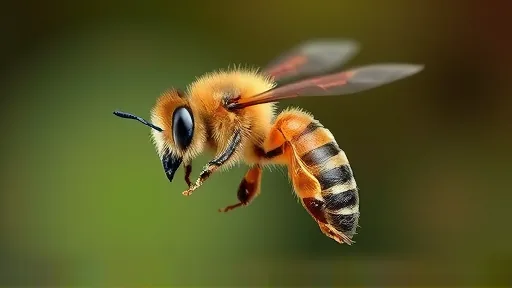
Honey bees do not stay in one place. They fly outward from the hive, visiting flowers, drinking water, and collecting pollen across agricultural fields and natural habitats. Every foraging trip is a sample collection run. Every return to the hive delivers material that carries traces of what the bee encountered along the way. A single colony can send out tens of thousands of foragers daily, each one covering an area of several square kilometers around the hive. .
The Environmental Data Hidden in the Hive
The value of this approach lies in what the bees bring back without knowing it. Nectar carries the chemical signature of the plants it came from. Pollen holds residues of whatever was sprayed on those plants. Water, gathered from puddles and streams, contains its own dissolved evidence. The hive becomes a repository of environmental samples, gathered continuously and free of charge. Studies have detected pesticides, heavy metals, and airborne particulate matter in hive materials, offering a composite picture of local contamination. A 2022 analysis of urban hives in Vancouver found 28 different pesticide residues in wax samples, while a separate German study published the same year measured cadmium and lead concentrations in bee bodies that correlated with traffic density on nearby roads.
What threatens the bees, in other words, also reveals what threatens the wider environment. When a colony shows signs of stress or contamination, that signal may point to pressures affecting the entire local ecosystem. The health of the hive offers information about environmental pressures that would otherwise require extensive, expensive monitoring networks to detect. Bees sample their surroundings far more thoroughly than any stationary monitoring station could.

This makes the honey bee a sentinel species, a term borrowed from medical practice where a single case warns of a broader outbreak. In public health, sentinels are used to catch problems early. The bee colony now performs that same early-warning function for the environment itself, flagging contaminants that might go unnoticed until they have spread much further. Canaries in coal mines served a similar purpose for miners; bees now serve that role for entire landscapes.
A Shared Health Framework Takes Shape
The novelty of this research is not the discovery that bees pick up pollutants. That has been known for years. The novelty is the framework that now interprets those findings. The One Health approach deliberately breaks down the barriers between human medicine, veterinary science, and environmental monitoring. A contaminated bee colony is no longer just an agricultural problem. It is a public health clue. Researchers at the University of California, Davis and the French National Institute for Agricultural Research have published work demonstrating how hive analysis can reveal landscape-level contamination patterns. . A 2019 study led by entomologist Berenice Ricou at the French National Institute for Agricultural Research analyzed pollen samples from hives across agricultural regions and mapped pesticide residue distributions that matched known spraying schedules. At UC Davis, a 2020 project tracked heavy metal deposition near industrial sites by analyzing bee-collected particulate matter, showing elevated lead and cadmium levels within a two-kilometer radius of smelting operations. .
The implications reach beyond the apiary. Monitoring hives could become a routine part of how communities track the safety of their air, soil, and water. Beekeepers, who already inspect their colonies regularly, could become frontline data collectors in a distributed environmental surveillance network. Citizen science projects in Europe and North America already enlist beekeepers to submit hive samples for analysis, creating datasets that span continents. The INSIGNIA project, funded by the European Union and running from 2018 to 2022, coordinated more than 500 volunteer beekeepers across 20 countries who collected pollen and nectar samples for pesticide screening. In the United States, the Bee Alert program at Montana State University has maintained a similar network since 1995, using beekeeper-submitted samples to track environmental contaminants.
The European Food Safety Authority published a draft protocol in 2023 for harmonized hive sampling across member states, aiming to make results comparable between regions. Standardized protocols for hive sampling and analysis are still emerging, and researchers are working to establish baseline data against which contamination events can be measured. The next stage involves translating what the bees reveal into actionable knowledge for environmental management and public health protection. Standardized methods now under development aim to turn hive data into routine environmental reporting, giving communities a living monitor that never stops sampling the world around them.