Hobby autopilot steers cruise missile
The Cheap Flight Controller That Outperforms Military Standards
For decades, the cost of a cruise missile’s guidance system was measured in hundreds of thousands of dollars. Military-grade inertial navigation units, encrypted GPS receivers, and radiation-hardened processors drove prices into the stratosphere. Only wealthy nations could afford to field such weapons. That calculation has now been overturned by a piece of software that drone hobbyists have been using since 2009.
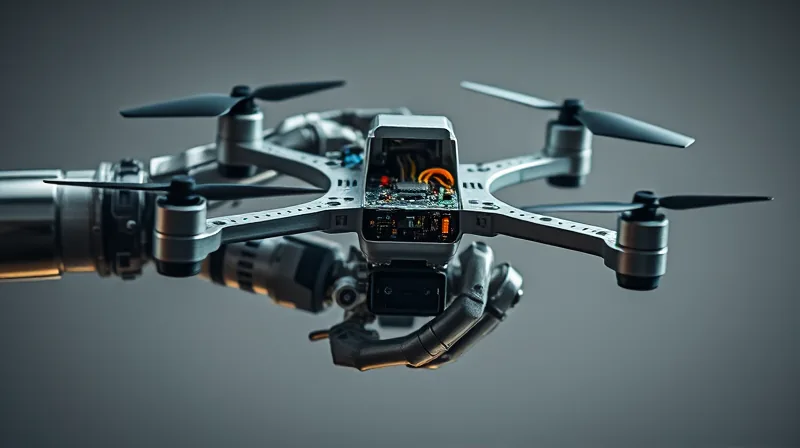
Ardupilot is an open-source autopilot suite that runs on hardware costing less than $100. It uses sensor data from accelerometers, gyroscopes, and barometers to keep an aircraft flying stably along a pre-programmed path. The same software that guides a teenager’s quadcopter through a park now steers a 6-tonne cruise missile over distances that exceed those of the Tomahawk.
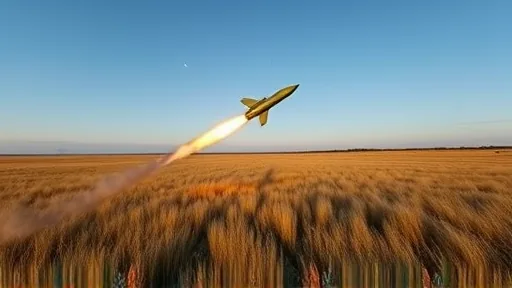
The FP-5 Flamingo, built by the Ukrainian company Fire Point, was shown at the Eurosatory defence expo in Paris in June 2025. The missile carries a warhead twice as heavy as a Tomahawk for twice the distance. Yet it costs a fraction of the American weapon. The secret lies in the flight controller.
Ardupilot is not a single program but a software suite that has been under continuous development for 16 years. It can run on everything from multicopters and model aircraft to boats and ground vehicles. The community of engineers who maintain it numbers in the thousands. They find bugs quickly. They resolve them faster than any single company could.
Fire Point’s Chief Technology Officer Iryna Terekh explained on X that open-source software offers independence. It does not come from a company that may go out of business. It cannot be blocked from export to Ukraine by foreign governments. The missile’s guidance system is not a black box from a distant supplier. It is code that Ukrainian engineers can read, modify, and trust.
Roy Gardiner of the non-profit group Defense Tech for Ukraine stated that Ardupilot is one of the world’s most extensively tested autopilots. The thousands of hobbyists who fly with it every day are unwitting test pilots. They stress the software in conditions that no military contractor would dare simulate. They report crashes. The bugs get fixed. The missile benefits.
Why Commercial Electronics Now Rival Military Hardware
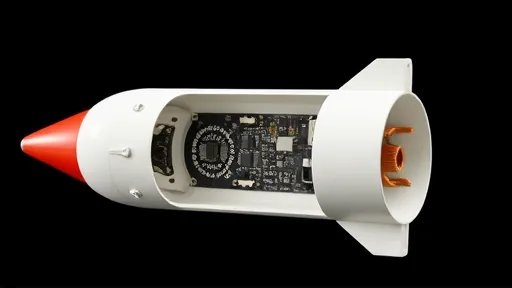
The boundary between consumer electronics and military hardware has been eroding for years. In Ukraine, that erosion has become a flood. The country’s vast fleet of small drones, many derived from hobby designs, runs largely on open-source flight controllers such as Betaflight, Ardupilot, and PX4. These are not stripped-down versions of military systems. They are the same boards and code that enthusiasts buy online.
The implications extend beyond Ukraine. Russia is also relying heavily on commercial electronics in its Shahed attack drones. Ukrainian drone expert Serhii Beskrestnov reported on Telegram that earlier Shahed versions navigated by satellite. A new “Seeker” version carries a camera and a Raspberry Pi 4 processor. The Raspberry Pi, made in the UK, is a credit-card-sized computer used in schools and hobbyist projects.
The Seeker’s software has not been identified publicly. But smaller drones often use an open-source vision program called YOLO to lock onto targets. YOLO stands for “You Only Look Once.” It processes camera images in real time. It identifies objects. It guides the drone to its target. All of this runs on hardware that costs less than a dinner for two.
Gardiner noted that Fire Point’s philosophy is to provide effective long-range strike at vastly lower cost than exquisite Western designs. The Flamingo is not a one-off experiment. It is the product of a deliberate strategy. Why build a guidance system from scratch when millions of hours of field testing already exist in open-source code?
The numbers tell the story. A Tomahawk cruise missile costs roughly $1.5 million per unit. The Flamingo costs a fraction of that. The warhead is twice as heavy. The range is twice as long. The guidance system costs less than a smartphone. The gap between hobby electronics and military systems has shrunk so far that it is now invisible.
Two Countries, One Conclusion
The question that follows from these developments is whether expensive custom military electronics can survive in the long run. Gardiner offered a clear answer. Over time, such systems will likely be developed only for the most demanding requirements. Everything else will use commercial hardware and open-source software.
The source identifies no single institution as the next-stage actor. Instead, it points to two countries already working on the same question from opposite sides. Ukraine is deploying the Flamingo and other open-source drones. Russia is fielding the Seeker Shahed with its Raspberry Pi brain. Both have reached the same conclusion independently.
The Ukrainian company Fire Point is the entity already working on the next stage. It has moved from small drones to a 6-tonne cruise missile. The logical next step is to refine the guidance software, improve the warhead, and increase production. The source does not say what that next step is. It only shows that Fire Point has already taken the step from concept to deployed weapon.
Russia’s Shahed program is also advancing. The shift from satellite navigation to camera-based targeting with AI software is a significant upgrade. The Seeker version represents a new generation. It is already hitting targets in Ukraine every night.
The wider implication is that small countries and non-state actors can now produce weapons almost as capable as those of large, well-funded neighbours. Gardiner stated that the dramatic reduction in cost gives many state and non-state actors access to strike capabilities previously available only to the wealthiest nations. The barrier to entry has collapsed.
Ukraine has also deployed the more conventional Storm Shadow cruise missile from French and British companies. Russia has its high-end Kalibr cruise missiles. These legacy systems are superior in some ways. But their costs are enormous. Their development cycles are long. Their supply chains are vulnerable.
The Flamingo and the Seeker represent a different path. They are built from parts that anyone can buy. Their software is maintained by a global community. They can be produced in quantity without waiting for a government contract. The gap between hobby and military is not just shrinking. It is gone.