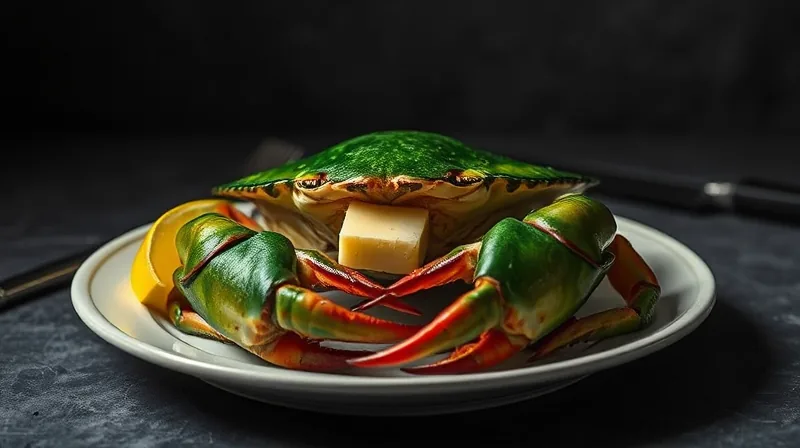
Green crabs rebranded from pest to New England delicacy
For generations, the European green crab has been the ocean’s unwanted guest along New England’s shores. The creature arrived centuries ago, hidden in the ballast water of ships crossing from Europe. It found a welcoming home and proceeded to wreak havoc on the local ecosystem. The crab outcompetes native species for food and space, destroys vital eelgrass beds, and undermines the salt marsh banks that protect coastlines. It eats mussels, oysters, and soft-shell clams, costing the region’s shellfish industry tens of millions of dollars every year. For decades, scientists and fishermen watched helplessly as the crab population exploded with no natural predators to keep it in check.
The crab’s resilience has made the problem seem unsolvable. It survives New England winters that kill off other species, thrives in diverse habitats, eats almost anything, and reproduces at astonishing rates. A single female releases up to 185,000 eggs once or twice per year. [1] These traits have made the green crab one of the world’s most successful invasive species, spreading along the West Coast, into Alaska, and reaching South Africa, Japan, Argentina, and Australia. The crabs number in the tens of millions along the East Coast alone. Their brown or green shells and five spines on either side of their eyes have become a familiar and dreaded sight.
Climate change has only made matters worse. Warming ocean waters have been linked to the crabs’ ability to survive New England winters and thrive in diverse habitats. What seemed like an impossible environmental challenge has now found an unexpected solution: eating the invaders. A growing movement across New England aims to turn this despised pest into a premium seafood product, creating new markets that could help control the crab population while offering diners something entirely new.
A Handpicked Harvest Worth Three Dollars
Mike
Masi stands on a dock over Maine’s York River as morning fog lifts, sorting through a mound of crabs with his two interns. The 45-year-old former marine science teacher is looking for something specific: European green crabs that are about to shed their hard shell, a process called molting. These soon-to-be-soft crabs are the prize, and they command a significant premium at market. Masi can fetch $3 for a single soft-shell crab compared to as little as 8 cents for a hard-shell specimen. [3] His company, shell+claw, is currently the only one in the region that commercially cultivates these crabs.
The process is intensely labor-intensive. Masi’s crew picks through thousands of green crabs by hand, looking for the subtle signs that a crab is about to molt. Crabs caught in the wild are stored out on the water until they show signs of shedding. Once they begin to bust or molt, they are relocated into a network of tubes housed in lobster crates. The soft-shell crabs that emerge have a texture described as feeling like a leather couch, and they have become popular at restaurants across New England.
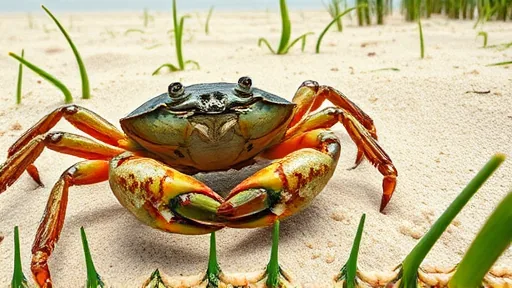
Masi’s approach turns the crab’s biology into an advantage. Soft-shell green crabs are not only more valuable but also provide a service to the ocean’s ecosystem. Every soft-shell crab harvested is one fewer hard-shell crab that would continue destroying eelgrass beds and preying on juvenile lobster and Atlantic rock crab. The business has grown since Masi began five years ago, though he admits it still feels like a hobby that brings in up to $20,000 annually. He remains optimistic about the potential, drawing inspiration from a centuries-old fishery in Venice where green crabs are native and are caught by families and fried to make a dish called moeche.
From Grant to Dinner Plate Across New England
The campaign to combat the crab invasion has been a grassroots affair for the past decade, with minimal impact on the overall population. However, the appetite for green crab is growing rapidly. Since 2021, advocates have seen a more than tenfold increase in restaurants offering the crab on their menus. Some establishments fry the crabs and put them in sandwiches, others place them on top of pasta dishes, and many incorporate them into sauces. Green crab weeks take place during the roughly two-month soft-shell season, drawing curious diners and adventurous eaters to participating restaurants.
Tracy Chang, chef and owner of PAGU, a Spanish Japanese tapas restaurant in Cambridge, Massachusetts, has become a champion of the green crab. She puts the crustaceans into the broth of her green crab laksa, a Malaysian-inspired noodle soup, and when available, places a tempura-fried soft-shell green crab inside a steamed bun called bao. Chang compares the flavor to more familiar crabs like king, stone, or Jonah crabs, noting that those all have a sweet, light crab flavor. The green crab, she says, offers something different: a rich, deep, luscious flavor that is far more potent and distinctive.
Dr. William Li, a physician and author, sat in the crowded restaurant and took his first bite from his bao. The dish caught his attention because he loves crab, and the experience did not disappoint. The tangy, sweet, and crunchy texture, with claws sticking out, made an impression. Li described the green crab bao as spectacular, filled with flavor, easy to eat, and very tasty. . The growing restaurant interest represents a shift in how New Englanders view this invasive species, transforming a hated pest into a sought-after delicacy.
Other entrepreneurs are finding creative uses for the crabs beyond restaurant dishes. Some are putting green crabs in pet treats, others are incorporating them into fish sauce, and one New Hampshire operation has even developed a line of green crab whiskey. These diverse products reflect a broader movement to create economic value from an environmental problem. The challenge remains building the infrastructure to support a larger fishery, including processing facilities and transportation networks to get the crabs to major markets like Boston, New Bedford, or New York City.
The Long
Road to a Working Fishery
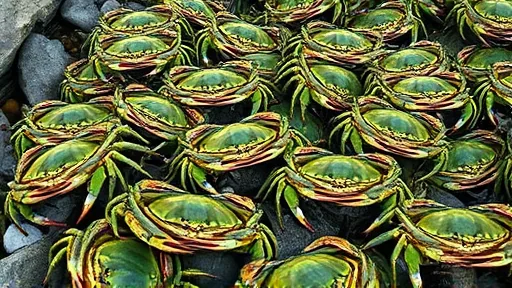
Despite the growing interest and demand, large-scale green crab fishing remains elusive. There are very few New England fishermen catching the crabs, and almost no infrastructure exists to process the catch and get it to market. Marissa McMahan, vice president of fisheries at Manomet Conservation Sciences, notes that people in Washington County, Maine, near the Canadian border, tell her they can catch as many green crabs as anyone could ever possibly want. The problem, she explains, is getting them on a truck and delivering them to where they need to be, often Boston, New Bedford, or New York City. That transportation gap is a huge impediment to building a viable fishery.
The lack of government support in New England stands in stark contrast to other regions. Only Massachusetts offers incentives to catch the crabs, providing fishermen 40 cents per pound on top of what they get from selling them, with just over $100,000 per year in state funding. The program operates in ten communities on the North Shore and outer Cape Cod. Rhode Island has passed a law offering a green crab fishing license for just $10, Connecticut now allows the crabs to be sold as food, and Maine has made it easier to get the crabs to market. These small steps, however, have not yet created the momentum needed for an industrial-scale fishery.
Washington state has taken a far more aggressive approach. The state declared an emergency in 2022 and expects to spend more than $38 million in state and federal funds through fiscal year 2027 eradicating the crabs. [2] So far this year, nearly 2 million crabs have been caught and mostly converted into 135,000 pounds of waste that goes to an organic fertilizer company. [2] The Shoalwater Bay Indian Tribe and Lummi Nation also catch crabs and use them as compost. Raquel Crosier, the deputy director of the state’s Fish Program, explains the urgency: treaty-protected fisheries are at risk, and critical habitats used by native species are threatened. The state worries about seeing the same effects on the West Coast that occurred on the East Coast if the population becomes established.
Scientists continue to study the crabs to understand why they thrive in different environments. Carolyn Tepolt, an evolutionary biologist at Woods Hole Oceanographic Institution, has studied green crabs for two decades and uses them to understand why some species succeed in new habitats. She describes them as really pretty resilient little guys. The impact on Maine’s shellfish industry has been dramatic. Chad Coffin, a clam fisherman from Maine, blames a decline in his catch on the emergence of green crabs. Soft-shell clam landings have fallen from over 7.8 million meat pounds in 1978 to 1.3 million pounds in 2025, according to the state. [1] Back on the water, Masi remains cautiously optimistic, believing that one breakthrough in infrastructure or demand could make green crab fishing a profitable business.
Sources
1. Woods Hole Oceanographic Institution
2. Shoalwater Bay Indian Tribe
3. shell+claw