GLP-1 Drugs Extend Lifespan in Aging Mice
The syringe was never meant to touch the subject of growing old. It was built to manage blood sugar in people with type 2 diabetes, a hormone mimicker that makes the body release insulin when food arrives. Then doctors noticed patients lost weight, and the same molecule became an obesity treatment sold under names like Wegovy. Now the needle points somewhere else entirely: at the biological clock itself, and a new study in the journal Nature suggests the injection may slow it down.
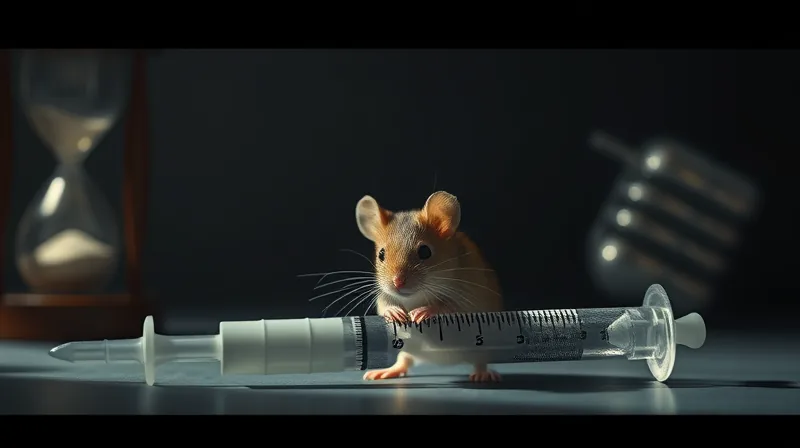
The experiment was straightforward in design but profound in implication. Older female mice received a GLP-1 obesity drug, the same class of medication that semaglutide belongs to, while a control group of older female mice received nothing. The treated animals lived longer than their untreated counterparts, with the results published in Nature on September 2, 2026. That single result shifts the conversation from managing disease to postponing decline itself
The treatment did more than extend lifespan. It also slowed several biological changes that researchers associate with the aging process, meaning the mice were not merely alive longer but healthier along the way. The study hints that the answer to whether these drugs will help with aging is yes, at least in female mice. Whether that translates to humans remains the open question that now drives the field forward.
From Blood Sugar to the Biology of Decline
The journey of this drug class began with the gut, not the brain or the aging cell. GLP-1, short for glucagon-like peptide-1, is a hormone the body releases after eating, signaling the pancreas to produce insulin and the brain to register fullness. Scientists engineered drugs that mimic this hormone, and the first applications targeted diabetes. The obesity indication followed when clinical trials revealed substantial weight loss as a side effect that quickly became the main event.
Each step of repurposing followed evidence, not intention. The diabetes drug became a weight-loss drug because patients shed pounds. The weight-loss drug now becomes a candidate anti-aging therapy because mice live longer. This pattern of accidental discovery is common in medicine, but the stakes here are unusually high, since aging is not a disease with a single mechanism but a process that touches every organ system at once.
The Nature study adds longevity to a growing list of ailments that GLP-1 drugs might treat, a list that already includes addiction, heart disease, and kidney problems according to prior research published in peer-reviewed journals. Each new indication broadens the commercial and scientific stakes, but aging is the ultimate prize, since it underlies so many of the chronic conditions that shorten human life.
Human Trials on the Horizon
The next step belongs to researchers who study aging in humans, and they are already moving. A new trial is putting the theory to the test, asking whether GLP-1 drugs can slow aging in people the way they did in mice. The mouse study provides the biological rationale, but human trials will determine whether the effect holds across species, and the first results from that trial will shape the field for years. .
The researchers behind the mouse study published their findings in Nature, the journal that sets the standard for biological discovery. Their work shows that the drugs did not merely extend the lives of older female mice but also reduced biological markers associated with aging, such as inflammation and cellular senescence. This dual effect, longer life and healthier life, is what makes the finding potentially transformative rather than merely interesting.
The question of who benefits first is not academic. Older adults with obesity are the most obvious candidates, since they already qualify for these drugs under current indications. If the anti-aging effect proves real in humans, the prescription base expands dramatically, and the first clinical results will determine whether that expansion happens. .
Lessons from Drug Repurposing
The history of repurposing drugs for aging has a precedent that shows what to expect next. Cancer research faced the same challenge: a drug developed for one purpose, then discovered to work for another, then tested in increasingly broad populations. The pattern is slow, marked by failed trials and surprising successes, and the timeline stretches over decades rather than years. .
The GLP-1 story follows that same arc. What began as a diabetes treatment became an obesity treatment, and now stands at the threshold of an aging indication. Each step required new trials, new regulatory approvals, and new evidence that the benefits outweigh the risks in a different population. The mouse study is the first step on this new path, not the last.
The gap between mouse longevity and human longevity is vast, and many drugs that extend the lives of rodents fail to do the same in people. But the mechanism here is already proven safe in millions of humans taking it for diabetes and obesity, which shortens the regulatory road considerably. The trial now underway will provide the first real answer, and until it reports, the mouse data remains a promise rather than a proof. .
Sources
1. DOI: 10.1038/d41586-026-02757-1
2. Nature