Fish recognize kind without self-sight
A Puzzle of Vision and Self-Perception
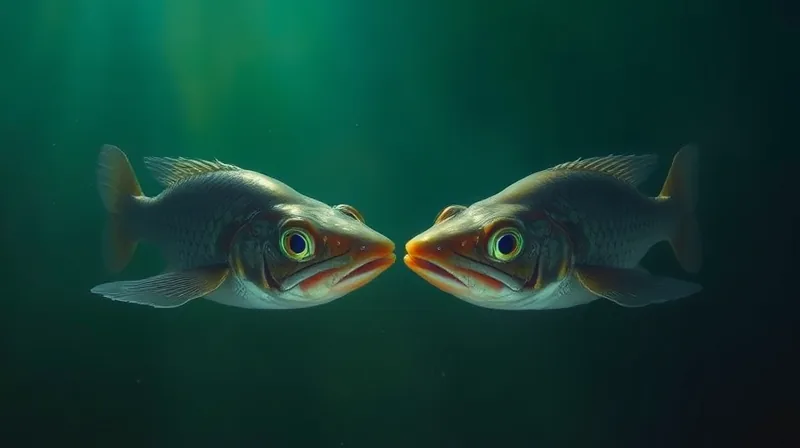
Most fish have eyes positioned on the sides of their heads. This placement means they cannot see their own body. A human cannot see their own face without a mirror. The same limitation applies to fish. Yet fish still manage to recognise others of their own species. This raises a fundamental biological question. How does a creature identify its own kind when it has never seen its own appearance?
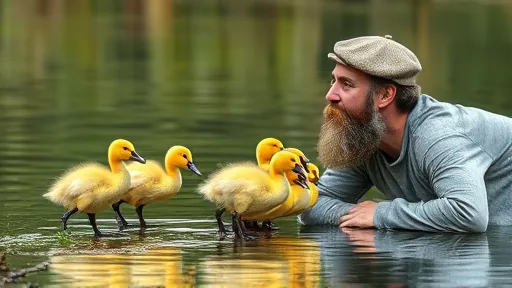
Shelby Temple, a researcher at the University of Bristol in the UK, points out that some of this recognition is innate, while some is learned. A baby human sees the face of its parents and learns to recognise them. The same process occurs in fish. Temple notes that this imprinting can be tricked. Konrad Lorenz, known as the ‘father of ethology,’ became the imprinted parent of newly hatched ducks and geese. The birds followed him as if he were their mother. Fish are probably no different in this capacity.
Temple describes her own experience with archerfish. Her fish learned to differentiate her from her wife and other guests. The reason was simple: Temple was the only person who fed them. This demonstrates that fish can learn to remember people and faces for various benefits. The ability to see yourself is not a prerequisite for recognising your own species. Fish use a combination of inputs, including visual cues, olfactory signals, and learned experiences of safety versus danger.
The Role of Imprinting and Instinct in Early Life
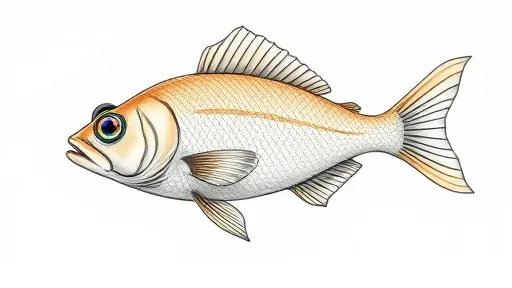
Andrew MacColl, from the School of Life Sciences at the University of Nottingham in the UK, explains that fish may imprint on a parent. This imprinting enables them to recognise adults of their own species later in life. However, most fish never see their parents. Many fish hatch from eggs and are immediately on their own. This leaves instinctual recognition as the most likely possibility. The exact mechanism remains unclear and may vary between habitats and species.
Mike Webster, from the School of Biology at the University of St Andrews in the UK, adds that some fish, including zebrafish, learn to recognise members of their own species through imprinting. This is a type of long-lasting learning that occurs early in life during a sensitive period. During this period, fish learn recognition cues from other nearby animals. Those animals tend to be members of their own species. This information provides a template for recognising others later in life. It is not necessary that they perceive their own appearance to do so.
For zebrafish, both visual and chemical cues are important for imprinting. Webster notes that multisensory integration is common in many species of fishes. These fish combine information detected using different senses. Visual cues are one component. Chemical cues are another. Tactile, acoustic, and electrical cues also play a role. This integration allows fish to build an accurate representation of their surroundings. It includes the other animals they interact with.
Sensory Limits and the Need for Multiple Cues
The extent to which vision is important to fishes varies greatly between species. It strongly depends on the habitat that they are adapted to. Fish inhabit a wide variety of environments. In shallow coastal waters and clear rivers and lakes, sunlight can penetrate easily. Vision may be important to many of the fishes that live there. However, conditions change dramatically in other environments.
In silty estuaries, algae-rich eutrophic lakes, and in the deep ocean, light is quickly scattered. Particles of suspended sediment or phytoplankton block sunlight. Light does not penetrate deeper water. Fishes in these environments might still use vision to detect shadows or flashes of bioluminescence from predators or prey. But in the absence of sunlight, they tend to rely more heavily on other senses. Smell becomes crucial for species recognition in dark or murky environments.
MacColl explains that the use of smell allows the possibility that species recognition could be ‘self-referential.’ This means it could depend on an individual’s perception of itself. Temple provides a striking example. A male deep-sea anglerfish in its natural habitat has likely never seen itself. It may never have seen another individual of its species before. Yet it still seems to know to attach itself to a female. Temple states that this is almost certainly down to an olfactory cue. There will be many other interesting and bizarre examples in the world of fish.
Webster concludes that species recognition in fishes is not always accurate. Many fishes live in mixed-species shoals. The many closely related cichlids in East African lakes have a particular problem when it comes to species recognition. MacColl notes that it is likely that any one mechanism is error-prone. The overall error rate is reduced by spatial and temporal context. Fish use multiple cues to compensate for the limitations of any single sense. This layered approach helps them navigate a world where they cannot see themselves.