The Doubt Behind the Tank
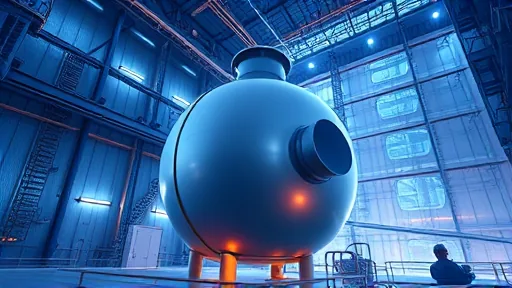
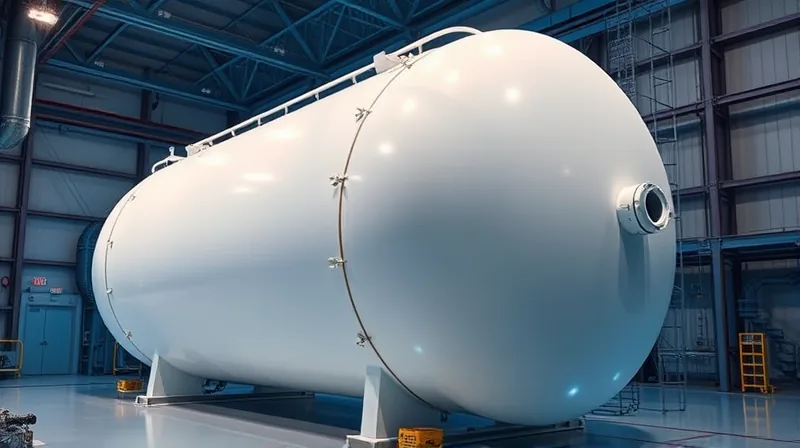
Blue Origin’s engineers did not set out to prove that a five-and-a-half-meter composite tank could hold liquid hydrogen under pressure. The doubt came first. Dave Limp, chief executive officer of Blue Origin, said the company was not sure such a large composite tank could be built at all that would contain hydrogen at high pressures. [1] Hydrogen is the smallest atom, and it leaks. The tanking test at Launch Site One in Texas was the answer to that doubt, not a side experiment. The tank was pressurized to 100 percent of the maximum force expected during operation and held there for 2.5 hours. It was then pushed to 150 percent of that maximum pressure for 10 minutes. Both tests succeeded.
The tank matters because of the stage it will carry. Blue Origin is developing a hydrogen-oxygen third stage for New Glenn called GS3, short for Glenn Stage 3, to give payloads a direct injection to geostationary orbit and to Earth-escape trajectories. The stage fits within an interstage, so the full fairing volume stays available for customer payloads. It can fly on both the smaller 7x2 variant of New Glenn, meaning seven first-stage engines and two second-stage engines, and on the larger 9x4 variant. A GS3-equipped New Glenn 7x2 can carry 8 metric tons directly to geostationary orbit and 10 metric tons to translunar injection. Those figures rise to 14 tons and 20 tons, respectively, for the larger 9x4 variant. The stage is powered by the company’s BE-7 engine, already used by its lunar landers, which is optimized for in-space operations and burns liquid hydrogen and oxygen. Limp said the stage needs to be light, which is why it is made mostly of composites — high-performing and lightweight, but until the Texas test, unproven at this scale for hydrogen.
The demand picture is what pushed these upgrades onto the table. Limp spoke at the UP.Summit conference at the Shuttle Landing Facility in Florida and put the case plainly: “There has never been higher demand for launch, ever.” [1] The company’s stated ambition is to eventually position New Glenn to launch more than 1,000 times a year.
Fewer Parts, More Thrust
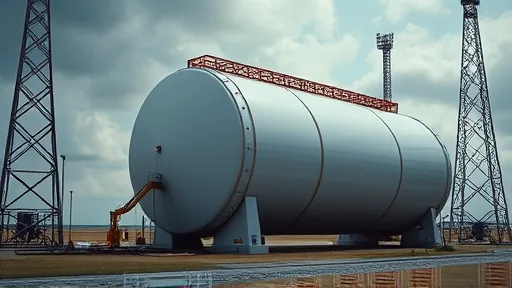
The BE-4 engine that powers New Glenn’s first stage today produces 640,000 pounds of thrust. Its replacement, an engine called Northstar, will start at 715,000 pounds of thrust. More thrust from less hardware is the unusual part. Northstar is a simplified but more powerful version of the BE-4, with half the number of parts, 30 percent less mass, and about 65 percent of it printable by 3D printing. Blue Origin believes it can manufacture the engine at 25 percent of the cost of a BE-4, and eventually reach the point where each engine can be assembled in less than a day. Like the BE-4, Northstar burns methane and liquid oxygen using an oxygen-rich staged combustion cycle and a single-shaft turbopump architecture. The company has already begun a test-firing campaign for Northstar and describes itself as deep into development and testing. Limp framed the logic in one line: “To get access to space at a lower cost, we have to look at every part of the vehicle.” [1] He called the engine “a game-changer.” The BE-4 was designed to be powerful and reusable enough to anchor two rockets — New Glenn and United Launch Alliance’s Vulcan, which uses two of the engines on its first stage. Northstar keeps the same propellant and the same combustion cycle, so the physics is not new. What is new is the part count and the build time. Limp said the company will continue to manufacture the existing BE-4 for United Launch Alliance, so the two engines will coexist rather than one displacing the other overnight.
A rocket that flies that often cannot be built like a bespoke instrument. It has to be built like a product, with fewer parts, faster assembly and a lower unit cost. None of this is a promise that the cadence will arrive; it is the manufacturing arithmetic the company says it is working toward.
One Customer, One Date
The third stage has a debut date and a buyer. Limp said the company is aiming for a 2028 debut of GS3 for a government customer, and he put the offer in direct terms: “We have one customer signed up for cislunar space in 2028. We are open for business.” Cislunar space is the region between Earth and the Moon — the same neighborhood the GS3 stage is designed to reach with its translunar injection capability. The composite tank test at Launch Site One gave the company confidence that a GS3 built on composite tanks was a concept that could go forward, and the 2028 date rests on that result.