Bee vaccine challenge transforms invertebrate immunity science
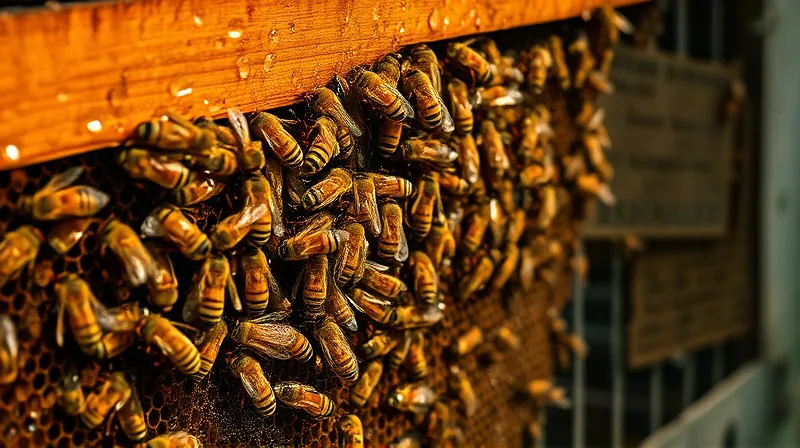
In northern California, beekeepers observed that hives treated with a novel vaccine survived environmental stressors better than untreated hives. This observation marks a potential paradigm shift in invertebrate immunology, challenging the long-held assumption that only vertebrates can benefit from vaccination.
For over two centuries, the scientific consensus held that vaccination required an adaptive immune system with lymphocytes and antibodies—features exclusive to vertebrates. Invertebrates, lacking these components, were considered incapable of vaccine-induced immunity. This principle was foundational in immunology education and research.
Challenging this assumption opened new possibilities: reducing annual losses in beekeeping, curbing antibiotic use in shrimp farming, and enhancing global food security. Researchers asked whether invertebrate immunity had been misunderstood
The Old Guard of Immunity
Vaccination originated in 1796 when Edward Jenner used cowpox material to immunize a boy against smallpox. The term ‘vaccine’ derives from the Latin ‘vacca’ (cow). This experiment established the principle of adaptive immune memory.
For over 200 years, vaccination relied on adaptive immunity: introducing a weakened pathogen to generate specific, long-lasting memory via lymphocytes and antibodies. This approach eradicated smallpox and controls polio.
Lymphocytes, essential for adaptive immunity, are exclusive to vertebrates—from fish to mammals. Invertebrates like insects, shrimp, and bees lack these cells, creating an apparent barrier to vaccination.
Adaptive immunity relies on somatic hypermutation, where immune cells randomly alter genes to produce diverse receptors. Matching a pathogen triggers clonal expansion and memory cell formation. Invertebrates lack this mechanism.
The Innate Revolution
The innate immune system, evolutionarily ancient and present in all organisms, recognizes broad pathogen patterns rather than specific threats. It was long thought incapable of memory, but recent evidence challenges this.
In the 1990s, researchers observed that plants surviving infection showed enhanced resistance to subsequent infections—a phenomenon termed systemic acquired resistance. This was unexpected given plants lack adaptive immunity.
Similar observations in insects—fruit flies, mosquitoes, and beetles—revealed that prior bacterial infection conferred resistance to reinfection, contradicting the traditional model of invertebrate immunity.
The mechanism involves epigenetics: modifications that alter gene expression without changing DNA sequence. These changes can persist and be inherited, enabling immune memory.
Pathogen exposure in invertebrates triggers epigenetic changes that can be transmitted to offspring—a process called transgenerational immune priming. This provides broad, though less specific, protection compared to antibody memory.
The Honeybee Breakthrough
Dalan Animal Health strategically targeted honeybees, which are vital for pollinating crops worth billions and produce honey and wax. However, diseases, pesticides, climate change, and Varroa mites threaten millions of colonies annually.
The vaccine targets American foulbrood, caused by Paenibacillus larvae. This bacterial disease infects bee larvae with spores that survive decades, heat, and chemicals. Infected hives must be destroyed; prevention is the only option.
Dalan developed a vaccine using killed Paenibacillus larvae, administered to queen bees via food. The queen’s immune response triggers epigenetic changes passed to offspring, protecting worker bees.
Vaccinated colonies showed reduced disease, higher honey production, and increased survival. The USDA granted conditional approval in 2022—the first invertebrate vaccine approval. It is now used in the U.S. and Canada.
Unexpectedly, vaccinated bees also showed resistance to a virus transmitted by Varroa mites, despite the vaccine targeting only bacteria. This suggests innate immune training provides broad protection.
The Shrimp Frontier
Shrimp farming, a tens-of-billion-dollar industry providing protein globally, suffers devastating viral and bacterial outbreaks causing billions in annual losses.
Current reliance on antibiotics for prevention and treatment leads to environmental accumulation, resistance, and public health risks. WHO identifies antibiotic resistance as a major global health threat
Dalan is developing a shrimp vaccine using killed bacteria fed to breeding stock, inducing epigenetic changes that protect offspring—similar to the bee vaccine approach.
Lab results show vaccinated shrimp exposed to Vibrio parahaemolyticus (early mortality syndrome) had survival improve from 27% to 48%, and against white spot syndrome virus (100% mortality), survival reached 58%.
The vaccine’s protection against a virus without viral components confirms innate immune memory’s broad, non-specific nature, potentially revolutionizing aquaculture.
The Skeptics and the Science
Not everyone is convinced. Arun Dhar is a crustacean disease researcher at the University of Arizona. [3] He has studied shrimp pathogens for years. He has seen many promising treatments fail. He wants to see the data. He wants it published in a peer-reviewed journal. He wants field trials. Lab conditions are controlled. Real farms are messy. The true test is in the field.
His skepticism is healthy. Science requires verification. Results must be reproducible. They must be confirmed by independent labs. They must hold up under real-world conditions. Many treatments work in the lab. Few work on the farm. The difference is often environmental stress. Shrimp in the lab are pampered. Shrimp on farms face predators, temperature changes, and pollution.
Dalan is planning field trials in Southeast Asia. They will start in Indonesia. This region is ideal. It has a large shrimp farming industry. It has significant disease problems. It has a need for better solutions. The trials will provide real-world data. They will show if the vaccine works outside the lab.
Other teams are also working on shrimp vaccines. They have faced challenges. Juvenile shrimp have weak immune responses. They are hard to vaccinate. Dalan avoids this by vaccinating the parents. The immunity is passed to the young. This is a clever workaround. It solves a major problem.
The Economic Impact
The numbers are staggering. The beekeeping industry is valued at over $10 billion. Disease and pests cost hundreds of millions each year. A vaccine could save a significant portion of this. It could reduce losses. It could increase yields. It could stabilize prices. It could make beekeeping more sustainable.
Shrimp aquaculture is even larger. It is worth tens of billions of dollars. Disease costs may reach several billion. A vaccine could save a large fraction of this. It could reduce the need for antibiotics. It could prevent catastrophic losses. It could make farming more predictable. It could improve food security.
But there are costs to consider. Shrimp farming has environmental impacts. Mangroves are destroyed to create ponds. Agricultural land is converted. Water is polluted. These costs are not reflected in the price of shrimp. A study from Bangladesh estimated the environmental cost at $13.66 per acre per year. This may seem small. But it adds up across thousands of acres. The true cost of shrimp is higher than the market price.
Vaccines could help reduce some of these costs. Healthier shrimp mean less waste. Less waste means less pollution. Less disease means less antibiotic use. Less antibiotic use means less resistance. The benefits extend beyond the farm. They affect the entire ecosystem.
The Broader Implications
If these vaccines work, the applications are endless. Silkworms are a candidate. They produce silk worth billions. They are susceptible to fungal infections. A vaccine could protect them. It could increase silk production. It could reduce losses.
Other insects could be vaccinated. Crickets are farmed for protein. Mealworms are farmed for animal feed. Black soldier flies are farmed for waste management. All of these could benefit. All of them face disease threats. All of them could be protected.
Even wild populations could be helped. Corals are invertebrates. They are dying from disease. A vaccine could protect them. It could help restore reefs. It could preserve biodiversity. It could mitigate climate change impacts. The possibilities are vast.
But there are risks. Epigenetic changes are not always predictable. They could have unintended effects. They could affect other traits. They could alter behavior. They could affect reproduction. These must be studied carefully. The benefits must be weighed against the risks.
The Bridge to the Future
This research connects to other fields. Cancer immunotherapy uses similar principles. It trains the immune system to fight tumors. It uses the innate system. It creates epigenetic changes. The parallels are striking.
Plant science is also relevant. Plants have innate immunity. They can be primed for resistance. This is called induced systemic resistance. It works through epigenetic changes. It can be passed to offspring. The same principles apply across kingdoms.
Even human medicine is involved. The innate immune system has memory. This is called trained immunity. It was discovered recently. It is changing how we think about vaccines. It suggests that vaccines might work in new ways. They might provide broader protection. They might last longer. They might be cheaper to produce.
The future of vaccination is not limited to vertebrates. It includes all animals. It includes plants. It might include fungi. It might include bacteria. The definition of vaccine is expanding. The possibilities are growing.
The Storm Recedes
The rain stopped in northern California. The sun came out. The beekeeper inspected his hives. The vaccinated colonies were strong. They were healthy. They were producing honey. The untreated colonies were weak. Some had died. Others were struggling. The difference was clear.
The storm had passed. But the revolution had just begun. The old rules of immunity were being rewritten. The barriers were falling. The impossible was becoming possible. The future of agriculture was changing. The future of medicine was changing. The future of biology was changing.
The word vaccine once meant cow. It came from the Latin for cow. It referred to a specific procedure. It referred to a specific type of immunity. Now it means something broader. It means training the immune system. It means creating protection. It means saving lives. It means transforming industries.
The beekeeper closed his hive. He walked away. He knew that next season, he would vaccinate all his colonies. He knew that other beekeepers would follow. He knew that shrimp farmers would join. He knew that the world was changing. He knew that the storm had brought something new.
The Next Frontier
The research continues. Dalan is working on other vaccines. They are testing different pathogens. They are optimizing delivery methods. They are scaling up production. They are seeking regulatory approval in more countries.
Other companies are entering the field. They see the potential. They are investing in research. They are developing their own products. The competition is healthy. It drives innovation. It reduces costs. It improves quality.
Academic labs are studying the mechanisms. They want to understand how innate immune memory works. They want to identify the key genes. They want to map the epigenetic changes. They want to predict the outcomes. The basic science is essential. It provides the foundation for applied research.
The field is moving fast. What seemed impossible ten years ago is now routine. What seems impossible today will be routine in ten years. The pace of discovery is accelerating. The boundaries of knowledge are expanding.
The Human Connection
This is not just about bees and shrimp. It is about food. It is about health. It is about the environment. It is about the future. The decisions we make today will affect generations to come. The technologies we develop will shape the world.
Vaccinating invertebrates is a tool. It is a powerful tool. But it is not a silver bullet. It must be used wisely. It must be combined with other approaches. Good husbandry is essential. Biosecurity is essential. Sustainable practices are essential. Vaccines are part of the solution. They are not the whole solution.
The farmers who use these vaccines will benefit. The consumers who eat the products will benefit. The environment will benefit. The planet will benefit. But we must be careful. We must monitor the effects. We must adapt as we learn. We must remain humble.
The Final Word
The beekeeper looked at the sky. The storm was gone. The air was clear. The bees were flying. They were collecting pollen. They were making honey. They were alive. They were thriving. They were vaccinated.
The word vaccine had changed. It was no longer just for vertebrates. It was no longer just for humans. It was no longer just for the lucky few. It was for everyone. It was for everything. It was for the bees. It was for the shrimp. It was for the future.
Vaccine.