
The Postcard That Kept a Ship Afloat
There is a story, possibly apocryphal, that before the mathematician G. H. Hardy set out on a dangerous sea voyage, he sent a colleague a postcard declaring that he had solved the Riemann hypothesis. Hardy was an atheist. The joke was that God, if God existed, would never allow him to die with credit for the century’s greatest result and no proof to show for it. The postcard was a life raft built from vanity.
That story lands differently now. The Riemann hypothesis — a conjecture about where the zeros of a certain complex function must sit, first posed in the nineteenth century — appears to have a proof. It was produced with the aid of artificial intelligence. And here is the twist that would have astonished Hardy: no one yet understands it. Mathematicians broadly expect the proof to hold. Making it comprehensible to humans is a separate mountain, and it has not been climbed.
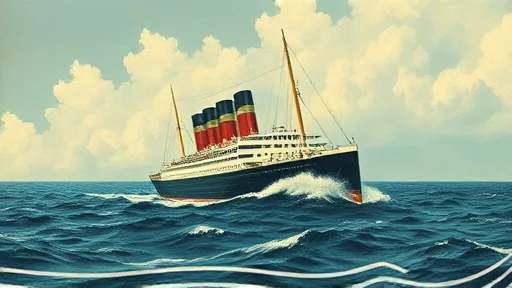
That is the situation mathematics now occupies: a result that verifies before it explains, an answer arriving ahead of its own reasons. A proof, after all, is supposed to be a route someone can walk. This one is closer to a destination with the road erased behind it.
A Year That Left the Field Reeling
The speed is what unsettles the professionals. As recently as last month, the mathematician Terence Tao speculated that AI would eventually solve the Riemann hypothesis — but perhaps not before 2050. [1] That estimate now reads like a weather forecast issued during the storm. Some mathematicians are openly asking whether the hardest and most infamous remaining problems could fall within months rather than decades. In a year that has left mathematicians reeling, this may be the knock-out blow.
In mathematics and in coding, an answer can be checked with nothing more than computer code. A candidate proof is submitted, a machine tests it, the result comes back, and the loop runs again — fast, cheap, repeatable.
Art, zoology, and most of what people actually care about cannot be checked by running a script. They involve the messy physical world, or unknowable human taste, or both. The same loop that spins so quickly in pure mathematics has nothing to grip in a laboratory full of living things or a gallery full of opinions. Whether this verification gap can be closed may become the biggest question of our age.