UK Living Standards Face Worst Parliament Since 1961
The Parliament That Leaves Families Poorer
The party in power is on course to preside over the worst parliament for living standards since modern records began in 1961, according to an analysis by the Joseph Rowntree Foundation. Soaring energy and housing costs are doing the damage, and the foundation puts a figure on it.
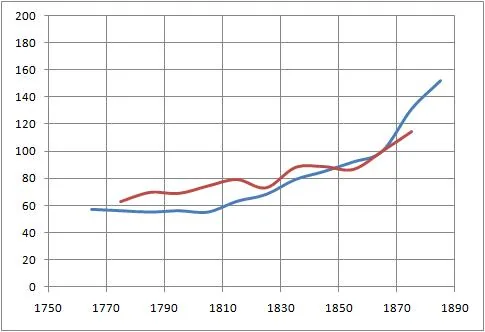
Three weeks before the budget, the Joseph Rowntree Foundation published an analysis warning that Britain faces a “dire” outlook unless the government takes “bold policy action”. [1] The forecast arrives as a range rather than a single figure. After housing costs, average household incomes are projected to be between £440 and £770 lower in real terms (adjusted for inflation) in 2029-30 than they were when Labour came to power two years ago. [1] Even the lower end of that range would mark the biggest decline in living standards since modern records began in 1961, the thinktank said, and would come on top of a tight squeeze in the last parliament. [1].
The JRF’s chief economist, Chris Belfield, said that without bold policy action on living standards, families are set to be poorer than they were a decade ago. [1].
The JRF’s analysis of changes in living standards over time differs from those of the Office for Budget Responsibility and other thinktanks such as the Resolution Foundation because of different ways of accounting for housing costs. [1].
The Trade-Off Nobody Wants to Name
Inside government, the answer is being assembled by taskforces rather than by a single department. Louise Haigh, the first secretary of state (a senior UK cabinet post), has been tasked by Andy Burnham to lead the Cabinet Office cross-government taskforces, two of which focus on turning around living standards. One taskforce is looking at short-term cost of living measures to help on housing and energy, and the other at big structural interventions such as public control that might alleviate those pressures long term. [1].
That work will eventually form part of the 10-year plan expected later this autumn, which Burnham began discussing with cabinet ministers at a Chequers away day (a political strategy meeting at the prime minister’s country residence) this week. Haigh has repeatedly told officials that there will have to be “trade offs” in order to prioritise alleviating the cost of living and public control. [1].
At the budget, Burnham has promised to offer a “breathing space” to voters, and Healey is expected to offer £1bn in additional support to energy consumers. [1].
The Rate Rise Already Priced In
The link that runs from a conflict abroad to a household bill goes through energy prices and interest rates. The foundation built its living standards analysis on two projections for energy prices set out by the Bank of England — a “central” scenario and an “adverse” one. Since the Bank published those projections in July, real-world events have tracked close to the adverse path. Oil prices have surged back above $100 a barrel after hostilities resumed in the Middle East.
By driving up the cost of energy, the renewed conflict has also increased expectations that the Bank will raise its base interest rate — the rate it charges commercial banks, which anchors borrowing costs across the economy — to tackle resurgent inflation. Markets are now betting on four quarter-point increases—rises of 0.25 percentage points—that would take that rate to 4.75 % by the end of next year.
In his 28 October statement, the chancellor is expected to focus on filling the gaps in the defence investment plan announced by Keir Starmer’s government in June, and on laying out how the Treasury will devolve some income tax revenue to regional mayors. [1].