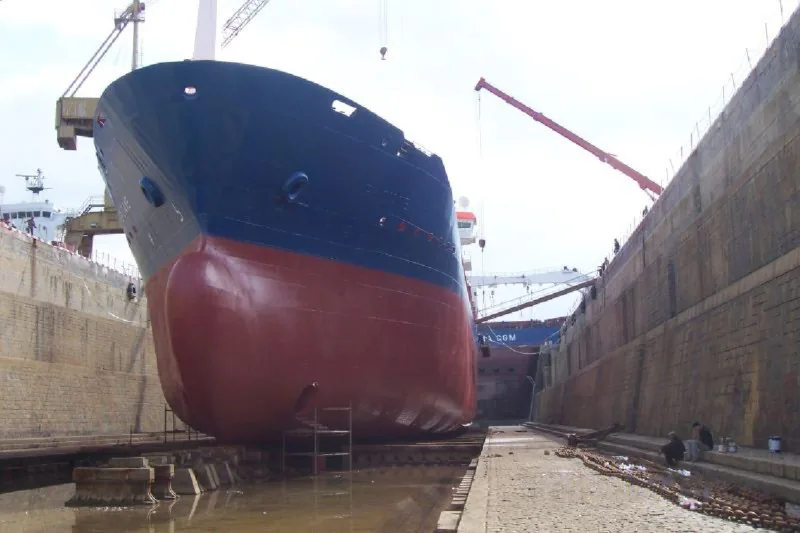
The tanker came in at Corpus Christi on a Tuesday in late October, one million barrels of Venezuelan oil in its holds and a president on the quay to take credit for the arrival. Donald Trump used the ship as the backdrop for a campaign swing through Texas — his third trip to the state since September — stumping for Attorney General Ken Paxton in his Senate race and for House candidates whose contests have turned unusually tight.
The chain that delivered the oil runs back to earlier this year, when Trump moved to depose Venezuela’s leader, Nicholas Maduro. Removing him opened the door to a sweeping oil agreement with the South American country, and the million barrels are part of that agreement. Trump presented the shipment as evidence of an upswing for Americans who face stiflingly high gasoline prices and who have grown weary of a war in Iran now eight months old.
The United States, Trump told the crowd, “is making an absolute fortune because of the situation in the Middle East.” [1] He repeated his promise that the fighting would “end very soon.” [1] Of Venezuela he said, “Jobs are happening in Venezuela that nobody would have thought even possible,” and then pushed further: “Who knows? Maybe someday soon it will become a prosperous 51st state.” [1]
Where the War Premium Lands
The ledger starts with the price of a barrel. Oil has shot up since the Iran war began, and the two largest Texas-based integrated oil companies, Chevron and ExxonMobil, have reported massive profits on the back of that move in their second-quarter results at the end of July.
Trump’s holdings in oil and gas doubled over the past year, from somewhere between $12.6 million and $46 million at the end of last year to somewhere between $22.5 million and $81.6 million, a figure set out in an October report by Democrats on the Congressional Joint Economic Committee.
The policy answer to expensive fuel has been a promise of more supply. While campaigning in Texas, Trump was expected to announce plans to loosen a Biden-era rule restricting emissions of a powerful greenhouse gas from oil and gas drilling, a rollback framed as encouragement for domestic production.
Short Memories and a Closing Calendar
Trump offered the crowd his own theory of political attention. Voters, he said, have a “two-week lifespan of memory,” and he wanted to talk about the border before his reelection. “My professionals say, ‘Sir, you’ve solved that problem. Nobody wants to talk about the border,’” he recounted. “I say, ‘Please, I want to talk. I did such a good job.’” He also defended his taxes on imported goods, which have driven up the cost of some goods, predicting that they will be appreciated someday.
Relief money entered the pitch late and without detail. The Federal Emergency Management Agency had recently denied a request for individual assistance tied to last year’s deadly Hill Country floods, a recent denial. Trump promised to free up more federal emergency relief for the damage, saying the push came at the behest of Paxton and Senator Ted Cruz. He did not specify what more would come, or when.
Paxton has trailed Democrat James Talarico in nearly every recent poll, and several Texas Republican congressional candidates are in unusually tight races while national Republicans appear increasingly nervous about holding Congress. Representative Monica De La Cruz has taken to calling herself an underdog and spent her speech attacking her opponent, the Tejano musician Bobby Pulido, over his family’s political influence in South Texas and over a former bandmate’s 2014 conviction. Former federal prosecutor Eric Flores, running against Representative Vicente Gonzalez, conceded the limits of his own control — “There is only so much the candidate controls,” he said, adding that “the rest of it is in the environment” — and pointed to Gonzalez missing 222 of 5,097 recorded votes since 2017. Campaigns have spent $11.21 billion on the 2026 congressional elections held between presidential election years, the most expensive cycle on record, according to the ad-tracking service AdImpact.
Can a tanker of foreign oil, a late promise of flood relief and an argument about short memories outweigh the price of a war now in its eighth month?
Sources
Mentioned organisations (context, not sources)
- United States Senate — Organisation (homepage)
- United States House of Representatives — Organisation (homepage)
- Chevron — Organisation (homepage)
- ExxonMobil — Organisation (homepage)
- Congressional Joint Economic Committee — Organisation (homepage)
- Democratic Party — Organisation (homepage)
- Federal Emergency Management Agency — Organisation (homepage)
- Republican Party — Organisation (homepage)
- United States Congress — Organisation (homepage)
- AdImpact — Organisation (homepage)